Social Consequences of Artificial Intelligence on Employment and Creativity
Social Consequences of Artificial Intelligence on Employment and Creativity
(Relevant for Sociology Paper I: Work and Economic Life; Social Change in Modern Society and Sociology Paper II: Industrialization and Urbanization in India)
The rise of Artificial Intelligence (AI) is transforming every aspect of society—from how we work, create, communicate, and imagine the future. While AI promises efficiency and innovation, it also raises profound questions about job displacement, human creativity, and inequality. For UPSC Sociology aspirants, understanding the sociological consequences of AI is essential to analyze the changing nature of work, stratification, and identity in the digital age.
Why Recently in News?
India’s AI mission, policy-level interest in AI-driven governance, and global developments like the rise of ChatGPT, generative AI tools, and automation in IT and manufacturing have sparked debates on AI’s societal impact. Recently, NITI Aayog, World Economic Forum, and ILO have raised concerns about job losses, algorithmic bias, and the future of creativity and innovation.
Sociological Analysis
Alienation in the Age of Algorithms: Marx’s concept of alienation becomes relevant in the AI era. As machines increasingly perform cognitive and creative tasks, workers may feel disconnected from the products of their labor, especially in platform-based gig work or AI-driven content creation, where human control and ownership are minimal.
Division of Labour and Anomie: Durkheim noted that rapid changes in division of labour could lead to anomie—a state of normlessness. AI disrupts traditional occupations, creating disorientation among workers, especially those whose skills become obsolete due to automation and machine learning technologies.
Rationalization and Bureaucracy: Weber’s concept of rationalization fits AI’s logic-driven systems. AI enables hyper-efficient decision-making and bureaucracy, but it also risks creating a “technocratic cage” where human creativity is secondary to algorithmic output, reducing individual agency and spontaneity.
Post-Industrial Society: Daniel Bell foresaw a knowledge-based economy where information and services dominate over industrial production. AI accelerates this trend, shifting work toward data, analysis, and digital creativity, but it also de-skills manual and routine jobs, creating a polarized labor market.
Impact of AI on Employment in India
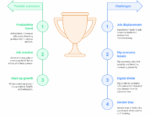
Positive Outcomes:
Increased productivity through automation of repetitive tasks.
New job creation in fields like AI ethics, data science, machine learning, cybersecurity.
Start-up boom using AI in agriculture, health, and education.
Challenges:
Job losses in traditional sectors like manufacturing, BPOs, and logistics due to automation.
Gig economy precarity: App-based delivery, ride-sharing jobs lack security and benefits.
Digital divide excludes rural and undereducated populations from AI opportunities.
Gender bias in tech jobs due to lack of inclusivity in AI training and access.
NASSCOM reports that 30–40% of India’s IT workforce needs reskilling to remain relevant due to AI-led changes.
Impact of AI on Creativity
AI as Enabler of Creativity
Tools like DALL·E, Midjourney, ChatGPT allow artists, writers, and musicians to collaborate with AI for faster output.
AI helps democratize access to design and writing, especially for non-experts.
Risks to Human Creativity
Commodification of art and writing where AI-generated content overwhelms human-made ones.
Loss of originality: AI imitates patterns; it lacks the emotional depth, cultural rootedness, and reflexivity of human creativity.
Intellectual property concerns as AI often draws from copyrighted content without consent.
Case Studies / Reports
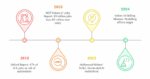
Oxford Report (2013): 47% of U.S. jobs were found at risk of being automated.
WEF Future of Jobs Report (2023): 83 million jobs expected to be lost globally by 2027 due to AI, while 69 million new ones may emerge.
India’s AI Skilling Mission (2024): Focus on reskilling workers for AI roles—yet urban-rural inequality persists.
Hollywood Writers’ Strike (2023): Demanded restrictions on AI-generated scripts and protection of creative rights.
Way Forward
Equip the workforce with AI literacy and creative thinking through NEP-aligned vocational and digital programs.
As recommended by ILO, ensure minimum wage, healthcare, and gig-worker insurance to combat AI-led precarity.
Laws and audits must prevent bias and discrimination in AI applications—especially in hiring, policing, and credit scoring.
AI should augment not replace creativity. Promote ethical guidelines for AI in art, journalism, and education.
Ensure AI development doesn’t centralize power in few corporations. Support open-source and community-based AI in India.
Conclusion
Artificial Intelligence is not just a technological innovation; it’s a social transformation that reshapes how we work, create, and relate. A sociological understanding helps uncover the power dynamics, inequalities, and emotional consequences AI brings to labor and culture. It is crucial to move beyond economic analysis and explore AI’s deep sociological implications on employment, creativity, and the human experience.
PYQs
Paper I
Examine the impact of post-industrial society on the nature of work. (2014)
Examine the impact of globalization on the organization of work. (2017)
Examine the social consequences of digital revolution on society. (2018)
What is the relationship between automation and alienation in industrial society? (2020)
What is knowledge society? Explain the role of information and communication technology in shaping it. (2021)
Paper II
Comment on the impact of new technology on industrial structure in India. (2014)
Examine the changing nature of work and family under the impact of globalization in India. (2016)
Discuss the emerging pattern of work and professional relationships in the Indian IT sector. (2017)
How do recent technological developments affect labour in the informal sector? (2018)
Examine the impact of digital economy on Indian social structure. (2021)
Discuss the implications of automation and Artificial Intelligence for employment generation and social inequality in India. (2022)









One comment