In the face of rising environmental consciousness, businesses across the globe have started marketing themselves as green or eco-friendly. But how genuine are these claims?
Greenwashing refers to the deceptive practice where companies falsely promote their products, policies, or brand as environmentally sustainable to attract eco-conscious consumers. This misleading tactic thrives in modern consumer culture, where identity and status are closely tied to what we buy.
Sociological Analysis
Jean Baudrillard’s idea of simulacra—where signs and symbols replace reality—applies directly to greenwashing. Products branded with green labels, recyclable logos, or earthy aesthetics create a false image of environmental responsibility. These simulations mask the actual ecological harm of overproduction and hyper-consumption, reinforcing a consumer culture that values symbols over substance.
Thorstein Veblen’s Theory of Conspicuous Consumption, in a consumer-driven society, individuals engage in conspicuous consumption—buying not just for utility but for social prestige. Today, flaunting “green” lifestyles (e.g., organic clothing, electric cars) has become a status symbol. This cultural shift creates a market for pseudo-sustainability, encouraging brands to greenwash products to appeal to the elite without committing to genuine ecological change.
Zygmunt Bauman’s notion of liquid modernity highlights how identities are shaped by rapid consumption and changing values. In such a context, greenwashed products serve as tools for shaping a “responsible” consumer identity without requiring structural change. This reflects individualized environmentalism, where responsibility is shifted from corporations to consumers.
Marxist sociologists critique how capitalism commodifies even ecological concerns. By converting sustainability into a marketing tool, corporations turn nature into a profitable brand, reducing genuine environmental activism to a trend. This leads to eco-capitalism, where the solution to climate change is ironically sold through the same systems that caused it.
Greenwashing in India
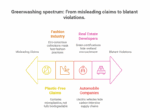
Plastic-Free Claims: FMCG brands market “biodegradable” packaging that still contains microplastics.
Real Estate Developers: Construction projects claim green certifications despite encroaching wetlands and violating environmental norms.
Automobile Companies: Promote electric vehicles without accounting for carbon-intensive supply chains and unethical lithium mining.
These examples show how corporate greenwashing is deeply embedded in Indian consumer culture, where environmental branding masks unsustainable practices.
Why Is Greenwashing Thriving in Consumer Culture?
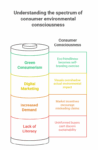
Increased Demand for Eco-Friendly Products: Consumers are willing to pay more for “green” products, creating a market incentive to mislead.
Lack of Environmental Literacy: Many buyers are unaware of what constitutes genuine sustainability.
Weak Regulatory Frameworks: India lacks robust laws to verify and punish greenwashing claims.
Digital Marketing and Influencers: Visual aesthetics overtake actual impact, with green imagery used for likes and sales.
Green Consumerism as Identity: Being “eco-friendly” has become a part of self-branding, not always rooted in informed choice.
Implications of Greenwashing
Positive Dimensions:
Promotes awareness of environmental concerns.
Encourages businesses to at least partially adapt to sustainable practices.
Reflects cultural shift toward eco-consciousness.
Negative Consequences:
Undermines genuine environmental efforts.
Misleads consumers and weakens collective action.
Commodifies social responsibility and limits systemic change.
Erodes public trust in sustainability movements.
Greenwashing and Indian Society:
Consumer Protection Act, 2019: Does not adequately address environmental misrepresentation.
ASCI Guidelines: Advertising Standards Council of India has begun addressing misleading “green” claims, but enforcement remains weak.
Environmental Movements: Grassroots movements like Chipko, Narmada Bachao Andolan, and Fridays for Future India contrast with corporate greenwashing and demand systemic accountability.
These highlight the tension between real environmental activism and market-driven pseudo-green solutions.
Conclusion
Greenwashing is a product of a deeply entrenched consumer culture that values appearance over authenticity. It exposes how capitalism adapts to criticism by commodifying resistance itself. Understanding greenwashing not only sharpens perspectives on environmental ethics and consumer behavior, but also links economic, cultural, and ecological concerns—an essential lens for analyzing social change in 21st-century India.
PYQs
Paper I
How do you understand the concept of consumerism in the context of post-modern society? Discuss with suitable examples.(2015)
Explain how the concept of ‘commodification’ is central to understanding capitalist societies.(2018)
Discuss the relationship between culture and consumption in the age of globalization.(2020)
Examine the role of media in shaping consumption patterns and lifestyle choices in modern society.(2017)
Evaluate the Marxian perspective on environmental degradation and the capitalist mode of production.(2023)
What is the significance of environmental sociology in understanding modern-day ecological crises?(2019)
Critically examine the commodification of social relationships in a consumerist society.(2021)
How do values of sustainability and ecological responsibility interact with post-modern lifestyles?(2023)
Paper II
Examine the sociological dimensions of urban environmental degradation in India.(2015)
Discuss the impact of consumerism on the social fabric of Indian society.(2016)
Discuss the cultural and environmental consequences of rapid urbanization and consumerism in Indian metros.(2017)
How does globalization affect environmental sustainability and indigenous communities in India?(2018)
What role do media and advertisement industries play in shaping aspirations and consumption patterns among Indian youth?(2019)
To what extent have Indian environmental movements addressed issues of social justice and sustainability?(2020)
Critically examine the role of civil society and environmental movements in resisting corporate-driven development in India.(2021)
Analyze how neoliberal economic reforms have influenced the commodification of natural resources in India.(2022)
Examine the changing nature of environmental activism in India in the era of climate change.(2023)
Discuss the rise of ethical consumerism in India and its contradictions within a capitalist economy.(2023)









2 comments