


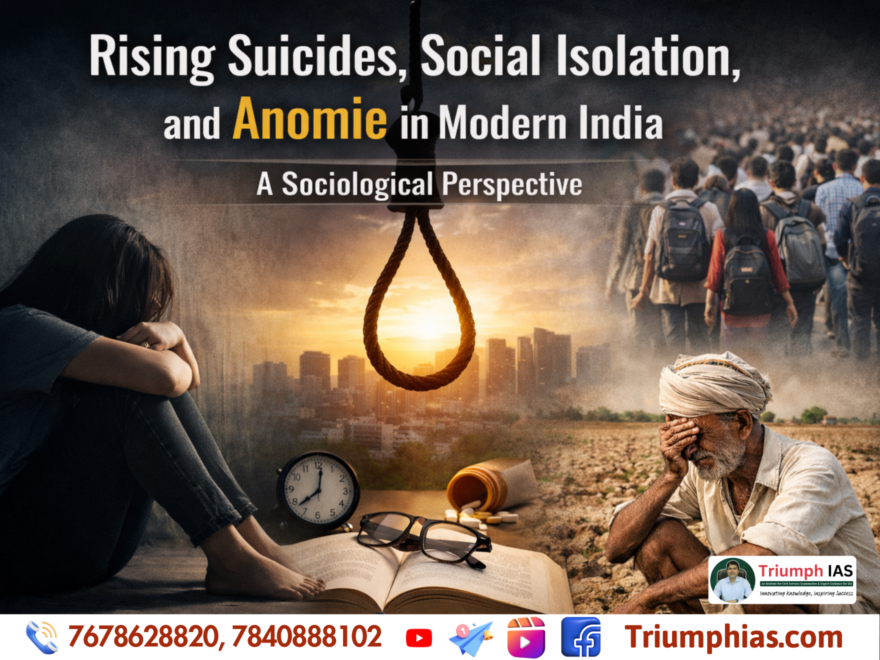
Rising Suicides, Social Isolation and Anomie in Modern India
(Relevant for Sociology Paper 1, Paper 2 , GS Society)
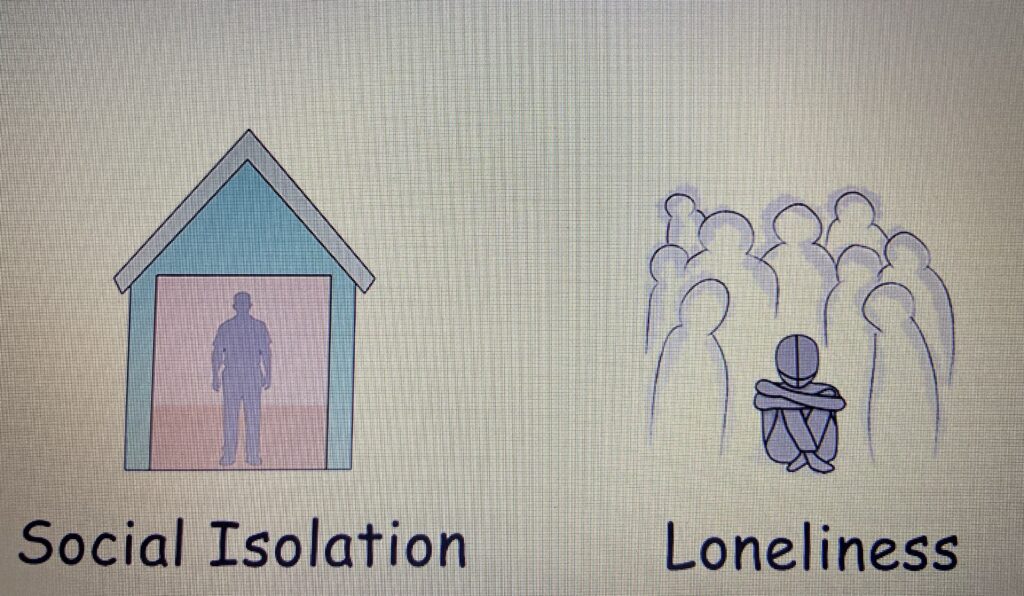
IntroductionIndia’s rapid socio-economic transformation has generated unprecedented opportunities, yet it has also produced deep psychological and social fractures. The rising incidence of suicides, particularly among students, farmers, daily wage earners, and urban professionals, compels a rigorous sociological analysis. Beyond individual pathology, suicide reflects structural strains, weakening social bonds, and normative disorientation in a rapidly changing society. Dimension:Durkheim’s Concept of AnomieThe foundational framework for understanding this phenomenon comes from Émile Durkheim in his classic work Suicide. Durkheim conceptualized suicide not merely as an individual act but as a “social fact.” He identified anomic suicide as occurring during periods of rapid social change, when norms become unclear and individuals experience moral deregulation. Modern India—characterized by liberalization, globalization, digitalization, and aspirational consumerism—has witnessed profound normative shifts. Traditional institutions such as family, caste, and community once provided stable identities and regulatory frameworks. Their weakening, combined with intense competition and material expectations, produces conditions akin to Durkheimian anomie. Social Isolation in an Age of ConnectivityIronically, the digital age has amplified social isolation. Urban migration, nuclear families, gig work, and online interactions often substitute for deep, durable relationships. While connectivity has expanded, meaningful social integration has weakened. In metropolitan centers, anonymity and individualism dominate. The decline of collective solidarity—what Durkheim termed the shift from mechanical to organic solidarity—can generate emotional alienation. For many young aspirants preparing for competitive exams, including civil services, relentless comparison, performance anxiety, and uncertainty heighten psychological vulnerability. The paradox is clear: economic growth coexists with fragile social support systems.
Structural Strains and Aspirational PressuresFrom a structural perspective, Robert K. Merton’s strain theory complements Durkheim. The cultural emphasis on success—education, wealth, status—often outpaces legitimate means available to large segments of the population. When institutional avenues are blocked or uncertain, frustration intensifies. In rural India, agrarian distress, indebtedness, and market volatility compound vulnerability. Among students, the coaching culture, hyper-competition, and fear of failure create emotional precarity. Among urban workers, job insecurity in platform-based and contractual employment increases existential anxiety. Thus, rising suicides must be situated within broader patterns of inequality, unemployment, and social mobility anxieties. Breakdown of Intermediate InstitutionsSociologically, the erosion of intermediary institutions—extended family, community associations, neighborhood networks—reduces buffers against stress. While traditional institutions had their own hierarchies and exclusions, they also offered belonging and emotional security. Contemporary India faces a dual crisis:
The resulting vacuum fosters isolation and despair.
Gendered and Generational DimensionsSuicide patterns reveal gendered and generational trends. Women face domestic violence, patriarchal pressures, and emotional burdens. Men confront expectations of economic provision and stoic masculinity, discouraging help-seeking behavior. Youth, navigating identity in a hyper-competitive society, experience uncertainty about career and relationships. The sociological lens underscores that vulnerability is patterned—not random. Way Forward: Rebuilding Social IntegrationAddressing the crisis requires structural and cultural interventions:
Suicide prevention must move beyond individual counseling to rebuilding social cohesion. As Durkheim emphasized, stronger social integration and moral regulation are essential safeguards.
Conclusion:Rising suicides in modern India are not isolated tragedies but indicators of deeper social dislocation. The interplay of anomie, isolation, inequality, and aspirational strain reveals a society in transition. A sociological understanding situates personal despair within structural realities, urging policies that restore solidarity, equity, and meaning in collective life. |





UPSC Civil Services Mains – Sociology Optional Question
“Rising suicide rates in India reflect conditions of social anomie and weakening social integration.” Critically examine with reference to classical and contemporary sociological theories. (250 words)
To Read more topics, visit: www.triumphias.com/blogs
Read more Blogs:
Class Struggle in the Era of Financialisation and Corporate Concentration
Platform Capitalism, Gig Workers, and New Forms of Alienation
One comment