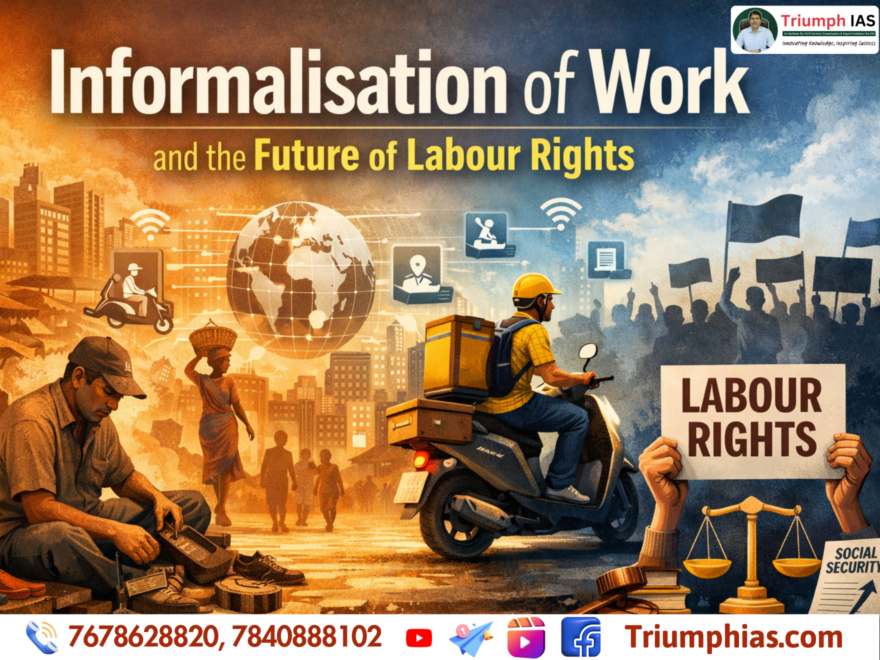
Over the past few decades, the global labour market has undergone a profound transformation. One of the most significant changes has been the informalisation of work, a process through which employment increasingly shifts from secure, regulated jobs to more precarious and unregulated forms of labour. This trend has major implications for labour rights, social protection, and the future of work. From a sociological perspective, informalisation reflects broader structural changes in the economy, including globalization, technological advancement, and the restructuring of production systems.
Dimension:
Informal work broadly refers to employment that lacks formal contracts, job security, social security benefits, and legal protections. Traditionally associated with developing economies, informal employment is now expanding across both developing and developed societies. According to international labour estimates, a large proportion of workers worldwide are engaged in informal work, including street vendors, domestic workers, agricultural labourers, gig workers, and temporary contract employees.
Sociologists view informalisation as a consequence of economic restructuring and neoliberal policy shifts that emphasize labour market flexibility, privatization, and deregulation. Since the late twentieth century, industries have increasingly adopted flexible labour arrangements such as outsourcing, subcontracting, and short-term contracts to reduce costs and remain competitive in the global market. This transformation has weakened the traditional model of stable, long-term employment that was once central to industrial economies.
The rise of the gig economy further illustrates this trend. Digital platforms have created new opportunities for work, but they have also blurred the boundaries between formal and informal labour. Platform-based workers—such as delivery drivers, ride-sharing operators, and freelance digital workers—often operate without formal employment status, which limits their access to labour protections such as minimum wages, insurance, and collective bargaining rights. Sociologists describe this phenomenon as the emergence of a “precariat”, a class of workers characterized by unstable employment and uncertain livelihoods.
Informalisation also has strong gender and social inequality dimensions. Women, migrants, and marginalized communities are disproportionately represented in informal employment. Domestic work, home-based production, and care work—sectors heavily dominated by women—often remain outside formal labour regulations. As a result, informalisation reinforces existing social hierarchies and contributes to persistent patterns of economic inequality.
From the perspective of labour rights, the expansion of informal work presents significant challenges. Traditional labour laws and welfare systems were designed around formal employer–employee relationships. However, as employment becomes more fragmented and decentralized, these frameworks struggle to protect workers effectively. Trade unions, historically a key institution for defending labour rights, also face difficulties organizing workers who are scattered across informal or platform-based jobs.
At the same time, informalisation is not solely a negative phenomenon. For many workers in developing countries, the informal sector provides essential livelihood opportunities in the absence of sufficient formal employment. It can offer flexibility, entrepreneurial opportunities, and entry points for marginalized populations into economic activity. However, without adequate regulation and social protection, informal work often perpetuates insecurity and vulnerability.
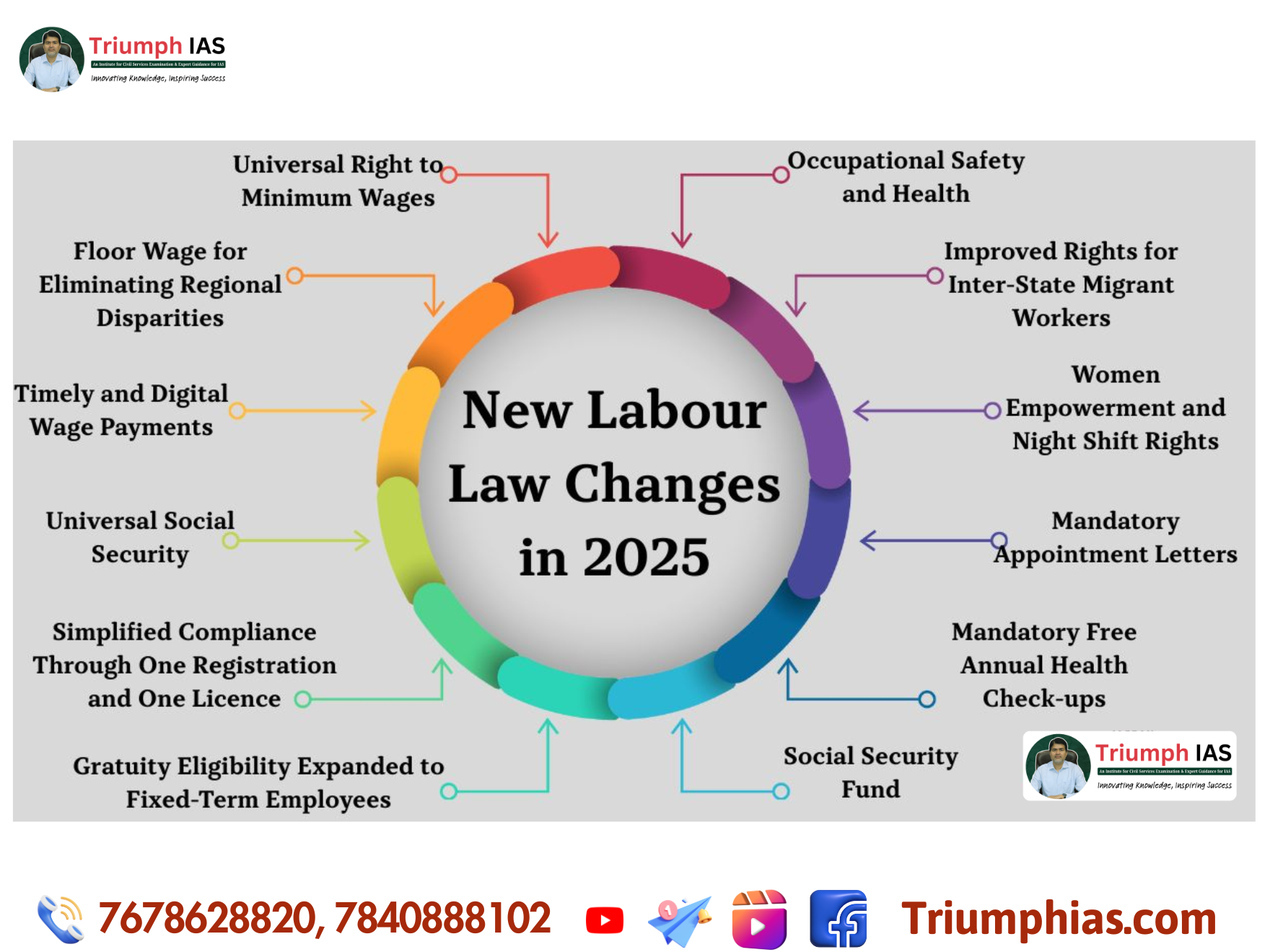
The future of labour rights therefore depends on how societies adapt their institutional frameworks to this evolving labour landscape. Governments and international organizations are increasingly exploring policies such as universal social protection, labour law reforms, and recognition of gig workers as employees. Initiatives aimed at extending social security coverage, strengthening worker associations, and promoting decent work standards are essential in addressing the vulnerabilities associated with informal employment.
From a sociological standpoint, the informalisation of work reflects deeper transformations in capitalism and labour relations. It raises fundamental questions about the nature of employment, the role of the state in protecting workers, and the balance between economic flexibility and social justice. Ensuring labour rights in the twenty-first century will require innovative policy approaches that recognize the realities of a changing world of work while safeguarding the dignity and security of workers.
Conclusion
In conclusion, informalisation is reshaping the global labour landscape and challenging traditional notions of employment and labour rights. Understanding this phenomenon through a sociological lens is crucial for designing inclusive policies that promote both economic efficiency and social equity. The future of labour rights will depend on how effectively societies respond to these transformations.
UPSC Civil Services (Mains) Question
Informalisation of labour is one of the defining features of contemporary capitalism.” Examine its causes and implications for labour rights and social inequality. (250 words)




2 comments