


Relevant for Sociology Optional Paper 1, Paper 2, and GS Paper I (Indian Society)
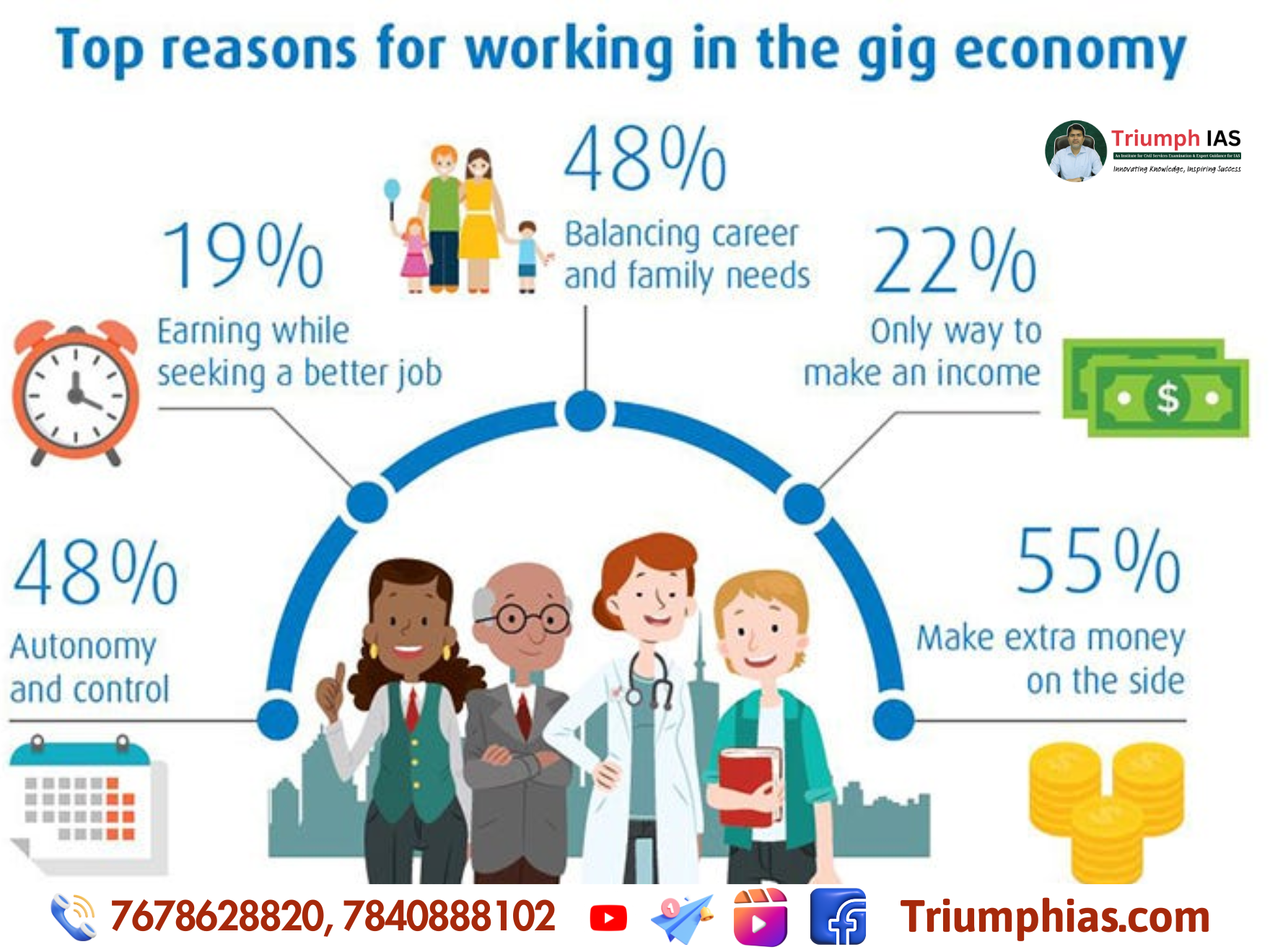

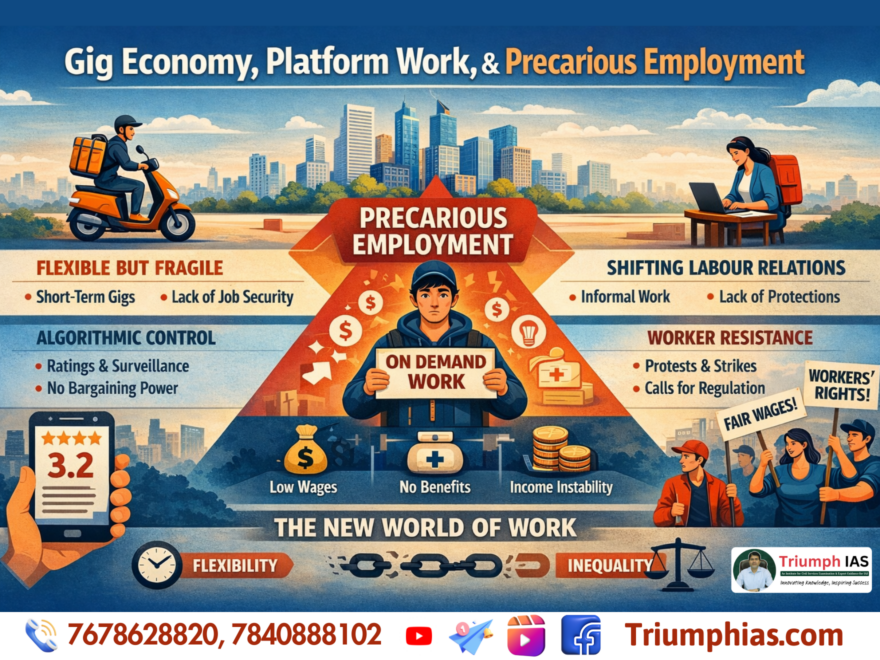
IntroductionThe rapid expansion of digital platforms has transformed the nature of work across the world. The rise of the gig economy—characterized by short-term, flexible, and task-based employment—has become a defining feature of contemporary labour markets. Platforms such as ride-hailing, food delivery, and freelance marketplaces connect workers and consumers through digital interfaces, reshaping traditional employment relations. From a sociological perspective, this transformation raises important questions regarding labour security, class relations, and the changing structure of work in the 21st century. DimensionThe gig economy refers to a labour market where individuals work as independent contractors or freelancers rather than as permanent employees. Digital platforms act as intermediaries that match workers with customers. While this system promises flexibility and autonomy, it also introduces a new form of labour vulnerability known as precarious employment. Precarious employment is marked by instability, lack of job security, irregular income, and limited access to social protection such as health insurance or pensions. Sociologists interpret the growth of platform work as part of the broader transformation of capitalism in the digital age. Scholars argue that platform companies rely on algorithmic management to monitor and control workers. Instead of traditional supervisors, algorithms allocate tasks, determine performance ratings, and regulate pay. This system increases efficiency but also reduces workers’ bargaining power. Workers often have little control over wages, working hours, or working conditions. Another key sociological concern is the informalisation of labour. Platform workers are usually classified as “independent contractors” rather than employees. This classification allows companies to avoid labour regulations, minimum wage requirements, and benefits. Consequently, workers bear the risks associated with fluctuating demand and market uncertainties. Sociologists describe this process as the “Uberisation” of labour, where digital platforms shift economic risks from corporations to individual workers. The gig economy also reflects broader structural changes in global labour markets. Economic liberalisation, technological innovation, and urbanisation have increased the demand for flexible labour arrangements. In developing countries like India, platform work has expanded rapidly because it provides income opportunities for a large informal workforce. For many workers, gig work functions as a supplementary source of income rather than a primary occupation. However, the flexibility offered by the gig economy often masks deeper inequalities. Workers face unpredictable earnings, long working hours, and intense competition due to low entry barriers. Rating systems used by platforms further discipline workers by linking customer feedback to continued employment opportunities. A single poor rating can reduce visibility on the platform, thereby limiting income prospects. From a sociological standpoint, the gig economy challenges the traditional concept of the employment relationship. Historically, industrial societies were structured around stable wage labour and formal employment contracts. In contrast, platform capitalism fragments work into discrete tasks and temporary engagements. This shift has implications for class formation, labour rights, and collective action. Gig workers are often geographically dispersed and lack institutional mechanisms such as trade unions to articulate their demands. Despite these challenges, new forms of worker mobilisation are emerging. Across different countries, gig workers have organised protests, legal challenges, and digital collectives to demand fair wages and labour protections. Governments and policy institutions are also debating regulatory frameworks to ensure social security for platform workers. In India, initiatives such as the Code on Social Security, 2020 aim to extend certain welfare benefits to gig and platform workers, although implementation remains a challenge.
ConclusionIn conclusion, the gig economy represents a significant transformation in the sociology of work. While digital platforms create new opportunities for employment and entrepreneurship, they also generate forms of precarious labour that challenge traditional labour protections. Sociological analysis helps reveal the underlying power relations and structural inequalities embedded within platform-based labour systems. Understanding these dynamics is essential for designing policies that balance technological innovation with social justice and labour welfare. |

UPSC Civil Services (Mains) Question
“The rise of the gig economy reflects the transformation of labour relations in the digital age.” Discuss the sociological implications of platform work and precarious employment. (250 words)
To Read more topics, visit: www.triumphias.com/blogs
Read more Blogs:
3 comments