


For Women, Unseen Battles at the Workplace
(Relevant for Sociology Paper II: Challenges of Social Transformation)
IntroductionIn the 21st century, women in India and across the globe are breaking barriers by entering paid employment, leadership positions, and entrepreneurial ventures. Yet, beneath this progress lies a hidden reality: the unseen battles that women fight every day at workplaces. These range from gender discrimination, sexual harassment, and the glass ceiling, to subtler forms like unpaid care burdens, occupational segregation, and gender wage gaps. From “Second Sex” to Wage Workers
Sociological Analysis
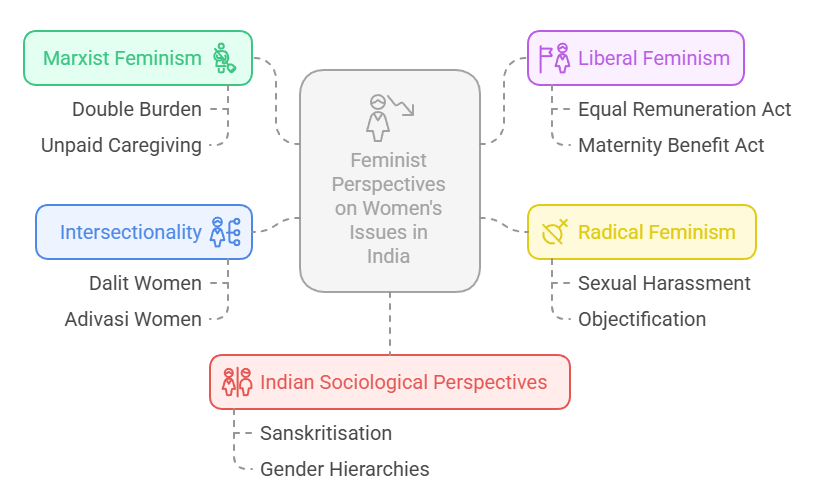
Marxist feminists argue that capitalism benefits from women’s double burden: wage work in the market and unpaid domestic work at home. In India, women contribute to the economy as garment workers, farm labourers, or IT employees, but remain underpaid and overworked. Their unpaid caregiving sustains the workforce but remains invisible.
Liberal feminists emphasise women’s right to equal education, training, and professional opportunities. The presence of policies like the Equal Remuneration Act (1976) and Maternity Benefit (Amendment) Act (2017) reflects this framework. Yet, gaps in implementation and persistent stereotypes hinder true equality.
Radical feminists highlight patriarchy as the root cause of women’s subordination. Sexual harassment at workplace (POSH Act, 2013), objectification in corporate culture, and subtle biases in promotions show how deep-seated patriarchy operates even within modern office spaces.
Women in India face layered disadvantages. Dalit women or Adivasi women in informal labour markets suffer discrimination not only as women but also due to caste and class. Sociological analysis must capture this intersectional oppression.
N. Srinivas’s concept of Sanskritisation shows how women in rural India are pressured to embody traditional roles to elevate caste status, restricting mobility. André Béteille’s studies on inequality highlight how institutions reproduce gender hierarchies. Unseen Battles Women Face at the Workplace
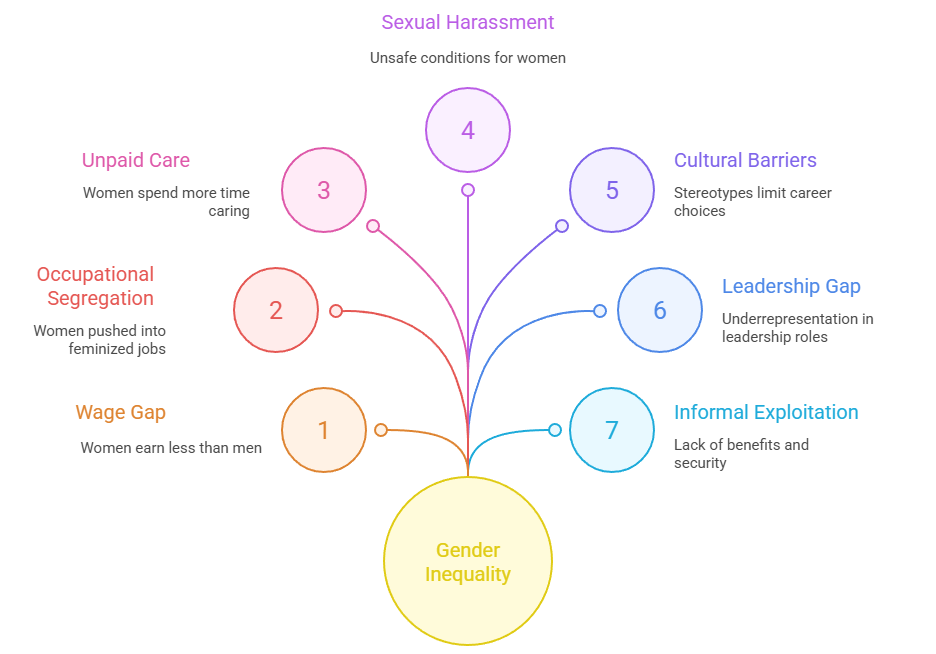
Despite equal qualifications, women in India earn 20–30% less than men on average (ILO, 2022). Wage inequality is more severe in informal sectors like domestic work, construction, and agriculture.
Women are pushed into “feminised” jobs like nursing, teaching, or clerical work, while men dominate STEM, leadership, and managerial roles. This reinforces the glass ceiling.
Women juggle office work with unpaid domestic duties. NSSO data shows Indian women spend five hours daily on unpaid care work, compared to men’s 30 minutes. This “double shift” creates stress and limits career advancement.
The POSH Act (2013) legally protects women, but implementation is patchy. Reports of harassment in offices, factories, and even educational institutions reveal the unsafe conditions many women endure.
Society often expects women to “quit jobs after marriage” or “sacrifice careers for family.” Women who pursue careers face stigma as “selfish” or “neglectful mothers.” Such stereotypes act as invisible constraints.
Only 17% of board members in Indian companies are women (NSE Report, 2023). Even in bureaucracy, judiciary, and politics, women are underrepresented. This leadership gap reflects systemic barriers to mobility.
Over 90% of Indian women workers are in the informal sector—as construction labourers, domestic workers, or street vendors—without contracts, maternity benefits, or social security. Their struggles remain hidden from mainstream policy debates. Impacts of Workplace Inequality on Indian Society
Policy Framework and Interventions
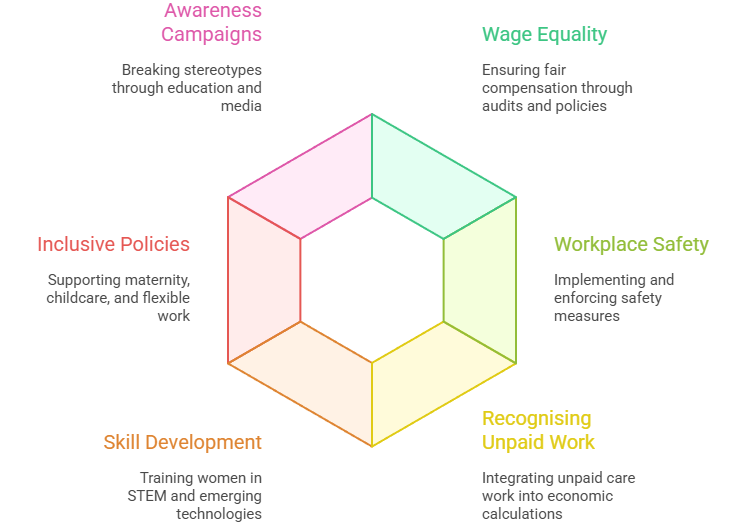
Despite these, implementation gaps, patriarchal attitudes, and lack of awareness reduce effectiveness. Way Forward
ConclusionThe battles women fight at the workplace is often invisible but deeply consequential. They range from wage discrimination and harassment to cultural stereotypes and double burdens. Recognising these struggles requires moving beyond token measures toward a structural transformation of workplaces and society. Women’s issues at work are not just personal or professional—they are systemic, rooted in patriarchy and inequality. The ultimate goal should be to ensure that women are not just included in the workforce but are empowered, respected, and given equal opportunities to shape India’s future. PYQsPaper II
|



To Read more topics, visit: www.triumphias.com/blogs
2 comments