Childhood is meant to be a stage of innocence and protection, yet in India, rising cases of child sexual abuse (CSA) show how deeply vulnerable children remain. To address this, the Protection of Children from Sexual Offences (POCSO) Act, 2012 was enacted, providing a comprehensive legal framework against child sexual abuse, harassment, and exploitation.
Recently, the Karnataka High Court reaffirmed that the POCSO Act is “gender neutral”, meaning it applies to both boys and girls below 18 years of age. This ruling has reignited discussions on child rights, gender justice, and social awareness. From a sociological perspective, the POCSO Act highlights the intersection of law, family, education, patriarchy, and social norms in tackling one of the most pressing issues in contemporary Indian society.
Objectives of the POCSO Act
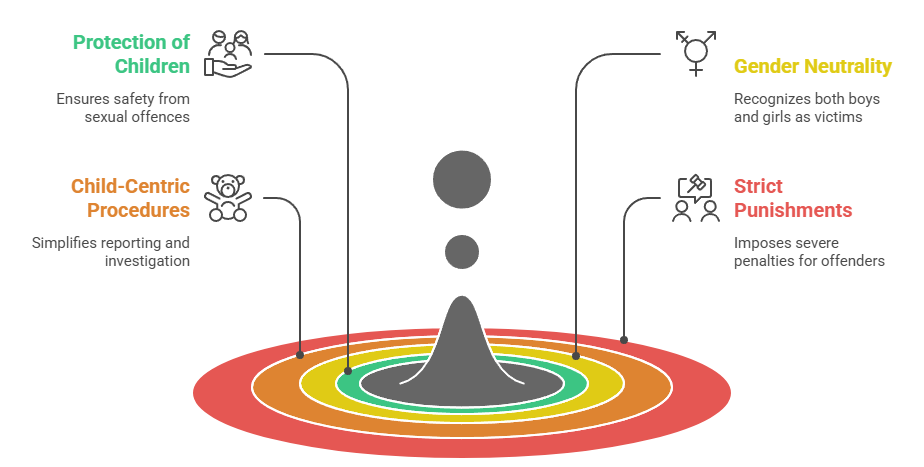
Protection of Children: To safeguard children (defined as any person below 18 years) from offences of sexual assault, harassment, and pornography.
Gender Neutrality: Recognizes that both boys and girls can be victims of abuse.
Child-Centric Procedures: Simplifies reporting and ensures child-friendly investigation and trial.
Strict Punishments: Includes imprisonment and, in aggravated cases, death penalty for perpetrators.
Procedural Safeguards under POCSO
Special Courts: Establishment of exclusive courts with in-camera proceedings to protect the child’s identity.
Mandatory Reporting: All citizens, especially doctors, teachers, and institutions, must report suspected cases of abuse.
Child-Friendly Language: Police and courts must use simple language while recording statements.
Protection from Retaliation: Victims and their families are safeguarded from intimidation.
These measures are intended to reduce stigma and increase reporting, but challenges remain in enforcement.
Child Sexual Abuse in India:
Prevalence:NCRB 2023 reported over 1.6 lakh cases under POCSO, indicating both rising crime and improved reporting.
Hidden Nature: Due to family honor, stigma, and fear of retaliation, many cases go unreported.
Perpetrators: Studies show that in most cases, the abuser is a known person—family member, neighbor, or teacher, making reporting difficult.
Digital Exploitation:Online child pornography and grooming have expanded the scope of abuse in the digital age.
Sociological Analysis
Functionalist Perspective: From a structural-functionalist view (Durkheim), laws like POCSO serve as mechanisms of social regulation. They reinforce collective conscience by criminalizing acts considered deviant. By punishing offenders, society seeks to maintain moral boundaries.
Conflict Perspective: Marxist and feminist scholars argue that child sexual abuse stems from power hierarchies—patriarchy, age-based dominance, and class inequalities. POCSO attempts to redistribute power by giving legal voice to children, but gaps in access to justice remain, especially for marginalized children from Dalit, tribal, and poor families.
Symbolic Interactionism: CSA leaves lasting trauma on children’s self-image. Labeling theory explains how victims may internalize shame, leading to social withdrawal. A child-friendly justice system helps reconstruct positive self-identities, countering stigma.
Feminist Perspective: Feminists highlight that sexual offences against children are not just individual acts but a reflection of patriarchal culture where bodily autonomy is denied. The gender-neutral clause ensures boys are recognized as victims too, expanding the feminist framework to all genders.
Challenges in Implementation
Underreporting: Families hesitate to report cases to protect “honor.”
Police Insensitivity: Victims often face hostile questioning.
Judicial Delays: Prolonged trials can retraumatize children.
Misuse Concerns: Some fear false cases, though data shows misuse is minimal compared to genuine cases.
Awareness Gap: Many rural communities lack awareness of POCSO provisions.
Case Studies
Unnao Case (2017): Highlighted how political influence can obstruct justice in sexual assault cases.
Karnataka High Court (2025): Reaffirmed that POCSO is gender neutral, ensuring boys are not excluded from protection.
Supreme Court on Consent: Clarified that a child below 18 cannot legally consent to sexual activity, strengthening safeguards.
Ethical Dimensions
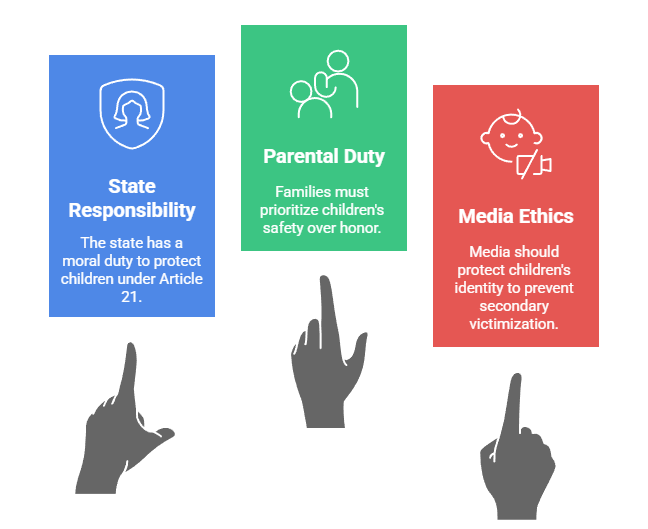
State Responsibility: Protecting children is not just legal but a moral duty of the state under Article 21 (Right to Life).
Parental Duty: Families must prioritize children’s safety over notions of honor.
Media Ethics: Reporting of POCSO cases must protect the child’s identity to prevent secondary victimization.
Way Forward
Awareness Campaigns: Grassroots programs to educate communities about child rights and mandatory reporting.
Police and Judicial Training: Sensitization programs to handle cases with empathy.
School-Based Interventions: Comprehensive sexuality education to help children identify and report abuse.
Digital Safety Laws: Stricter checks on child pornography and online grooming.
Counseling Support: Psychological care for survivors to overcome trauma.
Conclusion
The POCSO Act, 2012 is one of India’s most significant legal steps in protecting children from sexual abuse. However, laws alone cannot end abuse—social attitudes, patriarchal mindsets, and silence within families must change.
Sociology reminds us that abuse is not merely an individual deviance but a structural problem of power, inequality, and social norms. Combating it requires collective efforts—legal, social, and ethical.
As the saying goes, “The true measure of a society is how it treats its most vulnerable.” Protecting children must remain at the heart of India’s journey towards justice and equality.
PYQs
Paper II
Construct a sociological narrative on the increasing trend of child abuse in India. (2018)