


Digital Labour Platforms and the Sociology of Work in Contemporary India: A Current Affairs Perspective
(Relevant for Sociology Paper I and II)
IntroductionOver the past decade, India has witnessed an unprecedented expansion of digital labour platforms—from ride‑hailing services like Uber and Ola to food delivery platforms such as Swiggy and Zomato, and app‑based domestic and care services. Recent policy debates around gig‑worker social security, platform accountability, and algorithmic control have brought the gig economy back into the spotlight of current affairs. The Code on Social Security, state‑level gig worker welfare boards, and judicial observations on platform labour reflect the growing recognition that platform‑mediated work is reshaping India’s labour landscape. From a Sociology Optional perspective, the gig economy is not merely an economic phenomenon but a profound social transformation affecting class relations, labour identities, power structures, and everyday life. This blog critically examines digital labour platforms in India through classical and contemporary sociological theories, linking current policy debates with broader sociological concerns such as precarity, informalisation, social stratification, and the future of work. Understanding Digital Labour Platforms as a Social InstitutionSociology treats work as a core social institution that structures identities, status, and social relationships. Digital platforms have reconfigured this institution by acting as intermediaries between workers and consumers while denying the status of employer. Unlike traditional factory or office settings, platform work is:
This transformation reflects what sociologists describe as the platformisation of labour, where digital technologies mediate economic activity and social relations. In India, this shift intersects with pre‑existing informality, making the sociological analysis particularly complex. Historical Context: Informality and Labour in IndiaTo understand the gig economy sociologically, it is essential to locate it within India’s long history of informal labour. Even before digital platforms, over 85% of India’s workforce operated outside formal contracts, social security, and legal protections. Sociologists like Jan Breman have described Indian labour as characterised by footloose labour, marked by insecurity, migration, and weak bargaining power. Digital platforms did not create informality; instead, they rebranded and technologised it. The difference lies in:
Thus, the gig economy represents continuity as well as change—a crucial analytical insight for Sociology Optional answers. Theoretical Perspectives on Platform Labour
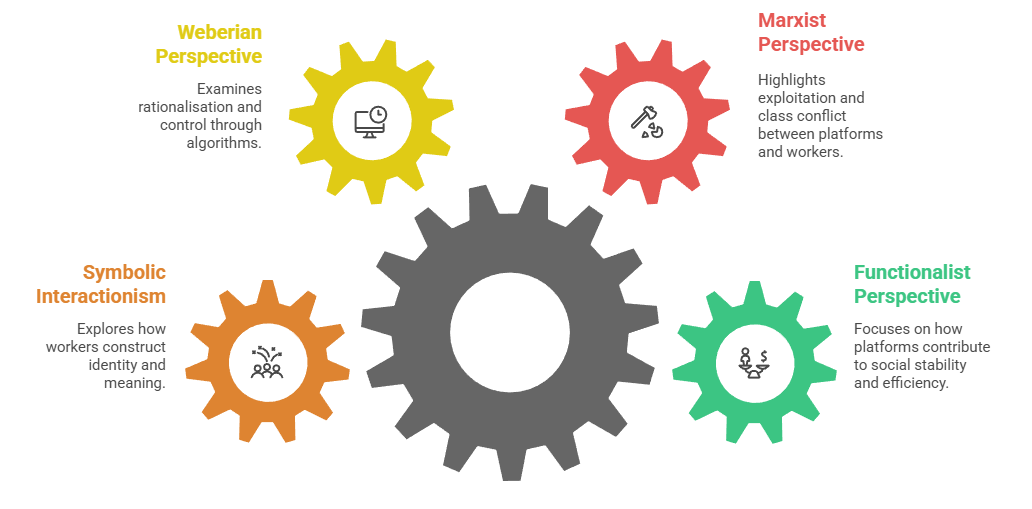
Functionalist PerspectiveFrom a functionalist viewpoint, digital labour platforms perform certain stabilising functions in society:
By offering flexible work, platforms appear to integrate diverse populations into the economic system. However, functionalism also asks whether institutions promote social equilibrium. The lack of social security, long working hours, and income volatility suggest emerging dysfunctions that may destabilise families and communities. Marxist and Conflict PerspectiveMarxist sociology provides one of the most powerful lenses to analyse gig work. Platforms own the means of digital production—apps, data, algorithms—while workers supply labour without ownership or control. Key conflict‑based features include:
Platform workers are often described as a new form of the precariat, a class marked by insecurity, lack of collective identity, and limited upward mobility. Current strikes by delivery workers and ride‑hailing drivers reflect growing class consciousness, making this a live example of conflict theory in action. Weberian Perspective: Rationalisation and ControlMax Weber’s concept of rationalisation is highly relevant to platform labour. Algorithms represent an advanced form of rational‑legal authority:
This creates what Weber might call a new iron cage, where workers experience control without direct human interaction. Sociologically, this raises concerns about alienation, dignity, and autonomy. Symbolic Interactionism and Worker IdentityAt the micro level, symbolic interactionism helps us understand how gig workers construct meaning and identity:
Caste, Class, and Platform WorkDespite claims of neutrality, digital platforms operate within deeply unequal social structures. In India:
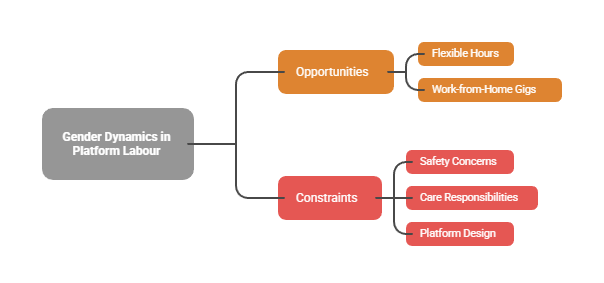
While apps do not ask for caste, social networks, residential segregation, and access to capital indirectly shape who enters platform work. Sociologically, this demonstrates how structural inequalities adapt rather than disappear under technological change. Gender Dimensions of the Gig Economy
Gender remains a critical axis of analysis. Platform work has mixed implications for women: Opportunities
Constraints
Thus, while digital labour platforms promise empowerment, they often reinforce existing patriarchal structures. Migration, Urbanisation, and Platform LabourPlatform work is closely linked to rural‑urban migration. Many gig workers are first‑generation migrants who:
This has implications for:
From a sociological standpoint, platforms are reshaping the experience of migration, turning cities into spaces of circulatory labour rather than long‑term settlement. State, Policy, and the Question of RegulationRecent current affairs highlight increasing state engagement with gig labour:
The sociological question is whether the state acts as:
This reflects the broader debate on the changing role of the state under neoliberalism, a recurring theme in UPSC Sociology Optional. Collective Action and New Forms of SolidarityDespite individualisation, gig workers are experimenting with new forms of collective action:
These movements challenge the assumption that platform labour is inherently unorganisable. Sociologically, they represent evolving forms of class consciousness in the digital age. Ethical and Social Implications of Algorithmic ManagementAlgorithmic decision‑making raises ethical concerns:
Sociology helps foreground these human costs, moving the debate beyond efficiency to questions of justice, dignity, and well‑being. ConclusionDigital labour platforms are transforming work in contemporary India, but not in socially neutral ways. A sociological lens reveals how technology intersects with class, caste, gender, and state power to reshape labour relations. As policy debates continue, sociology remains essential to understanding not just how platforms function, but who they benefit and at what social cost. For students of Sociology Optional, the gig economy offers a rich, contemporary case study that bridges theory and reality—making it an indispensable topic for examination and critical inquiry. |


To Read more topics, visit: www.triumphias.com/blogs
Read more Blogs:
Contemporary India at the Crossroads: A Sociological Analysis of State, Market, and Society
2 comments