



Cultivating Knowledge Societies: A Sociological Perspective on Innovation and Development
(Relevant for Sociology Paper 1: Politics and Society)
Introduction: Cultivating Knowledge SocietiesIn today’s world, knowledge is a key driver of economic growth, social progress, and innovation. However, creating a thriving knowledge economy involves far more than just incentives or financial investments. It requires an understanding of the social, cultural, and institutional factors that cultivate knowledge. Drawing on insights from Nobel laureate Joel Mokyr and sociological theories, this blog explores the complex relationship between knowledge, innovation, and society. Beyond Incentives: The Social Nature of Knowledge CreationA common belief is that innovation can be triggered simply by providing the right incentives—money, market demand, or government support. While these matter, they are not enough. Innovation depends on two crucial factors: necessity and the capacity to respond to that necessity. The presence of a problem or need alone does not guarantee a solution. Societies must have the social institutions and cultural conditions to identify problems, experiment with ideas, and apply knowledge. This view highlights knowledge as a social product. It grows through collective efforts, shared norms, and institutional support, not just through individual brilliance or market forces. Propositional vs. Prescriptive Knowledge: The Dynamic DuoKnowledge comes in two main forms:
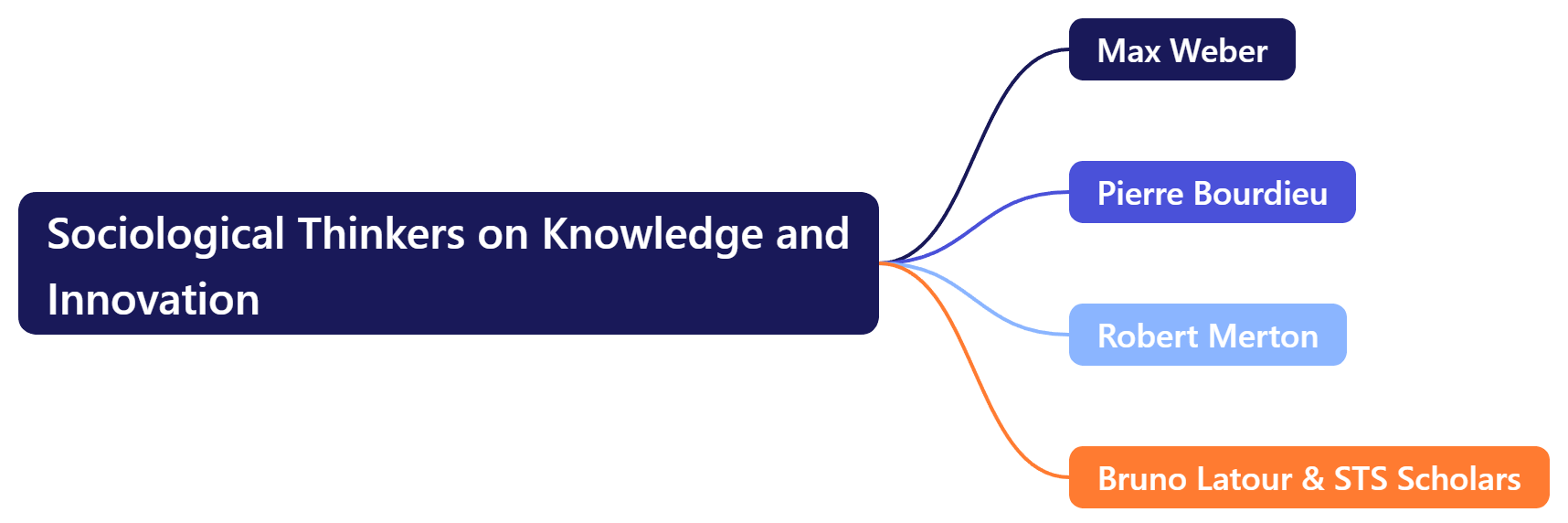
Sustained innovation depends on a feedback loop between these types. Scientific discoveries inspire new inventions, and inventions, in turn, raise new scientific questions. For innovation to flourish, societies need strong connections between research institutions and industries, ensuring science informs practice and vice versa. The Role of Elite Culture and InstitutionsInnovation doesn’t happen in isolation. It requires a culture that values inquiry and a network of institutions that nurture talent. In early modern Europe, for example, elite networks such as universities and academies created an environment where ideas could circulate freely. Competition among fragmented political states also spurred intellectual dynamism. This elite culture promoted meritocracy and openness, crucial for spotting and developing talent. The sociological takeaway is that building knowledge economies requires cultivating institutional cultures that reward creativity and encourage collaboration across borders and disciplines. Sociological Thinkers on Knowledge and Innovation
Classical and modern sociologists have long studied how societies create and manage knowledge.
These thinkers collectively demonstrate that knowledge is not just about facts, but also about social structures, power relations, and cultural norms. The Indian Context: Potential and ChallengesIndia has a rich history of intellectual traditions and political pluralism. Historically, knowledge circulated across regions, supported by vibrant scholarly networks. Yet, today, India faces structural gaps between scientific research and industrial application. Engineering and science often operate in silos, and institutional fragmentation hinders collaboration. To build a sustainable knowledge economy, India must focus on bridging these divides, fostering merit-based talent recognition, and encouraging fluid exchange of ideas between academia, industry, and government. The Ambivalent Role of the StateThe state can either enable or restrict innovation. Some scholars argue that too much state control stifles creativity and slows progress. However, examples like contemporary China show that strategic state involvement can accelerate innovation if combined with institutional autonomy and competitive incentives. Sociologically, the challenge is balancing regulation and freedom, enabling institutions and markets to function effectively while providing necessary support. Knowledge as a Social Force
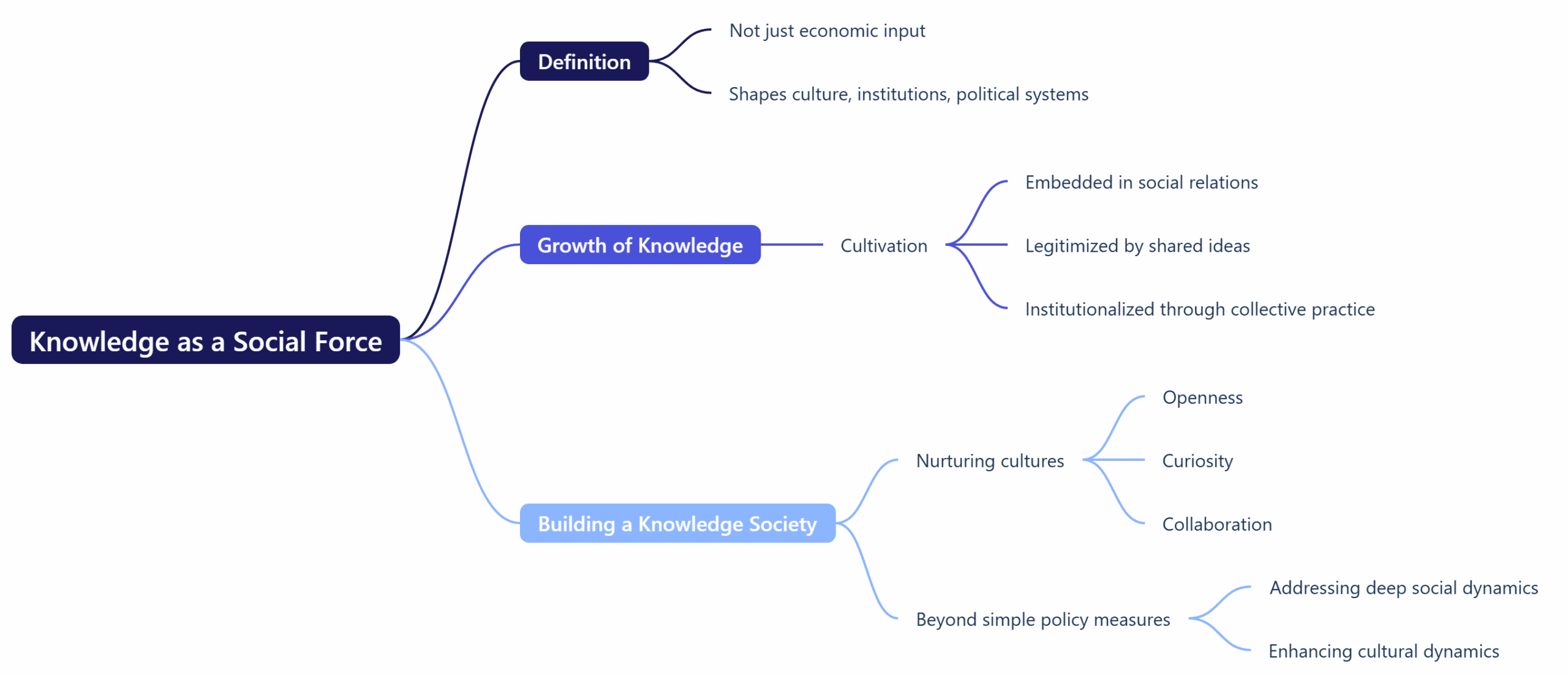
Knowledge is not just an economic input; it is a social force that shapes culture, institutions, and political systems. It grows through cultivation—embedded in social relations, legitimized by shared ideas, and institutionalized through collective practice. Building a knowledge society requires nurturing cultures and institutions that prize openness, curiosity, and collaboration. This goes beyond simple policy measures to address deep social and cultural dynamics. Conclusion: Towards a Sustained Culture of InnovationBecoming a knowledge-driven society is a complex, long-term process. It involves cultivating elite cultures, connecting scientific discovery with practical application, and balancing state involvement. Most importantly, knowledge must be understood as a social creation. Only by addressing cultural, institutional, and structural factors can societies transform necessity into innovation, fostering economic growth and social progress. |


To Read more topics, visit: www.triumphias.com/blogs
Read more Blogs:
Microfinance in India: A Sociological Lens on Inclusion, Inequality, and Empowerment
When Smart Cities Turned Into Sinking Streets: A Sociological Critique of Urban Development in India
One comment