


When Smart Cities Turned Into Sinking Streets: A Sociological Critique of Urban Development in India
(Relevant for Sociology Paper 2: Industrialization and Urbanization in India)
IntroductionA decade after the launch of India’s Smart Cities Mission (SCM), aimed at transforming 100 urban centers into models of efficiency, sustainability, and technological advancement, the country has witnessed recurring urban floods that expose the fragility of its urban infrastructure. From a sociological standpoint, the SCM highlights the intersection of urbanization, governance, and social inequality, raising critical questions about how policy priorities shape urban life. Thinkers like Henri Lefebvre and Manuel Castells provide insights into the production of urban space and the implications of selective modernization, while David Harvey’s ideas on accumulation by dispossession resonate with critiques of elite-focused urban development. This blog explores the SCM’s achievements, structural challenges, environmental vulnerabilities, and the sociological implications of India’s urban transformation. Smart Cities Mission: Vision and Objectives
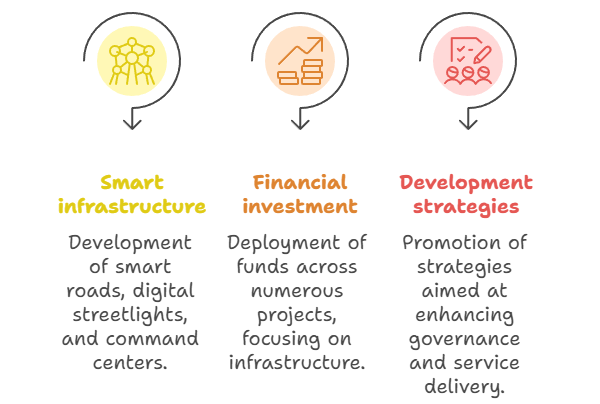
Launched in June 2015, the SCM sought to create urban spaces that are citizen-friendly, technologically advanced, and sustainable, integrating with programs like AMRUT, Swachh Bharat, Digital India, and Housing for All. Key initiatives included:
Despite these efforts, the SCM reveals a tension between aesthetic modernization and resilient urban planning—a concern that has profound sociological implications. Urban Pressures and Sociological ImplicationsIndia’s cities face unprecedented urban pressures. According to the World Bank, India’s urban population is projected to nearly double from 480 million in 2020 to 951 million by 2050. Rapid growth has produced several challenges:
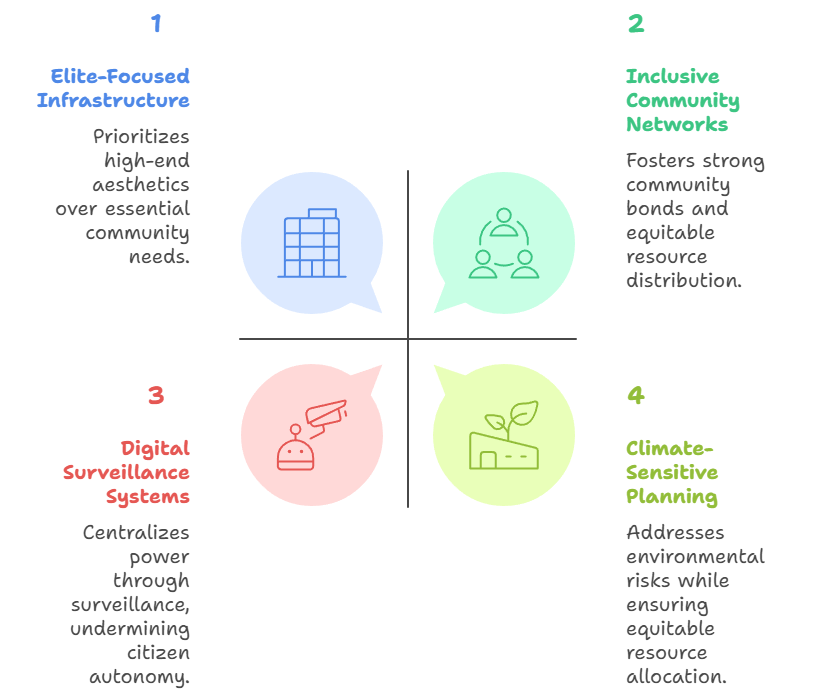
From a sociological perspective, Louis Wirth’s urbanism theory suggests that high-density urban environments intensify social differentiation and stress, while informal settlements emerge as coping strategies for marginalized populations. These settlements are often the most vulnerable to urban flooding and environmental shocks. Shifted Priorities: Cosmetic Upgrades over ResilienceThe SCM’s investments have often prioritized ‘islands of smartness’, including digitized streetlights, flyover refurbishments, and centralized command centers. Core issues such as flood management, drainage systems, and affordable housing remained largely unaddressed.
Structural and Governance ChallengesThe SCM’s governance model involves Special Purpose Vehicles (SPVs)—corporate entities led by bureaucrats or private stakeholders—bypassing elected municipal bodies. Sociologically, this raises concerns about democratic accountability and citizen participation.
Smart Cities and Flood ManagementFlooding highlights the SCM’s vulnerability to environmental risks. The Climate Smart Cities Assessment Framework (CSCAF) evaluates urban readiness for climate change, including flood mitigation. Key elements include:
However, implementation gaps and selective attention to high-visibility projects leave cities exposed, showing that technological advancement alone cannot substitute comprehensive ecological planning. Sociological Perspectives on Urban Vulnerability
Way Forward: Creating Resilient Urban Spaces
Sociological Implications of Smart Cities
ConclusionThe Smart Cities Mission illustrates the complex interplay between urban planning, governance, and social inequality in India. While digital infrastructure and aesthetic modernization showcase progress, the persistent vulnerabilities to flooding expose structural weaknesses and selective prioritization. From a sociological perspective, the SCM demonstrates the risks of top-down, technocratic urbanism that neglects equitable participation, environmental sustainability, and social inclusion. Thinkers such as Henri Lefebvre, David Harvey, Manuel Castells, and Ulrich Beck offer critical frameworks to understand how urbanization and policy interventions shape social relations, inequalities, and resilience. For India’s urban future, it is imperative to integrate inclusive planning, resilient infrastructure, green solutions, and citizen participation, ensuring that the promise of smart cities translates into truly sustainable and socially equitable urban spaces. Only then can cities transform from “sinking streets” into models of resilience, inclusivity, and urban justice. |



To Read more topics, visit: www.triumphias.com/blogs
Read more Blogs:
The Waqf Amendment Act 2025: A Sociological Exploration of Religion, Law, and State Power in India
One comment