


Beyond Legal Recognition: A Sociological Perspective on Transgender Inclusion in India
(Relevant for Sociology Paper 1: Stratification and Mobility)
IntroductionIn recent years, India has witnessed a growing recognition of transgender rights, anchored in legal reforms, judicial pronouncements, and institutional policies. The National Human Rights Commission’s National Conference on Transgender Rights symbolizes this progressive shift. However, despite such advancements, the transgender community continues to grapple with systemic marginalization, cultural exclusion, and economic vulnerability. Understanding Transgender Identity: A Social ConstructionSociologically, gender is not merely a biological trait but a socially constructed identity. The concept of transgenderism disrupts the conventional binary of male and female, compelling society to re-evaluate notions of gender roles, identity, and legitimacy. According to the Transgender Persons (Protection of Rights) Act, 2019, a transgender person is someone whose gender identity does not align with the gender assigned at birth. This legal definition embraces a range of identities, including intersex, gender-queer, hijras, kinnars, jogtas, and others. Theoretical perspectives such as Judith Butler’s theory of gender performativity help us understand how gender is enacted through repeated social performances, rather than determined biologically. In this framework, transgender identities challenge the rigidity of gender binaries and demand societal acceptance of diversity. The Legal and Constitutional Framework: A Rights-Based ApproachIndia has taken notable steps to protect the rights of transgender persons through both legislative action and judicial intervention. Key Milestones:
Despite this progressive framework, a gap persists between legal entitlements and social realities, pointing toward deeper structural and institutional barriers. Persistent Challenges: The Lived Reality of Transgender Persons
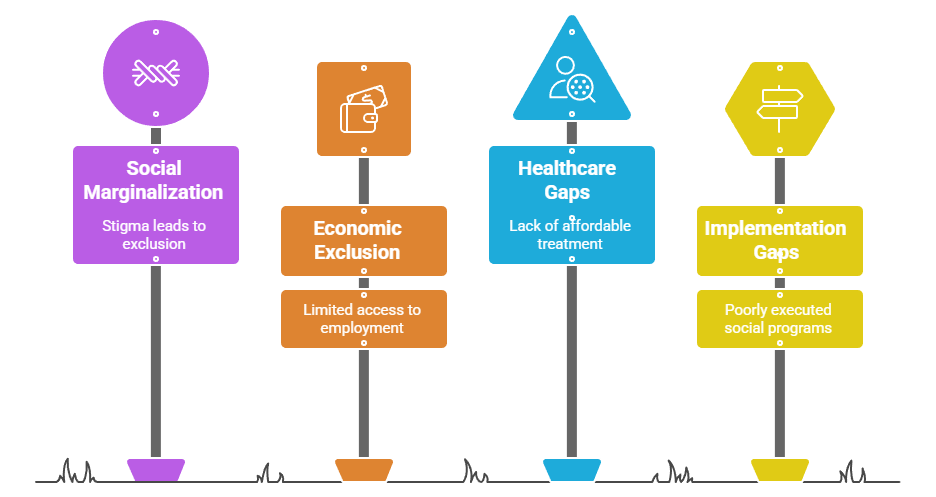
Transgender persons often face lifelong discrimination, beginning from familial rejection to societal exclusion. Stigma, prejudice, and transphobia manifest in bullying, name-calling, and physical violence. Many transgender children are pushed out of schools, and adults face ostracization in housing, relationships, and healthcare. The NALSA report noted that 27% of transgender persons were denied healthcare due to their gender identity. The 2011 Census revealed a literacy rate of only 56.1% among transgender persons—far below the national average of 74%.
Transgender persons are often forced into precarious livelihoods such as begging or sex work due to limited access to formal employment. Despite constitutional guarantees of equality, 92% of transgender persons face economic exclusion, and 48% remain unemployed (NHRC 2018; ILO 2022). Workplace discrimination, lack of gender-neutral facilities, and inadequate legal safeguards contribute to their exclusion. Although the RBI’s 2024 circular permitting joint bank accounts for transgender persons is commendable, awareness and institutional readiness remain lacking.
Access to gender-affirming healthcare is a critical need, but affordability and availability are major constraints. Treatments often cost ₹2–5 lakh, and while Ayushman Bharat TG Plus provides insurance, it suffers from poor outreach and coverage. The lack of mental health support exacerbates vulnerability. Many transgender persons suffer from depression, anxiety, and suicidal ideation due to chronic rejection, abuse, and isolation.
While the Garima Greh scheme offers shelter homes and the SMILE scheme aims at rehabilitation and skill development, they remain underfunded and poorly implemented. Issues like police harassment, delayed ID certifications, and lack of state-level coordination hinder the efficacy of these programs. Moreover, intersectional exclusion—based on caste, class, region, and age—further compounds the problems of transgender individuals. For instance, elder transgender persons are often denied access to geriatric care, while transgender children face institutional neglect. Sociological Analysis: Structural Barriers and Normative BiasesThe transgender community’s exclusion is deeply rooted in structural violence—a concept introduced by Johan Galtung, where social structures systematically harm marginalized groups. Institutions like schools, families, hospitals, and the police often reproduce hegemonic gender norms, leaving transgender persons disenfranchised. Pierre Bourdieu’s idea of cultural capital can also be applied. Transgender individuals, by virtue of their marginal position, are often denied access to social and cultural capital (like education, networks, and credentials), which further entrenches their vulnerability. Moreover, Emile Durkheim’s theory of anomie—a breakdown of social norms—explains the mental health crisis among transgender individuals who find themselves in a society that does not validate their existence. State and Civil Society Interventions: Emerging Pathways
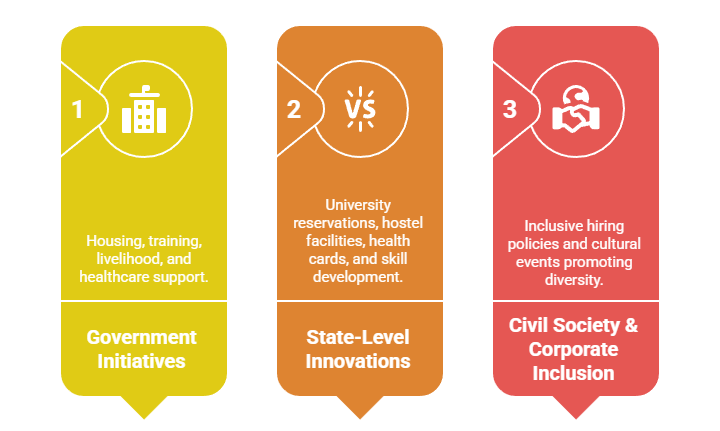
Despite the challenges, multiple measures—at both central and state levels—are paving the way for change: Government Initiatives:
State-Level Innovations:
Civil Society & Corporate Inclusion:
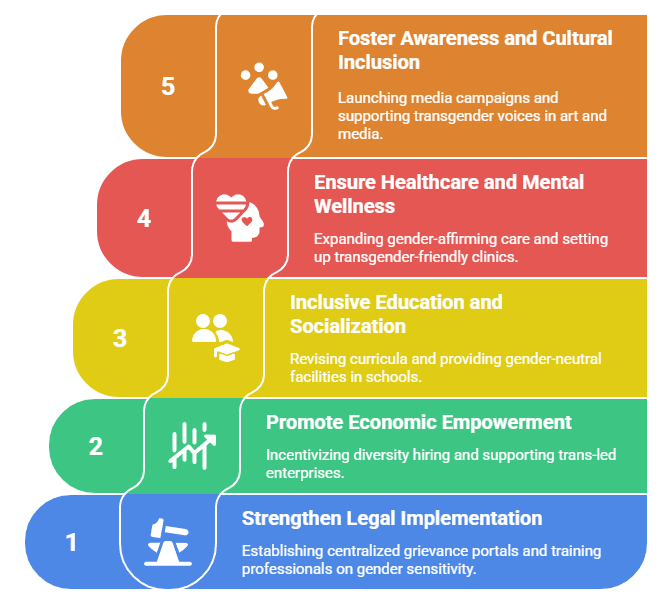
The Way Forward: Multidimensional Recommendations
ConclusionThe road to transgender inclusion in India goes beyond legal recognition. It requires a fundamental reimagining of our social institutions, cultural norms, and public policies through the lens of empathy, equity, and justice. The transgender community has shown resilience in the face of systemic neglect; it is now the responsibility of the state, society, and citizens to ensure their full participation in the Indian social fabric. In the words of Dr. B.R. Ambedkar, “The progress of any society is measured by the status it accords to its most marginalized.” The true test of Indian democracy lies in how it empowers its transgender citizens—not just in law, but in lived experience. |



To Read more topics, visit: www.triumphias.com/blogs
One comment