



Gyan Bharatam: Digitising the Soul of India’s Civilisational Wisdom
(Relevant for Sociology Paper 1 – Education and Social change)
|
“The past is not dead. In fact, it’s not even past.” India, a civilisation known for its profound depth of thought, spirituality, and scientific ingenuity, finds itself at a turning point — not only in its economic journey but also in reclaiming its intellectual and cultural legacy. The recent announcement of the Gyan Bharatam Mission, and its formal launch through the first Gyan Bharatam International Conference, marks a monumental shift in the Indian state’s attitude toward its manuscript heritage and knowledge systems. In a time where Artificial Intelligence, Big Data, and deep learning dominate conversations on progress, India has taken a decisive step backward — not to regress, but to dig deep into its ancient roots to power the future. This is not just about manuscripts. This is about reclaiming memory, reclaiming knowledge, and ultimately, reclaiming the soul of India. Why in News?The Ministry of Culture, at the inaugural Gyan Bharatam International Conference, invited researchers to present papers on deciphering the Indus Valley (Harappan) script. The event is part of a larger national project — the Gyan Bharatam Mission, announced in the Union Budget 2025-26, aimed at reviving, conserving, and digitising India’s manuscript heritage. This mission may appear to be a cultural programme on the surface, but it has deep socio-political, civilisational, and educational ramifications, especially in the context of Indian Knowledge Systems (IKS), Digital India, and decolonising academia. What is the Gyan Bharatam Mission?About the MissionThe Gyan Bharatam Mission is a government initiative to:
The Ministry of Culture is the nodal agency, with multiple collaborations spanning universities, research institutions, AI labs, and traditional scholars. Mission Components
The Hidden Treasure: India’s Manuscript HeritageIndia is home to the largest number of manuscripts in the world, with over 44 lakh manuscripts already documented in the Kriti Sampada database. These texts are written on palm leaves, birch bark, copper plates, handmade paper, and cloth, often in fading ink and delicate script, in over 80 scripts and hundreds of languages. Subjects Covered
These are not dead texts. They represent India’s indigenous knowledge economy, one that was deliberately suppressed during colonial rule. The Harappan Script: India’s Greatest Linguistic MysteryA key highlight of the Gyan Bharatam conference was the renewed scholarly focus on the Indus Valley Script, a writing system of one of the oldest urban civilisations in the world — the Indus Valley Civilization (2600–1900 BCE). Key Facts:
Despite nearly a century of research, the script remains undeciphered, unlike Egyptian or Mesopotamian scripts. Major Theories:
Unlocking this script could change the entire narrative of Indian history, proving that India had writing, trade, and urbanity long before the supposed “Aryan” arrival. The Sociological Significance of Gyan Bharatam
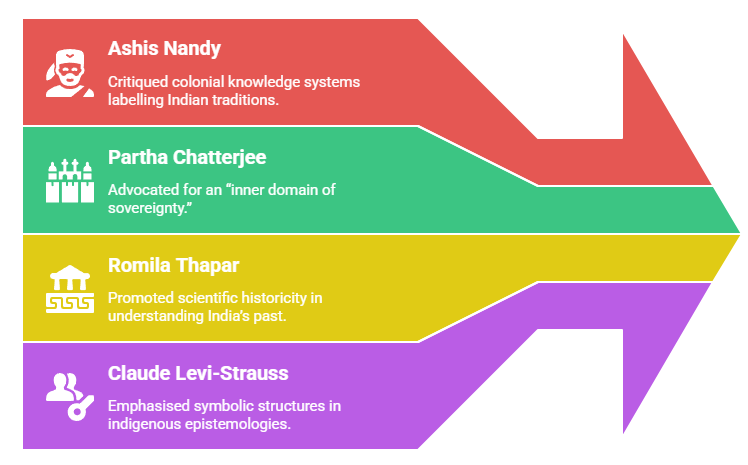
This mission is more than cultural preservation. It’s a civilisational reclamation project that touches the very foundation of Indian identity. Sociologists’ Views:
By digitising manuscripts and decoding ancient scripts, Gyan Bharatam is decolonising knowledge — shifting away from Eurocentric timelines and methodologies. The Mission’s Alignment with National Priorities
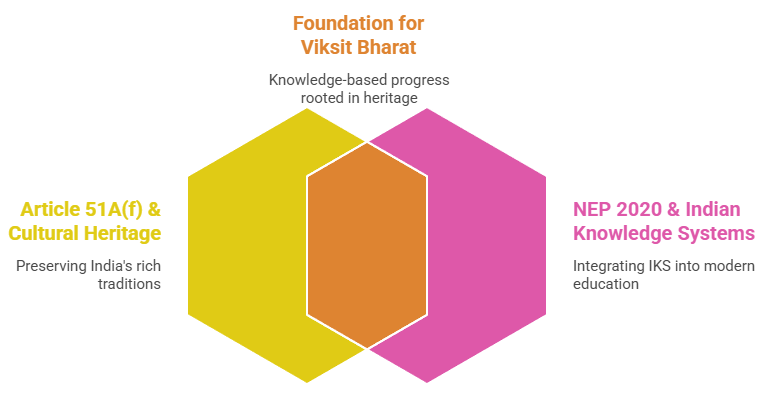
A fundamental duty of every citizen: “to value and preserve the rich heritage of our composite culture.”
The National Education Policy 2020 advocates integrating Indian Knowledge Systems (IKS) into school and university curricula — Gyan Bharatam directly feeds into this vision.
By building a knowledge-based economy, rooted in traditional wisdom and cutting-edge AI, India moves closer to becoming a Vishwa Guru (Global Knowledge Leader). The Role of AI and Digital InnovationUnlike previous manuscript efforts, Gyan Bharatam is deeply integrated with Artificial Intelligence, ensuring:
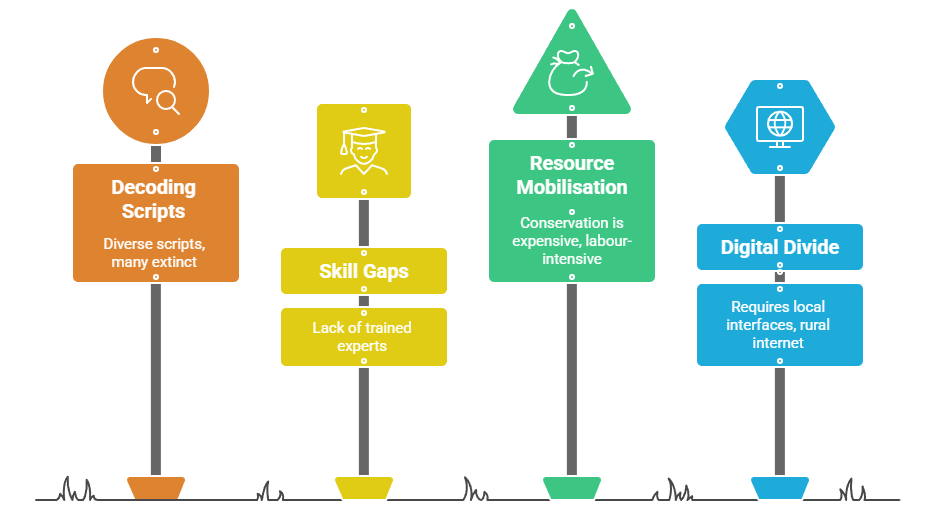
This ensures that India’s ancient knowledge doesn’t remain in dusty archives but becomes searchable, accessible, and usable. Challenges Ahead
Sociological Reflection: Whose Knowledge Gets Preserved?An important sociological question arises: Whose manuscripts are being preserved? Are we focusing only on Sanskritic high-culture texts, or are we also documenting regional, tribal, and women’s voices in India’s textual traditions? If this mission becomes top-heavy, it risks reproducing cultural elitism. But if democratized, it could amplify subaltern knowledge — folk healing, oral epics, and indigenous philosophies long excluded from the academic canon. Conclusion: Digitising the Past, Empowering the FutureThe Gyan Bharatam Mission is not about nostalgia. It is a strategic, technological, and intellectual intervention that aims to:
In a world hungry for sustainable living, ethical science, and spiritual grounding, India’s manuscripts hold keys to holistic healing, cosmic understanding, and human harmony. If implemented with inclusivity, scientific rigour, and digital excellence, Gyan Bharatam could very well be the 21st-century Saraswati — flowing through fibre-optic cables instead of Himalayan glaciers, connecting India’s ancient soul to its digital destiny. |



To Read more topics, visit: www.triumphias.com/blogs
Read more Blogs:
Beyond Legal Recognition: A Sociological Perspective on Transgender Inclusion in India
2 comments