Violence against women in rural India remains a grave and underreported social issue, despite progressive laws and policies. Deep-rooted patriarchal norms, socio-economic dependency, lack of education, and weak law enforcement contribute to the perpetuation of gender-based violence. The rural landscape, unlike urban India, has its own unique socio-cultural dynamics that exacerbate the vulnerability of women. This blog explores the multifaceted nature of violence against women in rural India. It also incorporates like patriarchy, gender inequality, structural violence, intersectionality, and social institutions.
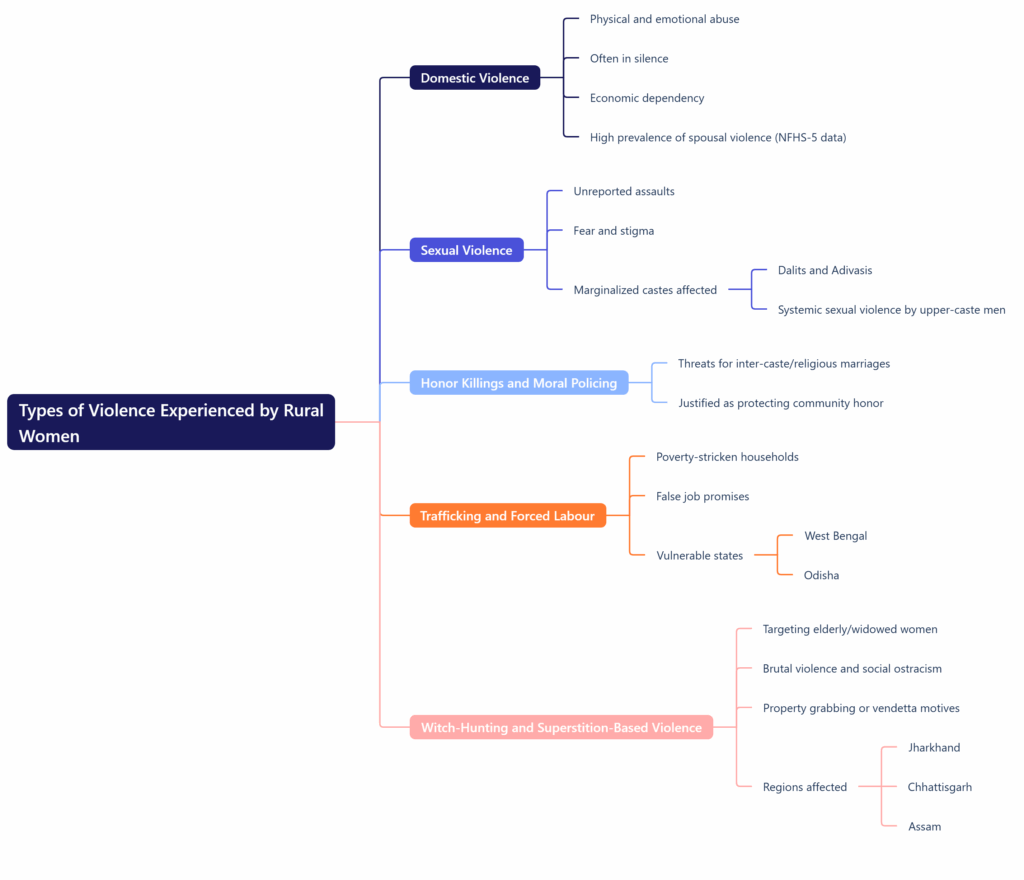
Types of Violence Experienced by Rural Women
Domestic Violence: Many rural women face physical and emotional abuse from their husbands or in-laws, often in silence. The joint family system, combined with economic dependency, discourages women from reporting such abuse. NFHS-5 data shows a high prevalence of spousal violence in rural areas.
Sexual Violence: Sexual assaults in rural India often go unreported due to fear, stigma, and the concept of family honor. Women from marginalized castes, especially Dalits and Adivasis, face systemic sexual violence, often by upper-caste men who go unpunished.
Honor Killings and Moral Policing: In regions dominated by khap panchayats, women face threats or even death for entering into inter-caste or inter-religious marriages. These actions are often justified as protecting community honor.
Trafficking and Forced Labour: Girls and women in poverty-stricken rural households are often lured into cities with promises of jobs but end up in exploitative labor or sex trafficking. States like West Bengal and Odisha are particularly vulnerable.
Witch-Hunting and Superstition-Based Violence: In tribal belts of Jharkhand, Chhattisgarh, and Assam, elderly or widowed women are branded as witches and face brutal violence or social ostracism, often as a means of property grabbing or vendetta.
Structural Causes of Violence in Rural India
Patriarchal Social Structure: The rural social fabric is predominantly patriarchal, where men control resources, decision-making, and women’s mobility. Patriarchy legitimizes violence as a means of maintaining gender hierarchy.
Caste and Gender Intersectionality: Women from lower castes suffer not only due to gender but also caste-based oppression. The dual subordination, explained through the concept of intersectionality, intensifies their exposure to violence and reduces access to justice.
Low Literacy and Economic Dependency: Low female literacy and lack of economic assets trap women in cycles of dependency. Illiteracy prevents awareness of rights, while financial reliance discourages reporting of abuse or leaving abusive households.
Poor Legal Awareness and Enforcement: Most rural women are unaware of their legal rights. Even when they are, the absence of supportive institutions, male-dominated police forces, and fear of social backlash deters them from seeking justice.
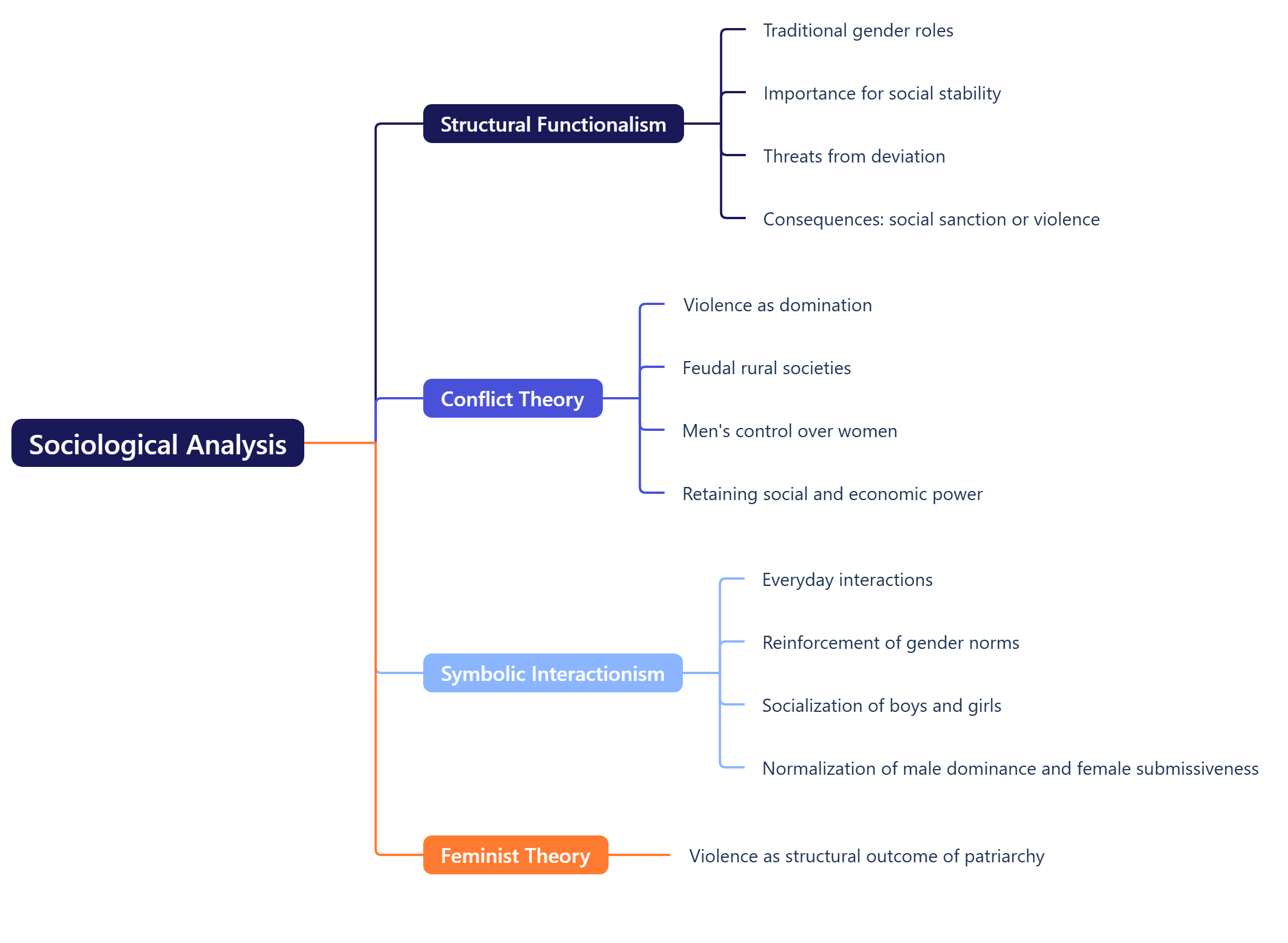
Sociological Analysis
Structural Functionalism: This theory views traditional gender roles as essential for social stability. In rural areas, any deviation—like women seeking independence—threatens this equilibrium and can result in social sanction or violence.
Conflict Theory: This perspective sees violence as a method of domination. In feudal rural societies, men, especially from dominant castes, use violence to assert control over women and retain their social and economic power.
Symbolic Interactionism: This theory explains how everyday interactions reinforce gender norms. Rural boys and girls are socialized into roles where male dominance and female submissiveness become normalized, perpetuating violence.
Feminist Theory: Feminist sociologists argue that violence is a structural outcome of patriarchy. Radical feminists see it as a deliberate tool to control female sexuality, while liberal feminists demand state intervention and gender-just laws to protect rural women.
Case Studies
Hathras Case (2020): A Dalit woman was brutally assaulted in Uttar Pradesh, showcasing caste and gender-based violence.
Khap Verdicts in Haryana: Many young women have faced death for defying community marriage norms.
Jharkhand Witch-Hunting: Between 2001–2020, over 500 women were killed on suspicion of witchcraft.
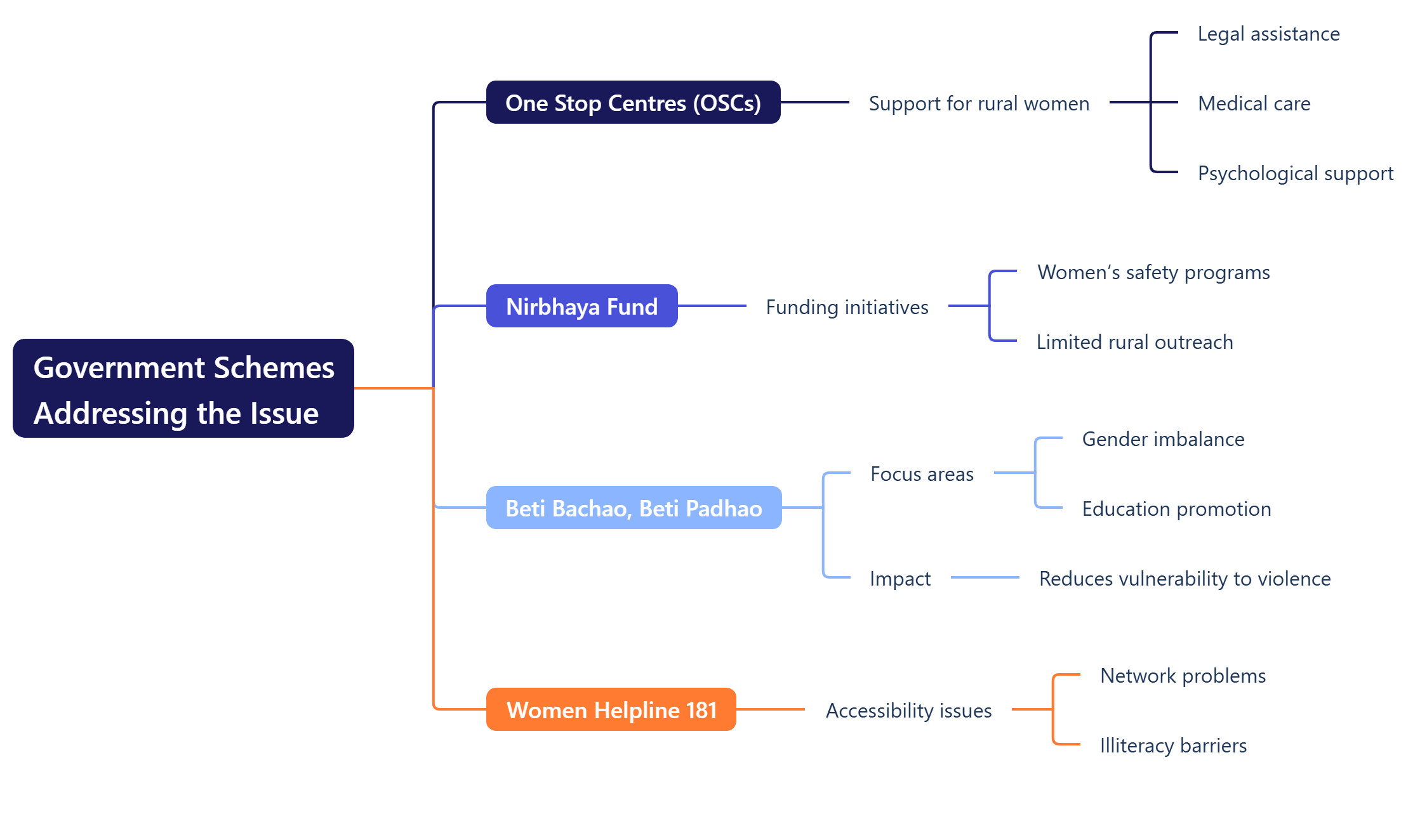
Government Schemes Addressing the Issue
One Stop Centres (OSCs): Provide legal, medical, and psychological support to rural women survivors of violence.
Nirbhaya Fund: Finances initiatives to ensure women’s safety, but rural outreach remain limited.
Beti Bachao, Beti Padhao: Targets gender imbalance and promotes education, indirectly reducing vulnerability to violence.
Women Helpline 181: Though available, network issues and illiteracy prevent many rural women from using it
Way Forward
Community-Based Gender Sensitization: NGOs and SHGs (Self-Help Groups) can be mobilized to conduct gender workshops at village level. Freire’s participatory education model can empower women to challenge oppressive practices.
Land and Property Rights: Secure economic independence by providing joint land titles, as recommended by Bina Agarwal. This reduces dependence on abusive husbands or in-laws.
Legal Reforms and Fast-Track Courts: Establish rural women’s courts (Nyaya Panchayats with female members). Train police in gender-sensitive investigation techniques.
Mobile and Digital Literacy: Digital inclusion can help women access help, report crimes, and gain knowledge of their rights. Digital Saksharta Abhiyan (DISHA) needs to focus more on rural women.
Conclusion
Violence against women in rural India is not merely an issue of crime; it is a deeply entrenched sociological problem rooted in patriarchy, caste hierarchy, and institutional neglect. Any meaningful reform must combine legal interventions, economic empowerment, and social transformation through education and awareness.
Previous Year Questions
Paper I
“Violence against women is both a personal tragedy and a social issue.” Explain in sociological terms. – 2017
Paper II
“Discuss the role of khap panchayats in enforcing social norms in rural India.” – 2018
“Discuss how caste and patriarchy intersect to shape the status of women in rural India.” – 2020
“Evaluate the role of grassroots movements in empowering rural women.” – 2022






2 comments