


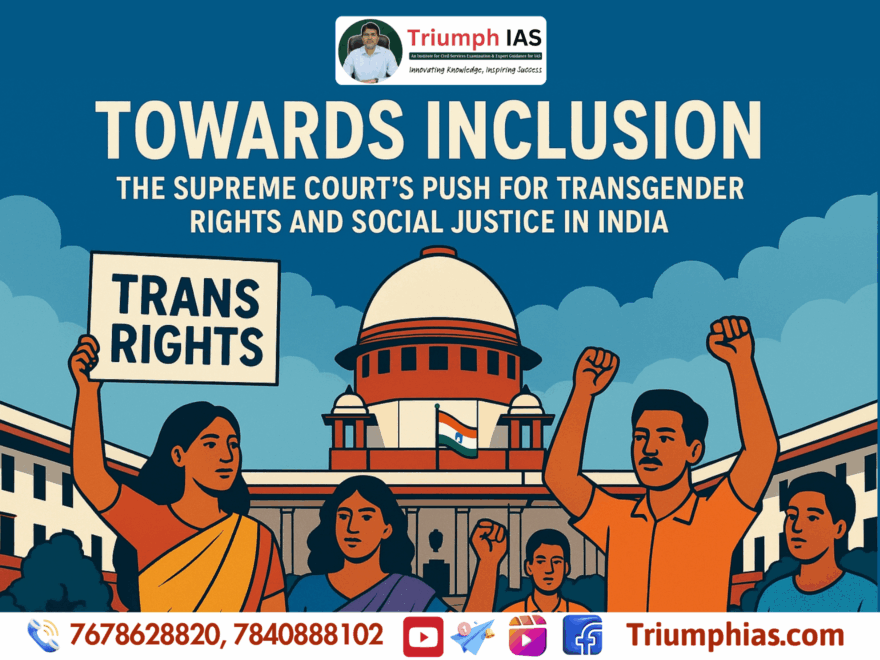
Towards Inclusion: The Supreme Court’s Push for Transgender Rights and Social Justice in India
(Relevant for Sociology Paper 1: Stratification and Mobility)
|
In a landmark move towards social justice, the Supreme Court of India has recently formed a committee under former Justice Asha Menon to draft an Equal Opportunity Policy for transgender individuals. This committee’s mandate includes suggesting measures for inclusive medical care and protection for gender non-conforming and gender-diverse persons. This development signals a significant step forward in addressing the systemic discrimination and social exclusion faced by transgender persons in India. Understanding the Supreme Court’s InterventionThe Supreme Court’s intervention goes beyond mere policy formulation. Exercising its powers under Article 142 of the Constitution, the Court has mandated multiple systemic reforms. These include:
The Court also urged public and private institutions to foster gender-inclusive environments and recommended gender-diverse screening points at public venues to uphold dignity and safety. The Social Barriers Faced by Transgender Individuals
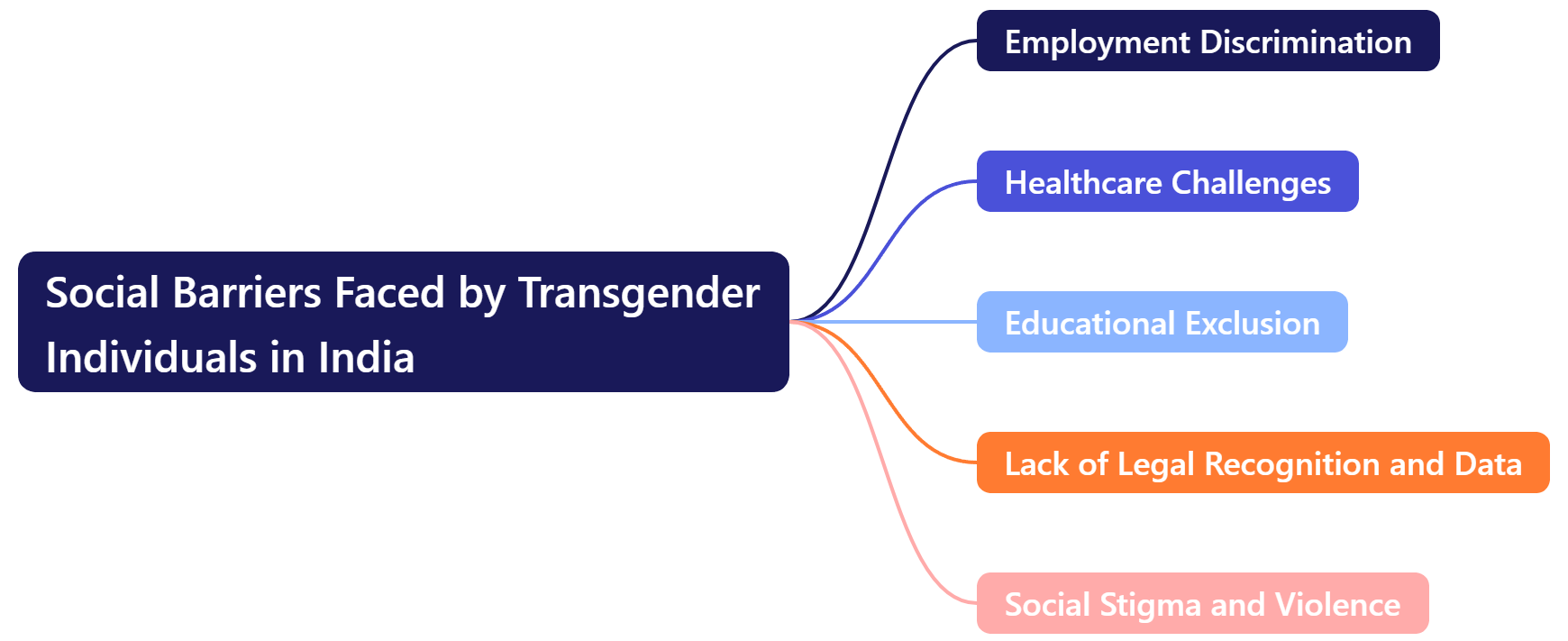
Despite legislative and judicial progress, transgender persons in India face deep-rooted institutional and societal challenges that hinder their full inclusion:
Transgender individuals encounter systemic barriers to employment, often being excluded outright or relegated to informal, precarious work without security or benefits. Social stigma and workplace insensitivity further aggravate this marginalization.
Access to healthcare remains a critical issue. Transgender persons often face discrimination in medical settings, including denial of gender-affirming treatments or insensitive attitudes by healthcare providers, which violate their right to health.
Discrimination starts early, with many transgender youth facing bullying, harassment, and exclusion in schools. This lack of supportive environments results in high dropout rates and limits future opportunities.
Many transgender individuals struggle with documentation that does not reflect their gender identity, affecting access to welfare schemes and basic rights. Moreover, poor data collection leads to their invisibility in policymaking and resource allocation.
Especially in rural areas, transgender persons are vulnerable to violence and social ostracism. Traditional norms and patriarchal attitudes contribute to their marginalization and denial of basic dignity. Legislative and Policy Frameworks: Progress and Gaps
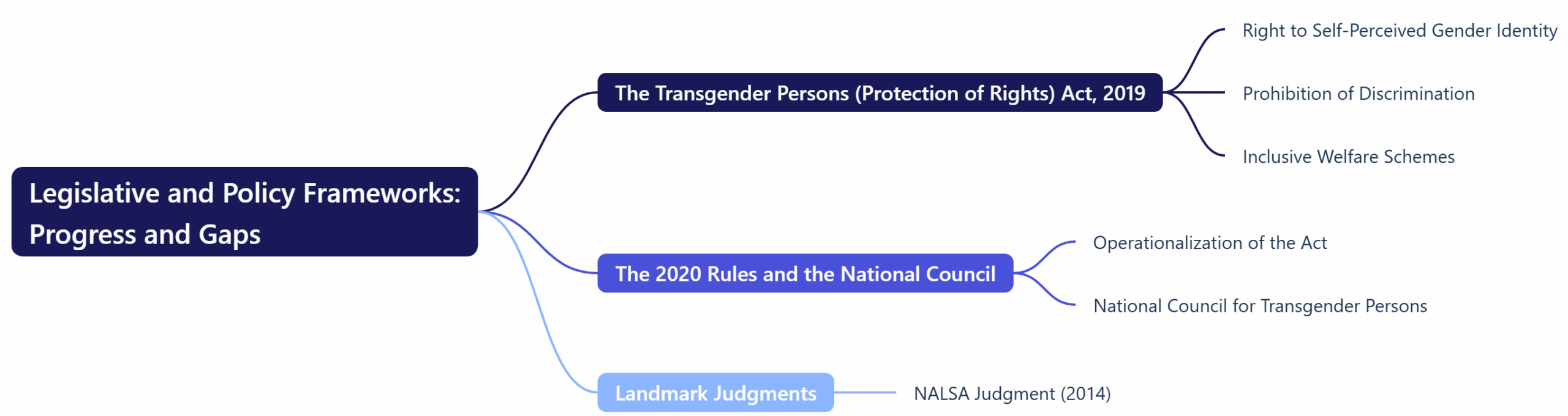
This Act is a landmark legal framework affirming the right to self-perceived gender identity. It prohibits discrimination in education, employment, healthcare, and access to public goods and services. The Act also mandates the government to develop inclusive welfare schemes that avoid stigmatization.
To operationalize the Act, the 2020 Rules were enacted, detailing procedures for identity certification, grievance redress, and the functioning of welfare boards. The National Council for Transgender Persons was established to monitor policy impact, advise the government, and coordinate efforts among departments and civil society organizations.
The NALSA Judgment (2014) recognized transgender persons as a third gender and established the right of self-identification. This decision laid the jurisprudential foundation for subsequent affirmative action and policy frameworks. Government InitiativesIndia has also taken concrete steps through various initiatives such as:
Sociological Perspectives on Transgender InclusionFrom a sociological standpoint, the struggle for transgender rights intersects deeply with theories of identity, power, and social structures.
This theory emphasizes the role of social interaction in shaping identity. Transgender individuals continuously negotiate their identities within society’s norms, often facing invalidation. Recognition through legal self-identification represents a critical affirmation of their social reality.
Rooted in power dynamics, conflict theory highlights how marginalized groups, including transgender persons, are excluded by dominant groups. The lack of access to resources and institutional power perpetuates their social and economic vulnerability.
This perspective focuses on social institutions and their roles in maintaining social order. Discrimination against transgender persons indicates dysfunctions in institutions like healthcare, education, and law enforcement, calling for reforms to restore social equilibrium.
Queer theory challenges the fixed categories of gender and sexuality, promoting fluidity and diversity. Intersectionality draws attention to how multiple social identities (such as caste, class, and gender identity) overlap, compounding discrimination for transgender individuals in India. The Way Forward: Building Inclusive Societies
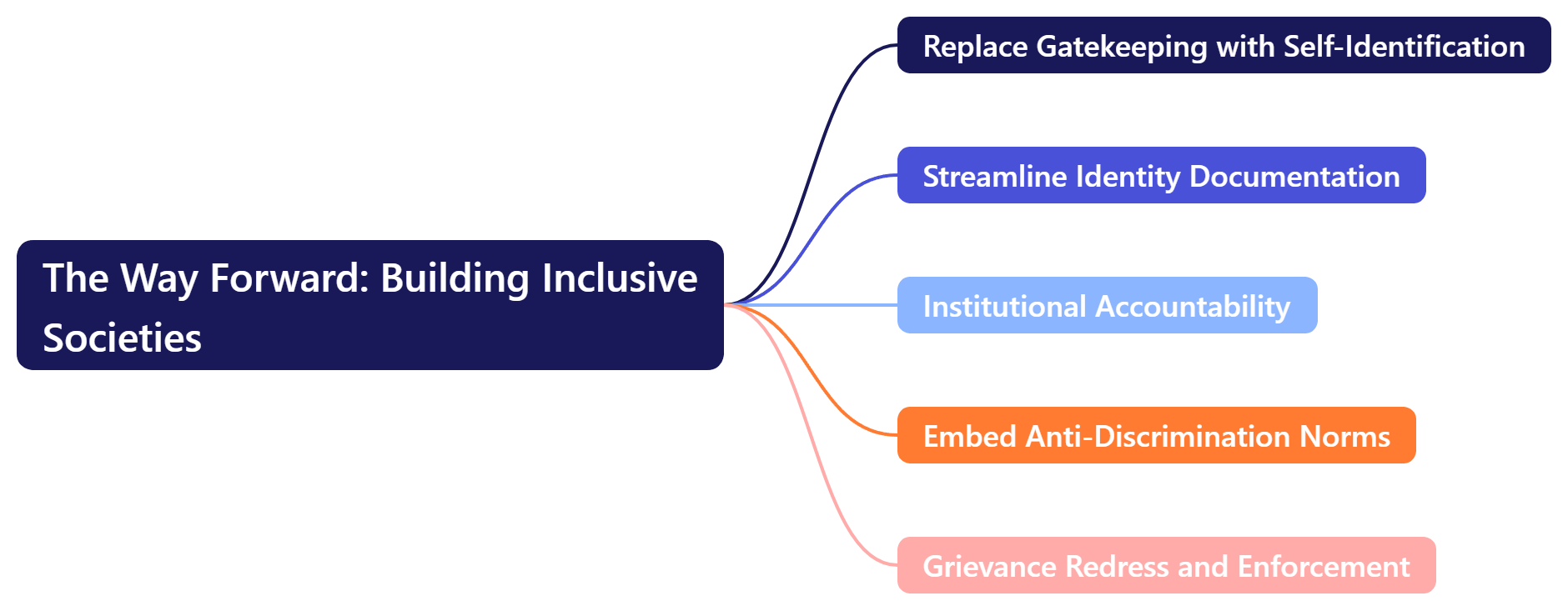
The Supreme Court’s panel and subsequent reforms are a critical foundation, but real change requires sustained efforts on multiple fronts:
Removing bureaucratic hurdles and gatekeeping mechanisms will ensure that transgender persons can access rights and services without unnecessary exclusion.
Simplified, accessible ID processes must be implemented nationwide to facilitate access to education, employment, healthcare, and welfare.
Appointing complaint officers, operationalizing Protection Cells, and establishing clear timelines and accountability mechanisms will enhance the effectiveness of protections.
Schools, workplaces, and public institutions should institutionalize gender-inclusive policies and sensitivity training to foster safe environments.
Effective grievance mechanisms backed by enforceable penalties are necessary to hold violators accountable and ensure justice. Conclusion: Towards Dignity and EqualityThe Supreme Court’s proactive approach reflects growing recognition that transgender rights are integral to the broader project of social justice in India. While laws and policies lay the groundwork, the ultimate goal must be a society where transgender persons can live with dignity, equal opportunity, and freedom from discrimination. This requires not only legal reforms but also cultural shifts in attitudes and institutional practices. By addressing the social roots of exclusion and fostering inclusive institutions, India can move closer to realizing the constitutional promise of equality for all its citizens. |



To Read more topics, visit: www.triumphias.com/blogs
Read more Blogs:
Right to Die or Duty to Suffer? A Sociological Critique of Euthanasia in India
PM Dhan-Dhaanya Krishi Yojana: A Sociological Lens on Rural Transformation
One comment