In contemporary society, information travels faster than ever before. Digital platforms, particularly messaging applications and social media networks, have transformed how individuals access, interpret, and disseminate knowledge. Among these, the popular phenomenon often labelled as “WhatsApp University” symbolises the rapid spread of half-truths, misinformation, and unverified social commentary disguised as factual knowledge. In contrast, sociology, as an academic discipline, encourages critical thinking and systematic understanding of social reality through what C. Wright Mills termed the sociological imagination. The tension between sociological knowledge and common-sense narratives is not new; however, digital communication has intensified this conflict, making it highly relevant in present-day India and globally.
Dimension:
Understanding Sociological Imagination
C. Wright Mills introduced the concept of sociological imagination to emphasise the ability to connect personal experiences with broader social structures. It encourages individuals to move beyond personal biases and understand how historical, cultural, political, and economic forces shape individual lives.
Sociological imagination rests on three fundamental dimensions:
1. Linking Personal Troubles with Public Issues
Mills argued that individual problems often reflect structural conditions. For instance, unemployment is not merely a result of personal inefficiency but may emerge from systemic economic policies, technological displacement, or labour market transformations.
2. Contextualising Social Reality
Sociology stresses the importance of empirical research, theoretical frameworks, and comparative analysis. Scholars like Emile Durkheim demonstrated how seemingly individual actions such as suicide are influenced by social integration and regulation.
3. Challenging Common Sense
Common-sense knowledge tends to be subjective, tradition-bound, and influenced by dominant ideologies. Sociology challenges these assumptions by providing scientific and evidence-based explanations.
What is WhatsApp University? The Rise of Digital Common Sense
The term “WhatsApp University” is a metaphor representing the informal digital ecosystem where individuals receive and circulate information without verifying authenticity or context. It reflects how digital capitalism and algorithm-driven communication encourage instant, emotionally appealing, and often polarising content.
Several sociological processes contribute to this phenomenon:
1. Echo Chambers and Confirmation Bias
Digital platforms reinforce existing beliefs by exposing users to information aligned with their ideological preferences. This leads to selective acceptance of information and rejection of contradictory evidence.
2. Democratisation of Information Without Accountability
While social media has made knowledge accessible to masses, it has also blurred the distinction between expertise and opinion. Individuals often equate viral messages with credible information.
3. Moral Panic and Identity Politics
Unverified digital narratives frequently mobilise emotions related to religion, nationalism, caste, or gender. Stanley Cohen’s concept of moral panic becomes relevant in understanding how exaggerated or fabricated threats shape public consciousness.
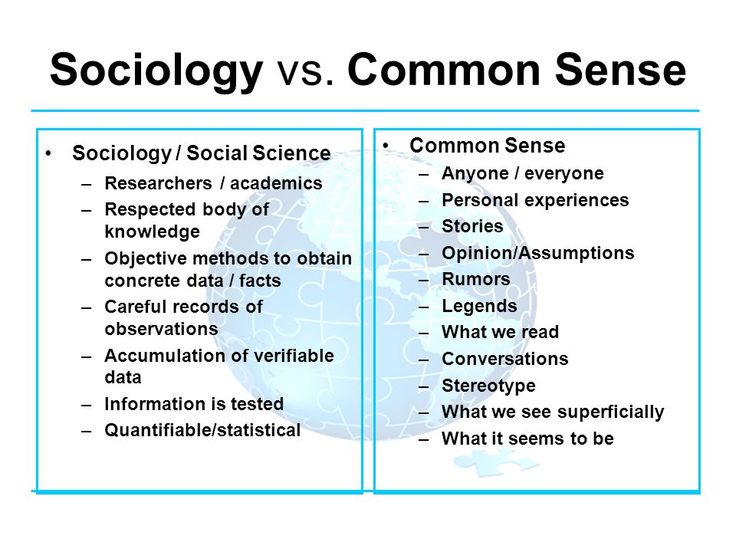
Sociology vs Common Sense: Key Differences
Scientific Orientation vs Subjective Interpretation Sociology relies on systematic data collection, theoretical reasoning, and methodological rigor. Common sense, on the other hand, is shaped by cultural norms, tradition, and personal experience.
Critical Thinking vs Immediate Reaction Sociology promotes reflexivity and encourages questioning dominant narratives. WhatsApp-based knowledge often promotes impulsive acceptance of simplified explanations.
Structural Analysis vs Individual Blame Sociology highlights structural inequalities such as caste hierarchies, patriarchy, and class exploitation. Digital misinformation frequently attributes social problems to individual or community-level failures, ignoring structural causes.
Digital Capitalism and Knowledge Production
The rise of WhatsApp University cannot be separated from the broader transformation of digital capitalism. Technology companies design platforms to maximise engagement, often prioritising sensational content over factual accuracy. Manuel Castells’ concept of the network society explains how digital networks shape power relations and knowledge flows.
In India, where digital penetration has expanded rapidly, messaging platforms have become key instruments for political mobilisation, social polarisation, and cultural dissemination. The commodification of attention and algorithmic targeting encourages the spread of emotionally charged misinformation, weakening rational public discourse.
Consequences for Society
The dominance of unverified digital knowledge has significant social implications:
Erosion of Rational Public Sphere Jurgen Habermas emphasised the importance of rational debate in democratic societies. The spread of misinformation undermines informed decision-making and democratic participation.
Reinforcement of Social Prejudices Digital common sense often reproduces caste stereotypes, gender biases, and communal narratives, reinforcing existing inequalities.
Decline in Scientific Temper The replacement of empirical knowledge with viral misinformation discourages evidence-based reasoning and academic inquiry.
Relevance of Sociological Imagination in the Digital Age
Sociological imagination is increasingly necessary to counter misinformation and build critical citizenship. It enables individuals to:
Distinguish between verified knowledge and popular narratives
Understand the socio-economic and political structures shaping digital communication
Promote responsible information consumption
Strengthen democratic and pluralistic values
Educational institutions, civil society, and policy frameworks must encourage digital literacy alongside sociological awareness to address the challenges posed by WhatsApp University.
Conclusion:
The conflict between sociological imagination and WhatsApp University reflects the broader struggle between scientific reasoning and populist knowledge systems. While digital platforms have democratised access to information, they have also created new forms of epistemic vulnerability. Sociology provides a crucial framework to interpret social reality objectively, challenge misinformation, and foster critical consciousness. In an era dominated by digital communication, cultivating sociological imagination is essential for sustaining rational discourse, social harmony, and democratic governance.
“The growth of digital communication platforms has strengthened common-sense narratives while weakening sociological reasoning.” Critically examine this statement using the concept of sociological imagination.








2 comments