


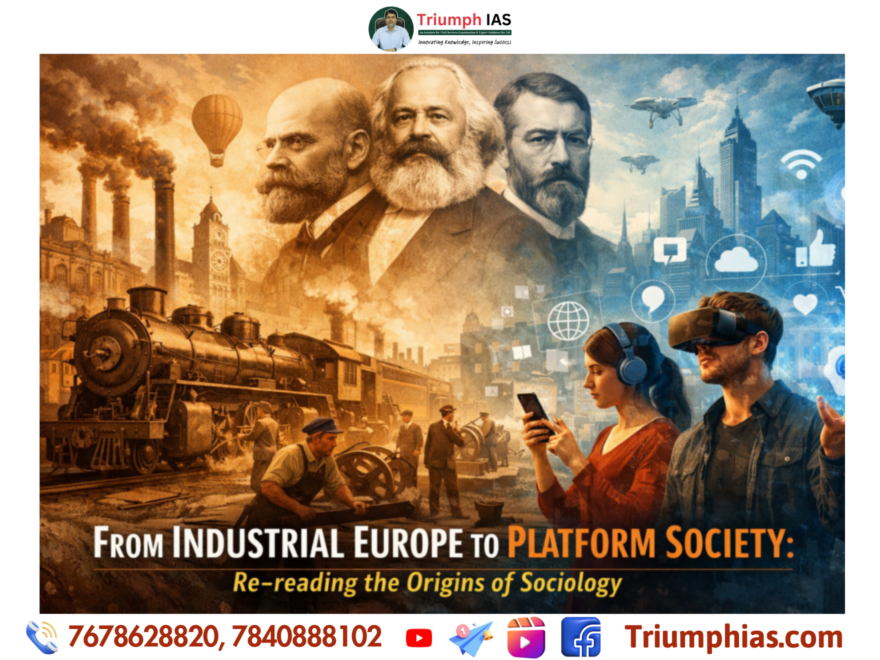
From Industrial Europe to Platform Society: Re-reading the Origins of Sociology
(Relevant for Sociology, Society [GS])
IntroductionSociology emerged in the nineteenth century as a systematic attempt to understand the unprecedented transformations unleashed by industrial capitalism in Europe. Rapid urbanisation, factory production, class conflict, secularisation, and the erosion of traditional solidarities created a sense of social dislocation that demanded intellectual explanation. The founders of sociology sought to diagnose these changes and propose ways to restore social order or achieve social justice. In the twenty-first century, societies are undergoing another epochal transformation driven by digital platforms, data capitalism, and algorithmic governance. The shift from industrial capitalism to what is increasingly described as a “platform society” has altered the nature of work, social relations, power, and inequality. Re-reading the origins of sociology in this context is not an exercise in nostalgia; rather, it enables us to reinterpret classical sociological insights to better understand contemporary digital realities. This blog argues that classical sociology, rooted in industrial Europe, remains analytically relevant for understanding the platform society. The core concerns of sociology—social order, inequality, power, alienation, and collective life—persist, albeit in transformed forms.
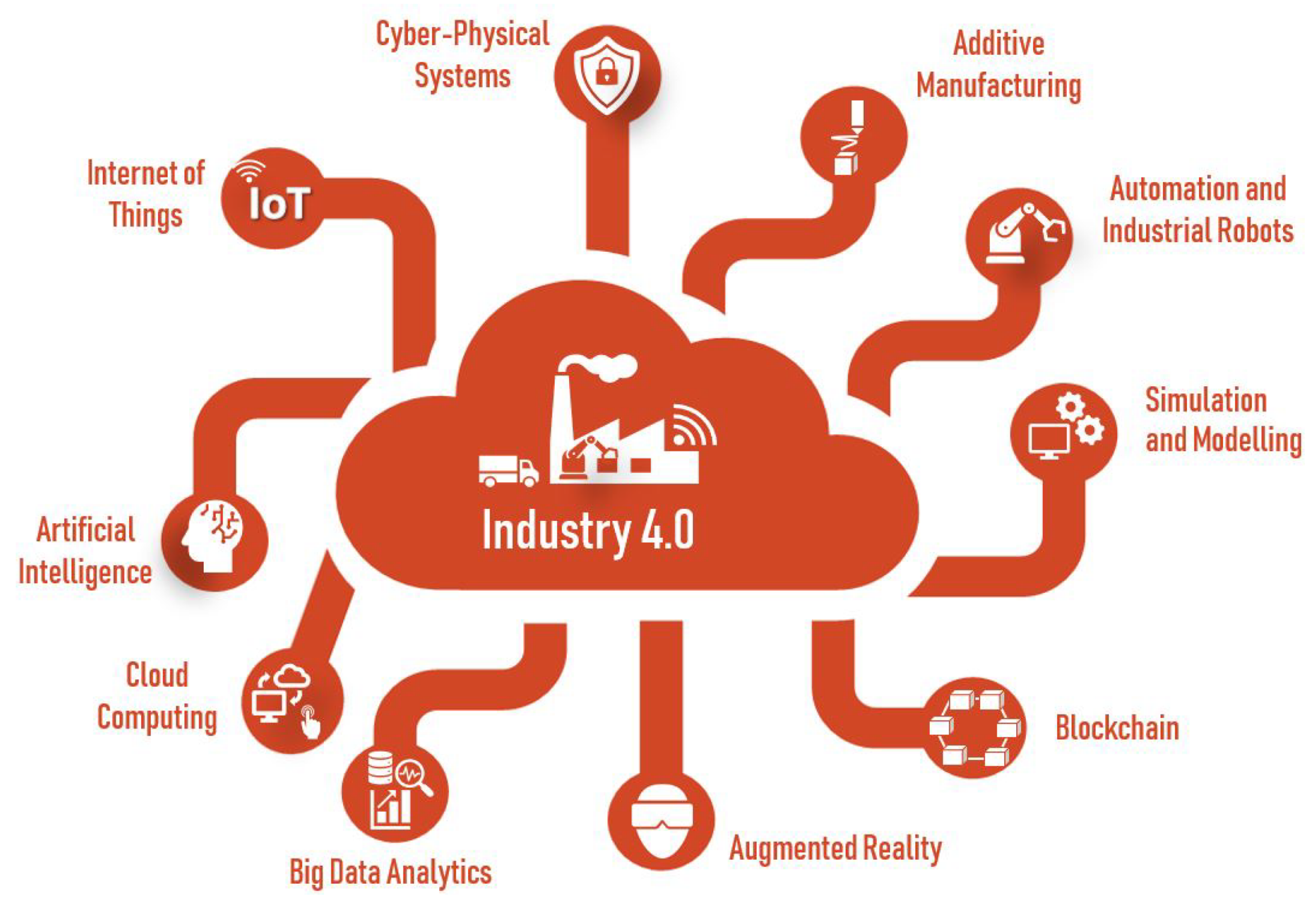
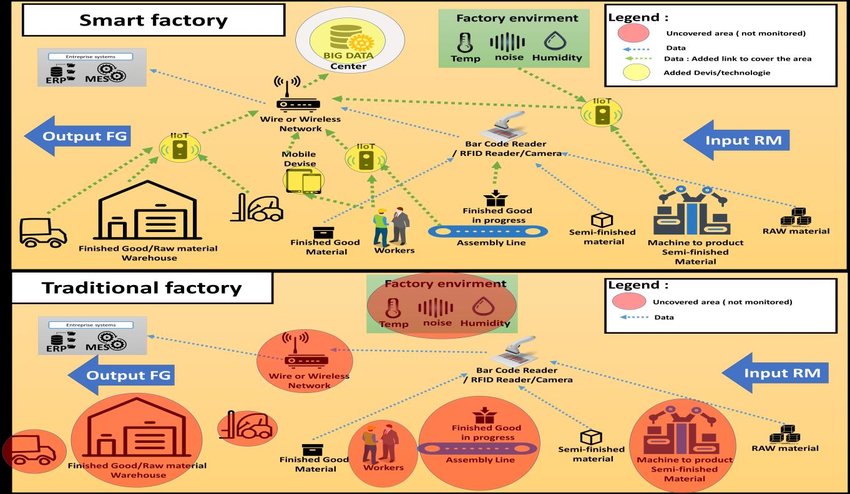
Dimension:Industrial Europe and the Birth of SociologyThe origins of sociology are inseparable from the social upheavals of nineteenth-century Europe. Industrialisation dismantled agrarian economies and replaced them with factory-based production systems. Traditional kinship ties weakened as populations migrated to cities, while new class divisions emerged between capital owners and wage labourers. Early sociological thought was shaped by three interrelated anxieties. First, there was concern over social order: how could societies remain cohesive amid rapid change? Second, there was a focus on inequality and exploitation generated by capitalist production. Third, there was an attempt to understand the changing relationship between individuals and society in an increasingly rationalised world. Classical sociology thus developed as both a diagnostic and normative project—diagnosing the problems of modernity and, in some cases, offering moral or political solutions. These foundational questions remain central today, even though the material conditions have shifted from factories and smokestacks to servers, platforms, and digital networks. From Factory Capitalism to Platform CapitalismIndustrial capitalism was characterised by mass production, standardised labour, and relatively stable employer–employee relationships. In contrast, platform capitalism reorganises economic activity through digital intermediaries that connect producers, consumers, and service providers. Work is increasingly mediated by algorithms rather than direct human supervision, and employment is often fragmented into short-term, task-based engagements. Despite these differences, the underlying capitalist logic persists. Just as factory owners controlled the means of production, platform owners control digital infrastructures, data flows, and algorithmic visibility. Value extraction no longer relies solely on physical labour but also on data generation, attention, and user participation. This continuity suggests that sociology’s original concern with power and exploitation remains relevant. The factory floor has been replaced by digital dashboards, yet asymmetries of power between owners and workers endure. Sociology’s classical frameworks therefore provide valuable tools for analysing these new forms of domination. Social Order: From Mechanical and Organic Solidarity to Networked CohesionOne of the central problems addressed by early sociology was the maintenance of social order in modern societies. Industrialisation disrupted traditional solidarities based on kinship, religion, and custom, replacing them with more impersonal forms of social integration. In the platform society, social cohesion is increasingly mediated by digital networks. Online communities, social media groups, and platform-based interactions create new forms of association that transcend geographical boundaries. However, these connections are often fragile, fragmented, and shaped by algorithmic filtering. While classical sociology emphasised shared norms and institutional regulation as sources of social order, the platform society raises questions about algorithmic governance and digital norms. Social integration today is less about collective conscience and more about network effects, ratings, reputational systems, and platform rules. Re-reading sociological origins helps us see that the problem of order has not disappeared; it has merely assumed new technological forms. Alienation Revisited: Digital Labour and the SelfAlienation was a key theme in early critiques of industrial capitalism. Factory work was seen as reducing workers to cogs in a machine, stripping labour of creativity and autonomy. In the platform economy, alienation takes subtler but equally profound forms. Digital workers often experience isolation rather than collective exploitation. Gig workers operate independently, connected to platforms but disconnected from fellow workers. Surveillance technologies, performance metrics, and customer ratings shape behaviour, producing what can be described as internalised discipline. Moreover, users themselves become sources of value through data production, blurring the boundary between work and leisure. This raises a renewed sociological question: when everyday social interaction becomes monetised, what happens to the autonomy of the self? Revisiting classical ideas of alienation enables sociology to critically interrogate how digital capitalism reshapes subjectivity and identity. Inequality: From Class to Data and Algorithmic StratificationClassical sociology focused heavily on class inequality rooted in ownership of the means of production. While class remains significant, the platform society introduces new dimensions of stratification. Access to digital skills, data visibility, algorithmic rankings, and platform participation increasingly determine life chances. Digital divides are not merely about access to technology but about differential capacities to benefit from it. Platforms often reproduce and intensify existing social inequalities related to gender, caste, race, and region, even as they claim to be neutral and meritocratic. From a sociological perspective, this represents a transformation rather than a disappearance of inequality. Classical insights into structural disadvantage, power asymmetries, and systemic reproduction of inequality remain crucial for analysing these new hierarchies. Power and Authority in the Platform SocietyIndustrial society relied heavily on bureaucratic institutions and formal authority structures. In contrast, the platform society exercises power through opaque algorithms, terms of service, and data control. Authority is decentralised in appearance but highly concentrated in practice. This shift challenges traditional sociological understandings of power while simultaneously reaffirming their relevance. Power continues to shape social outcomes, but it operates through code, design choices, and digital infrastructures rather than overt coercion. Re-reading sociology’s origins allows us to extend classical theories of power into the digital realm without abandoning their core assumptions.
Conclusion:From industrial Europe to the platform society, the material conditions of social life have changed dramatically. Yet the foundational concerns that gave birth to sociology—order, inequality, power, alienation, and social change—remain strikingly persistent. Re-reading the origins of sociology in light of digital transformations reveals not the obsolescence of classical theory but its enduring adaptability. Sociology today must bridge its classical heritage with contemporary realities. By doing so, it can provide a critical lens to understand platform-mediated societies and contribute to informed debates about regulation, justice, and the future of social life. The journey from factories to platforms thus reaffirms sociology’s original mission: to make sense of social change and its human consequences. |


UPSC Civil Services (Sociology Optional) – Mains Question
“The transition from industrial capitalism to platform capitalism represents a transformation rather than a rupture in modern society.” Critically examine this statement using insights from classical sociological theory.
To Read more topics, visit: www.triumphias.com/blogs
Read more Blogs:
Modernity, Digital Capitalism, and the Changing Nature of Social Relations
One comment