


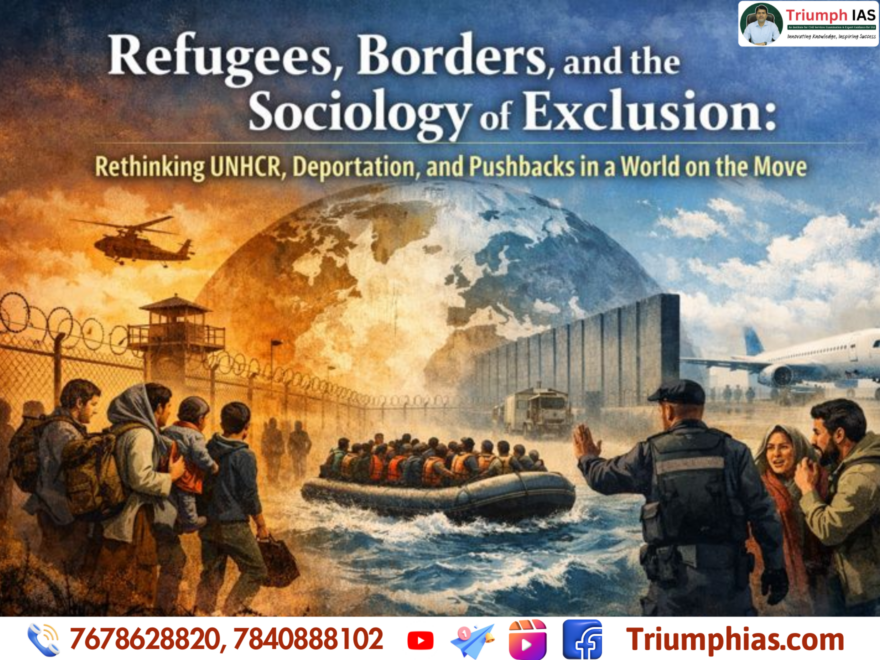
Refugees, Borders, and the Sociology of Exclusion: Rethinking UNHCR, Deportation, and Pushbacks in a World on the Move
(Relevant for Sociology Paper 1: Stratification and Mobility and Works and Economic Life and Politics and Society and Social change in Modern Society)
|
The appointment of Barham Salih as the United Nations High Commissioner for Refugees (UNHCR) in December 2025 is symbolically significant. As the first UNHCR chief from the Middle East in decades, his leadership comes at a time when forced displacement has become one of the defining social realities of the 21st century. Yet beyond institutional announcements lies a deeper sociological crisis: how modern states manage mobility, belonging, and exclusion. Refugees, deportees, and stateless persons occupy the most precarious position in global society—physically present, yet politically invisible. UNHCR and the Moral Architecture of the International System
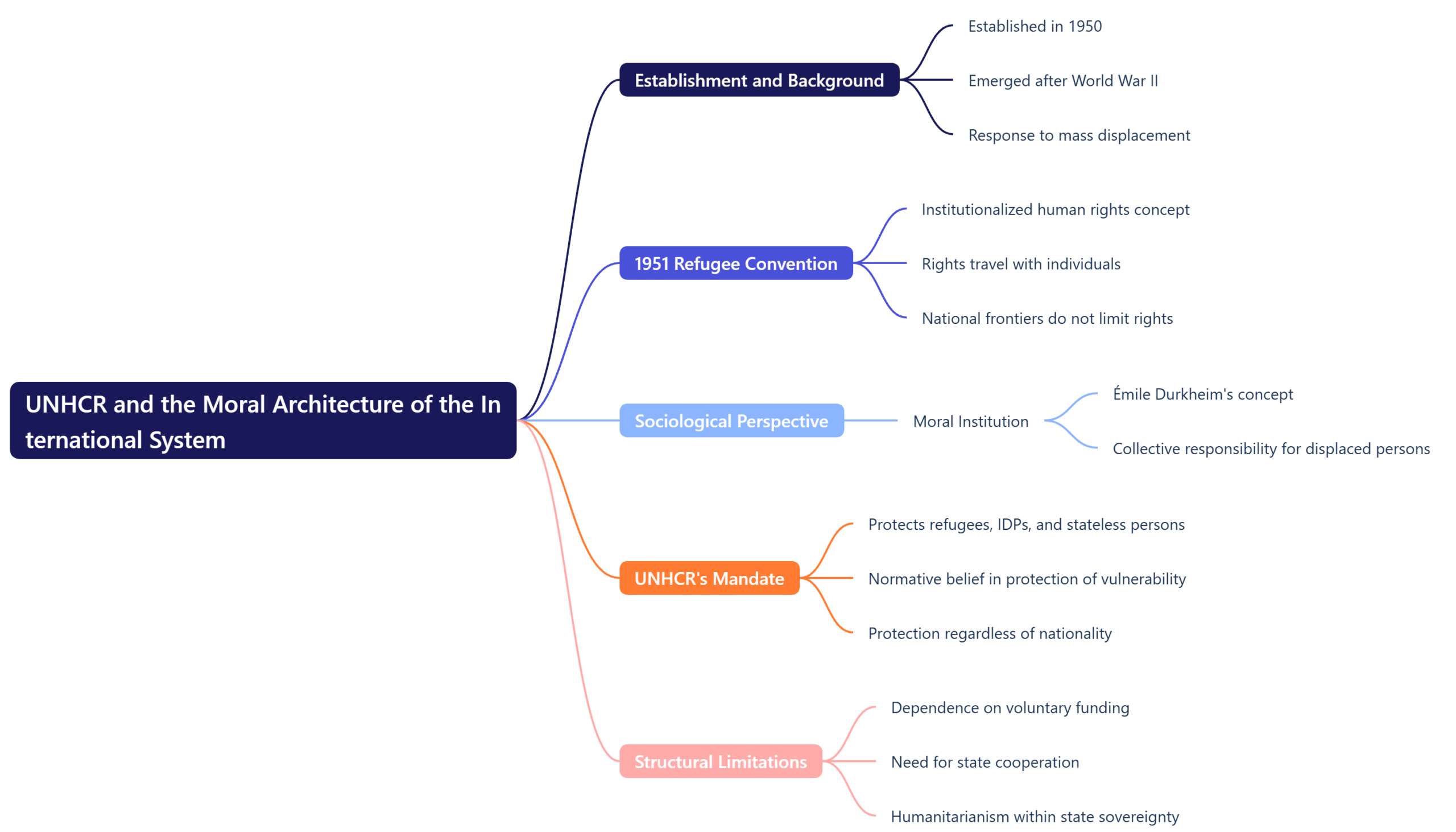
Established in 1950, UNHCR emerged from the ruins of World War II, when mass displacement forced the international community to confront the moral consequences of borders. The 1951 Refugee Convention institutionalised the idea that human rights must travel with people, not stop at national frontiers. From a sociological standpoint, UNHCR represents what Émile Durkheim would call a moral institution—an attempt by the global community to express collective responsibility for the displaced. Its mandate to protect refugees, IDPs, and stateless persons reflects a normative belief that vulnerability deserves protection, regardless of nationality. However, UNHCR’s dependence on voluntary funding and state cooperation reveals a structural limitation: humanitarianism operates within, not above, state sovereignty. Hannah Arendt and the “Right to Have Rights”Political theorist Hannah Arendt famously argued that refugees suffer not merely from loss of home, but from loss of the “right to have rights.” Citizenship, not humanity, becomes the gateway to legal recognition. This insight is crucial when examining deportation and pushbacks. Once individuals are labelled as “foreigners” or “illegal migrants,” they slip outside the protective net of rights. Procedures matter less than classification. In India, wrongful expulsions of citizens during deportation drives expose this danger. When documentation replaces lived belonging, citizenship becomes fragile, especially for the poor, migrants, tribals, and border populations. Weber: Bureaucracy, Documentation, and the State’s Power to ClassifyMax Weber described modern states as bureaucratic entities that govern through classification, records, and documentation. Immigration regimes exemplify this logic. Deportation is a legal-bureaucratic process involving verification, hearings, and diplomatic coordination. Pushbacks, by contrast, bypass this rational-legal framework, replacing it with discretionary force. From a Weberian lens, pushbacks represent a breakdown of legal rationality—where coercive power overwhelms procedural legitimacy. Ironically, this weakens the state’s own authority by undermining rule-based governance. Foucault: Borders, Surveillance, and Governmentality
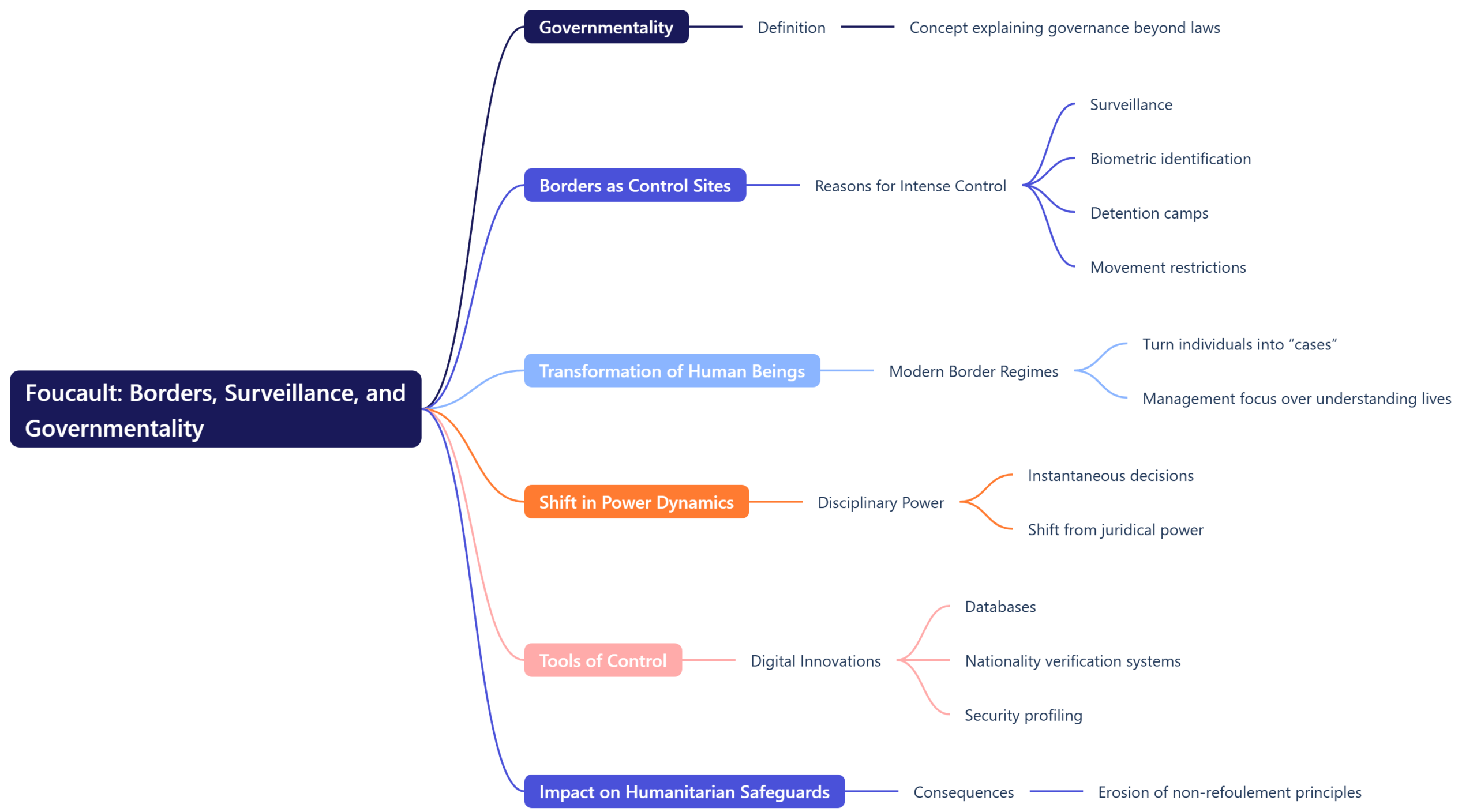
Michel Foucault’s concept of governmentality helps explain why borders have become sites of intense control. Refugees are governed not only through laws, but through surveillance, biometric identification, detention camps, and movement restrictions. Modern border regimes transform human beings into “cases” to be managed, not lives to be understood. Pushbacks reflect what Foucault would call a shift from juridical power to disciplinary power, where decisions are made instantly, without deliberation. Digital databases, nationality verification systems, and security profiling further entrench this logic, often at the cost of humanitarian safeguards like non-refoulement. Zygmunt Bauman: Refugees as “Human Waste” of GlobalisationSociologist Zygmunt Bauman described refugees as the “human waste” of global modernity—produced by wars, economic restructuring, climate change, and political instability. Globalisation enables free movement of capital and goods, but not of people. Refugees are the visible contradiction of this system: displaced by global forces yet unwanted by nation-states. India’s ad hoc refugee policy reflects this paradox. While it has historically provided shelter to refugees from Tibet, Sri Lanka, and Afghanistan, the absence of a legal framework leaves refugees vulnerable to shifting political priorities. Marx: Class, Labour, and Migrant Vulnerability
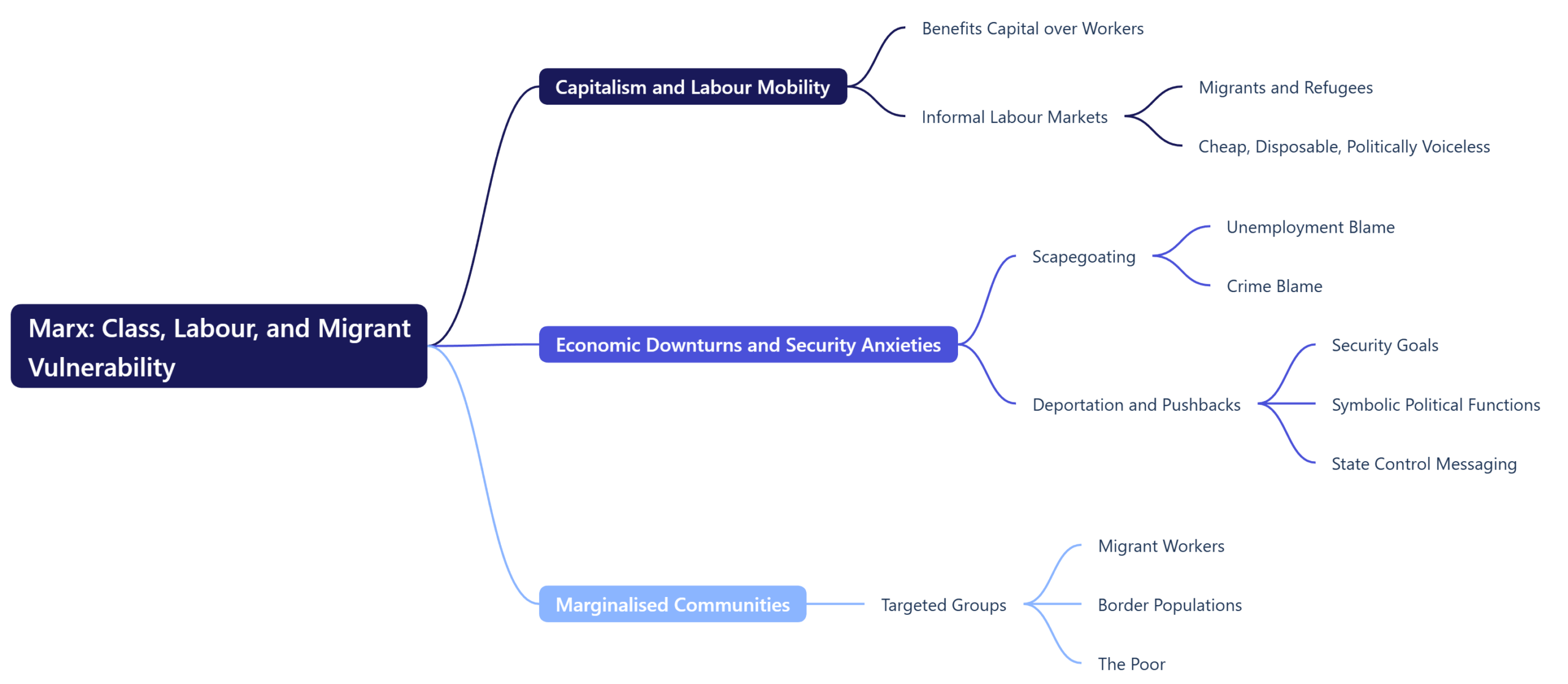
Karl Marx’s analysis of capitalism highlights how labour mobility often benefits capital more than workers. Migrants and refugees frequently enter informal labour markets, where they are cheap, disposable, and politically voiceless. When economic downturns or security anxieties arise, these groups become scapegoats, blamed for unemployment or crime. Deportation and pushbacks thus serve not only security goals but also symbolic political functions, reassuring citizens that the state is “in control.” This class dimension explains why marginalised communities—migrant workers, border populations, and the poor—are disproportionately targeted. Amartya Sen: Justice, Capabilities, and Human DignityAmartya Sen’s capability approach shifts the focus from legal status to human well-being. From this perspective, refugee protection is not merely about preventing return, but about ensuring basic capabilities—safety, health, education, and dignity. Pushbacks violate this ethical framework by reducing individuals to security risks rather than human beings with needs and histories. Even deportation, when conducted without due process, undermines justice by denying individuals the opportunity to contest decisions that fundamentally alter their lives. Good governance, Sen would argue, must balance sovereignty with reasoned public ethics. India’s Refugee Policy: Sovereignty vs HumanityIndia’s refusal to sign the 1951 Refugee Convention is rooted in concerns about sovereignty, security, and the Convention’s Eurocentric framework. Instead, India follows a humanitarian but ad hoc approach, offering refuge without legal recognition. Sociologically, this creates a condition of permanent liminality—refugees are protected but not entitled, welcomed but not integrated. They exist at the mercy of executive discretion. The distinction between deportation (legal) and pushbacks (extra-legal) becomes crucial here. Without legal clarity, humanitarian action risks sliding into arbitrary exclusion. Deportation, Pushbacks, and Structural ViolenceJohan Galtung’s concept of structural violence helps explain the harm caused by wrongful expulsions. When institutions systematically deny due process, access to justice, or recognition, violence occurs without visible force. Pushbacks exemplify this form of violence. They erase identity, silence appeals, and render suffering invisible—all while appearing administratively efficient. UNHCR’s Relevance in a Fragmented WorldIn an era of rising nationalism and securitisation of borders, UNHCR’s role becomes both more important and more constrained. Its advocacy for non-refoulement and durable solutions challenges states to uphold ethical commitments beyond narrow political interests. Barham Salih’s leadership may bring renewed attention to displacement from conflict-prone regions, but structural change requires collective political will, not symbolism alone. Conclusion: Beyond Borders, Towards JusticeRefugees force societies to confront uncomfortable questions: Who belongs? Who decides? And on what basis? Sociology teaches us that borders are not merely lines on maps—they are social institutions that reflect power, fear, and moral choice. Deportation and pushbacks, when stripped of due process, erode not only refugee rights but the ethical foundations of democracy. Ultimately, the treatment of refugees is a mirror reflecting the moral character of states. Protecting sovereignty need not mean abandoning humanity. True security lies not in exclusion, but in justice governed by law, empathy, and reason. |



To Read more topics, visit: www.triumphias.com/blogs
Read more Blogs:
Consumer Justice and the Sociology of Delay: Rethinking Consumer Commissions in India
Good Governance and the Sociology of Power: Rethinking the State, Citizens, and Trust in India
2 comments