


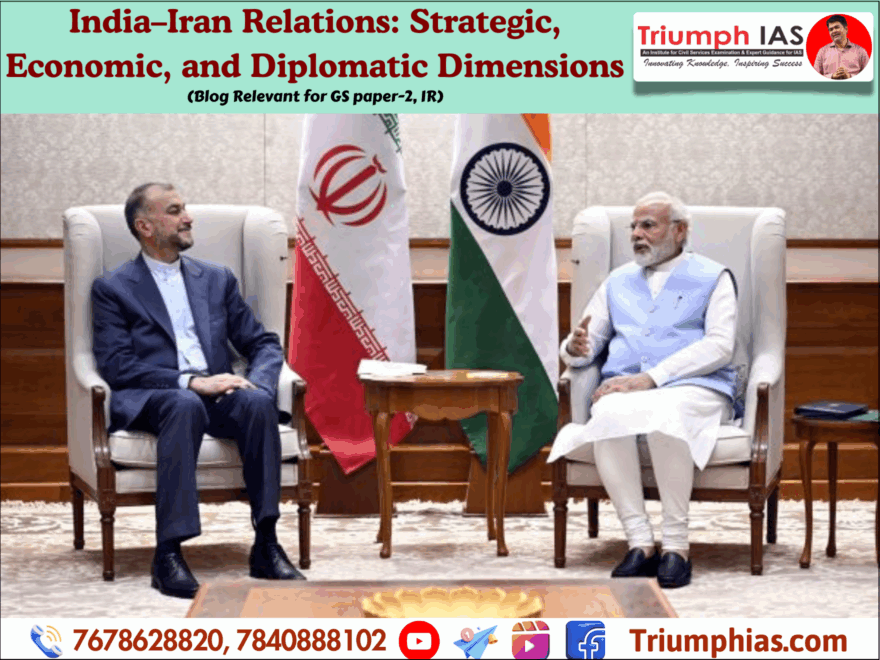
India–Iran Relations: Strategic, Economic, and Diplomatic Dimensions
(Relevant for GS paper-2, IR)

IntroductionIndia and Iran share centuries of historical and cultural ties that continue to shape their contemporary diplomatic and economic engagements. Both countries recognize each other’s importance in the region, making their partnership strategically significant, especially amid evolving geopolitical developments in West Asia. India–Iran relations touch upon multiple dimensions—energy security, connectivity, trade, regional stability, and counterterrorism—which are crucial for India’s foreign policy and energy needs. Historical and Civilizational TiesThe India–Iran relationship is rooted in centuries of shared cultural links, linguistic exchanges, and trade routes. Persian influence can be seen across India’s architecture, language, and Sufi traditions. Diplomatic ties were formalized in 1950 after India recognized the modern Iranian state. High-profile visits like Prime Minister Atal Bihari Vajpayee’s trip in 2001 and Iranian President Khatami’s visit in 2003 set the tone for future cooperation. Key Areas of Cooperation
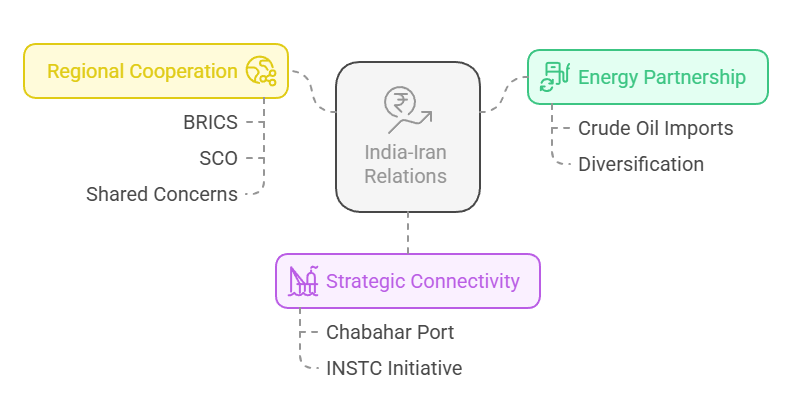
Iran historically supplied up to 10–12% of India’s crude oil. Though imports decreased due to U.S. sanctions post-2019, India remains interested in diversifying its energy sources. Restoring energy trade could help India ensure stable crude supplies at competitive rates.
A cornerstone of India–Iran relations is Chabahar Port, which provides India with direct access to Afghanistan and Central Asia, bypassing Pakistan. The port’s development is part of India’s broader International North–South Transport Corridor (INSTC) initiative, enhancing trade and regional connectivity.
Both countries collaborate on regional platforms like BRICS and SCO. India supported Iran’s entry into these groups and engages in regular strategic consultations at the National Security Advisor level. Shared concerns like counterterrorism, maritime security, and stable Afghanistan have brought them closer. Challenges in Bilateral Relations
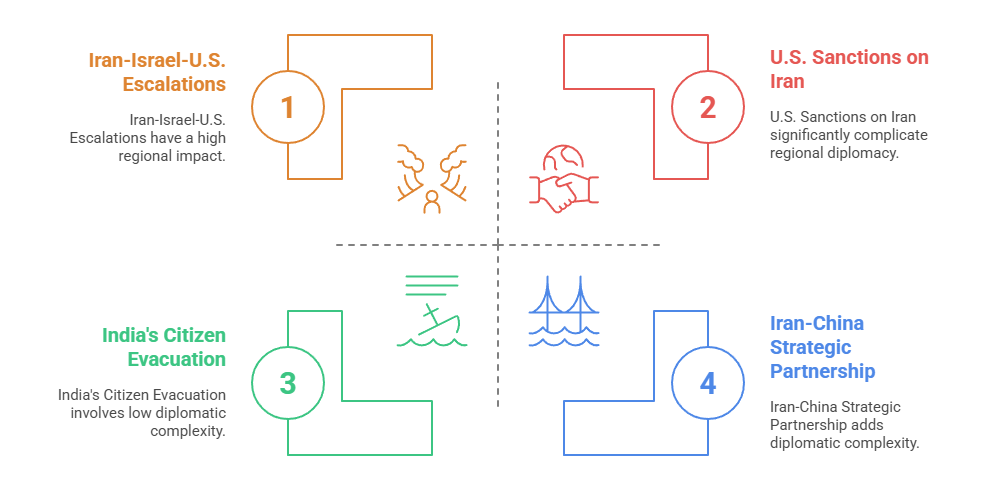
American economic sanctions on Iran pose a significant challenge. India had to scale down oil imports and balance its ties with the U.S. and Israel. Navigating these sanctions requires deft diplomacy.
Iran’s tense relations with the U.S. and its position on regional conflicts, including its close strategic partnership with China and support to militias across West Asia, complicate India’s diplomatic calculus.
The ongoing crisis, especially post the Iran–Israel–U.S. escalations, underscores the fragility of the region. India evacuated its citizens under Operation Sindhu, demonstrating its commitment to safety. PM Modi’s conversations with Iran’s leadership have focused on de-escalation and upholding regional peace. Way Forward for India–Iran Relations
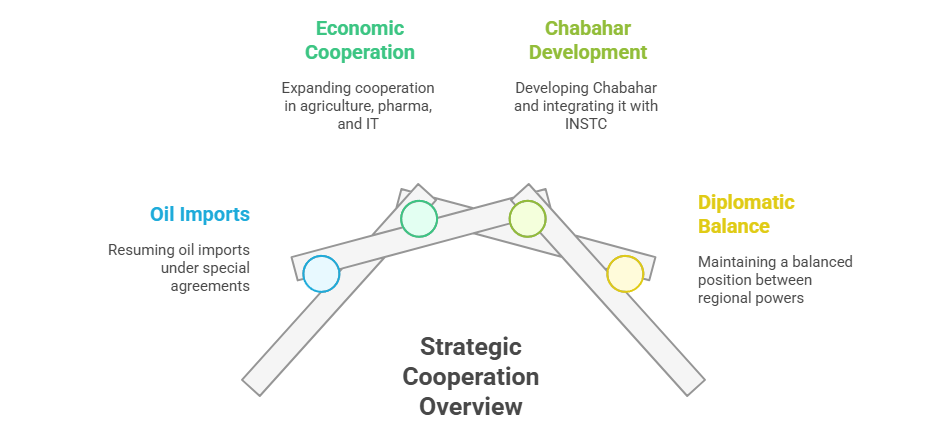
To strengthen ties with Iran, India could:
ConclusionIndia–Iran relations hold immense strategic value due to geographic proximity, historical linkages, and mutual interests. Despite challenges like geopolitical tensions and international sanctions, there are avenues for deeper collaboration. By engaging proactively in areas like energy, connectivity, counterterrorism, and regional stability, India can strengthen this partnership while safeguarding its larger strategic goals. Going forward, India must continue its nuanced diplomacy, leveraging its historical goodwill to enhance its influence and secure its interests in West Asia. |





To Read more topics, visit: www.triumphias.com/blogs
Read more Blogs:
Global Dreams, Local Realities: Indian Middle Class in the Age of Globalization
One comment