Childhood nutrition is central to human development, health, and social equity. Yet, the modern food environment is increasingly failing children worldwide. According to the UNICEF report “Feeding Profit: How Food Environments Are Failing Children” (2025), unhealthy diets and obesogenic environments are contributing to a surge in overweight and obesity among children and adolescents aged 5–19 years. Alarmingly, for the first time in history, global obesity prevalence (9.4%) has surpassed underweight (9.2%) among this age group, highlighting a pressing public health challenge. India, with its large and diverse population, mirrors this global trend, facing a dual burden of undernutrition and rising obesity, making it a critical concern for sociologists, policymakers, and public health professionals.
Key Findings from the UNICEF 2025 Report
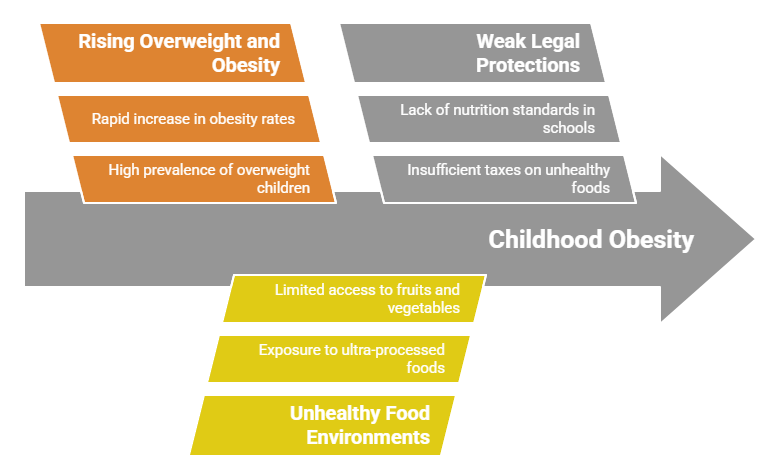
Rising Overweight and Obesity:
One in five children globally is overweight.
Obesity is increasing faster than overweight, making it harder to reverse and more harmful to long-term health.
Unhealthy Food Environments:
Schools, homes, and communities increasingly expose children to ultra-processed foods (UPFs) and sugary drinks.
UNICEF’s U-Report (2023) across eight South Asian countries found unhealthy foods more available than fruits and vegetables in schools.
Children in poorer areas are disproportionately exposed to unhealthy food displays, reflecting structural inequality in access to healthy diets.
Weak Legal Protections:
Only 18% of countries mandate nutrition standards for school meals.
Only 19% levy national taxes on sugary or ultra-processed foods.
Most nations rely on fragmented voluntary measures, leaving children vulnerable to unhealthy food systems.
Childhood Nutrition and Obesity in India
India faces a rapid rise in childhood overweight and obesity, exacerbating health inequities.
Trends:
Under-five overweight/obesity rose 127% from 1.5% in NFHS-3 (2005–06) to 3.4% in NFHS-5 (2019–21).
Adolescent girls’ obesity increased 125%, boys’ by 288% during the same period.
By 2030, India may have 27 million children aged 5–19 with obesity, contributing 11% to the global burden.
Key Drivers:
Dietary Shifts: Traditional diets rich in fruits and vegetables are being replaced by ultra-processed foods (UPFs). UPF consumption surged from USD 900 million in 2006 to USD 37.9 billion in 2019.
Aggressive Marketing: Digital advertising targets children, creating constant exposure and desire for unhealthy foods.
Early-Life Factors: Poor maternal nutrition, inadequate breastfeeding, and childhood dietary habits contribute to early-onset obesity.
Social Norms: In many households, girls and women eat last and least, deepening nutritional inequities.
Lifestyle Factors: Low physical activity, screen dependence, and high UPF intake further exacerbate obesity.
Health and Economic Implications:
Childhood obesity elevates the risk of diabetes, hypertension, cardiovascular diseases, and certain cancers.
In 2019, obesity cost India nearly USD 29 billion (1% of GDP); without interventions, this may rise to 2.5% of GDP by 2060.
Unhealthy diets contribute to 56% of India’s disease burden, highlighting the intersection of nutrition, economics, and health policy.
Government Initiatives and Policies
India has implemented multiple strategies to curb obesity, focusing on awareness, behavioral change, and regulation:
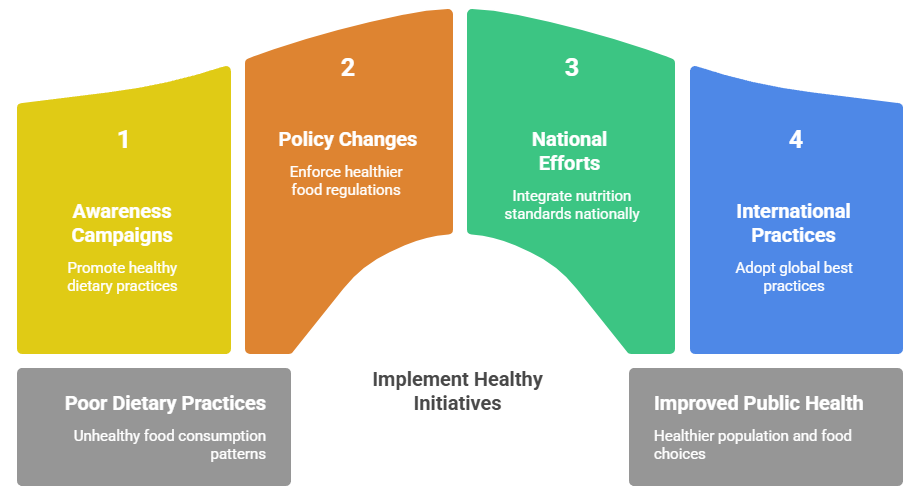
Awareness and Behaviour Change Campaigns:
Fit India Movement, Eat Right India Campaign, POSHAN Abhiyaan 2.0, and Mission LiFE promote healthy dietary practices and physical activity.
The Stop Obesity Campaign encourages reducing cooking oil consumption by 10%, highlighting small actionable steps.
Policy and Regulatory Actions:
Placement of sugar and oil boards in schools guides healthier consumption.
India became the first lower-middle-income country to adopt WHO best-practice policy limiting trans fats.
National Efforts:
Inclusion of school nutrition standards and health taxes on sugary beverages and ultra-processed foods.
Nutrition labeling reforms, although partially implemented, aim to inform consumer choices.
International Best Practices:
Chile’s black “high in” warning labels for sugar, fat, sodium, and calories reduced unhealthy food consumption by 24%, offering a model for India.
Challenges in Ensuring Healthy Nutrition
Regulatory Gaps:
FSSAI has not defined HFSS (high fat, sugar, salt) or UPFs, making regulation and enforcement difficult.
The Indian Nutrition Rating (INR) system misleads consumers; foods high in HFSS may still receive 2–3 stars.
Industry Influence:
Industry lobbying dominates policymaking, sidelining scientific evidence.
FSSAI abandoned proposed traffic-light labeling in favor of the star system due to industry pressure.
Weak Advertising Restrictions:
Regulations under the Consumer Protection Act (2019) are insufficient to prevent misleading ads.
National Multisectoral Action Plan (2017) recommendations to restrict HFSS marketing remain largely unimplemented.
Socioeconomic Inequities:
Children from poorer households face greater exposure to unhealthy food and limited access to nutritious alternatives, reflecting broader social inequality.
UNICEF Recommendations for Policy and Practice
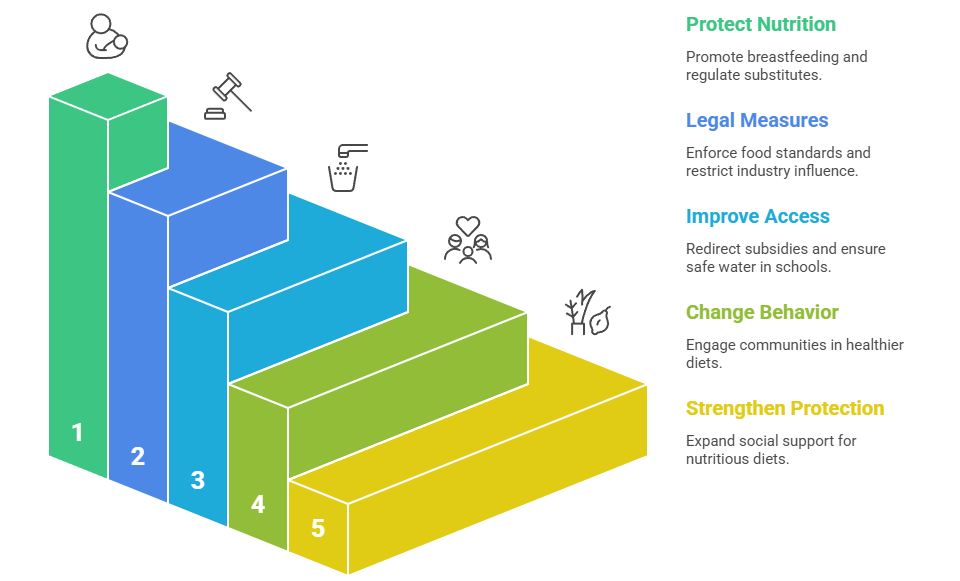
Protect Early Nutrition:
Promote breastfeeding and regulate breast-milk substitutes.
Limit digital marketing and sales of unhealthy infant foods.
Legal and Mandatory Measures:
Enforce school food standards, labeling laws, sugar taxes, and reformulation of processed foods.
Restrict industry participation in policymaking and introduce conflict-of-interest safeguards.
Improve Access to Nutritious Foods:
Redirect subsidies towards healthy foods, fortify staples, and ensure safe drinking water in schools.
Behaviour Change Campaigns:
Community-based programs emphasizing the harms of UPFs.
Engage families in adopting healthier diets and lifestyles.
Strengthen Social Protection:
Expand food, cash, and voucher transfers.
Support affordable childcare and parental benefits to improve access to nutritious diets.
Sociological Perspective
From a sociological lens, childhood nutrition is not just a health issue but intersects with social inequality, culture, and policy governance:
Pierre Bourdieu’s theory of habitus explains dietary choices as socially conditioned; children inherit food behaviors from families, communities, and peer networks. Poor families with limited access to healthy foods face structural constraints in practicing nutrition.
Amartya Sen’s capability approach highlights that children’s well-being depends not only on food availability but also on their real capability to consume nutritious diets, which is constrained by socioeconomic inequities.
Social stratification: The report shows that children from low-income households are disproportionately exposed to unhealthy foods, deepening health disparities and perpetuating inequality.
Media and consumer culture: Aggressive digital marketing normalizes UPFs consumption among youth, creating a cultural environment where unhealthy food is aspirational.
Conclusion
The rise of overweight and obesity among children in India is a growing public health and sociological concern, intertwined with social inequality, urbanization, lifestyle changes, and globalized food systems. Despite government campaigns, policy and regulatory gaps, industry lobbying, and poor enforcement hinder progress. Evidence from global best practices, such as Chile’s labeling system, offers actionable lessons for India.
To safeguard children’s health and rights, urgent interventions are needed: mandatory front-of-pack labels, school food standards, marketing restrictions, health taxes, nutrition education, and equitable access to healthy foods. Addressing child obesity requires a multi-stakeholder approach involving government, civil society, communities, and schools. Ultimately, every child has the right to a safe, healthy, and nutritious food environment to thrive physically, mentally, and socially.






One comment