


Echoes of Life and Loss: A Sociological Inquiry into India’s Vital Statistics 2023
(Relevant for Sociology Paper 2: Population Dynamics)
Introduction: Echoes of Life and LossVital statistics—births, deaths, and everything in between—are more than just numbers. They are a mirror reflecting the moral, cultural, and institutional contours of a society. India’s Vital Statistics Report 2023, released by the Registrar General of India, offers not just demographic data but a window into the evolving psyche of the nation. Vital statistics are not just state data—they are social documents. They challenge us to rethink our values, question our assumptions, and shape a future that embraces equity, dignity, and justice for all. The Rise and Fall of Numbers: Birth and Death TrendsThe year 2023 recorded 2.52 crore births, a slight decrease of 2.32 lakh from 2022. In contrast, 86.6 lakh deaths were registered, a marginal increase from the previous year. Though subtle, these shifts reveal broader demographic and sociological trends.
India’s declining birth rate is not an isolated event. It is symptomatic of a society in demographic transition—shifting from high fertility and mortality to lower levels of both. As access to healthcare, education, and contraception improves, families are choosing to have fewer children. This trend is typically associated with increased urbanization, female education, and workforce participation.
The sharp spike in deaths in 2021 (1.02 crore) remains a grim reminder of the COVID-19 pandemic’s second wave. The excess deaths—21 lakh more than in 2020—underscore the strain placed on India’s healthcare infrastructure and the socio-emotional trauma endured by millions. It also raised questions about state capacity, crisis preparedness, and inequality in access to care—core concerns in sociology. Sex Ratio at Birth: A Cultural Crisis in NumbersPerhaps the most telling insight of the report is the Sex Ratio at Birth (SRB)—a measure of gender equity and social values.
Gender Imbalance: A Structural IssueThe SRB in several states remains below the natural baseline (usually around 950-975 female births per 1000 male births), revealing a gender-selective culture. The preference for sons over daughters, deeply embedded in patriarchal traditions, continues to distort birth outcomes. This isn’t just a private family choice—it’s a structural manifestation of inequality. The sex ratio is shaped by factors like:
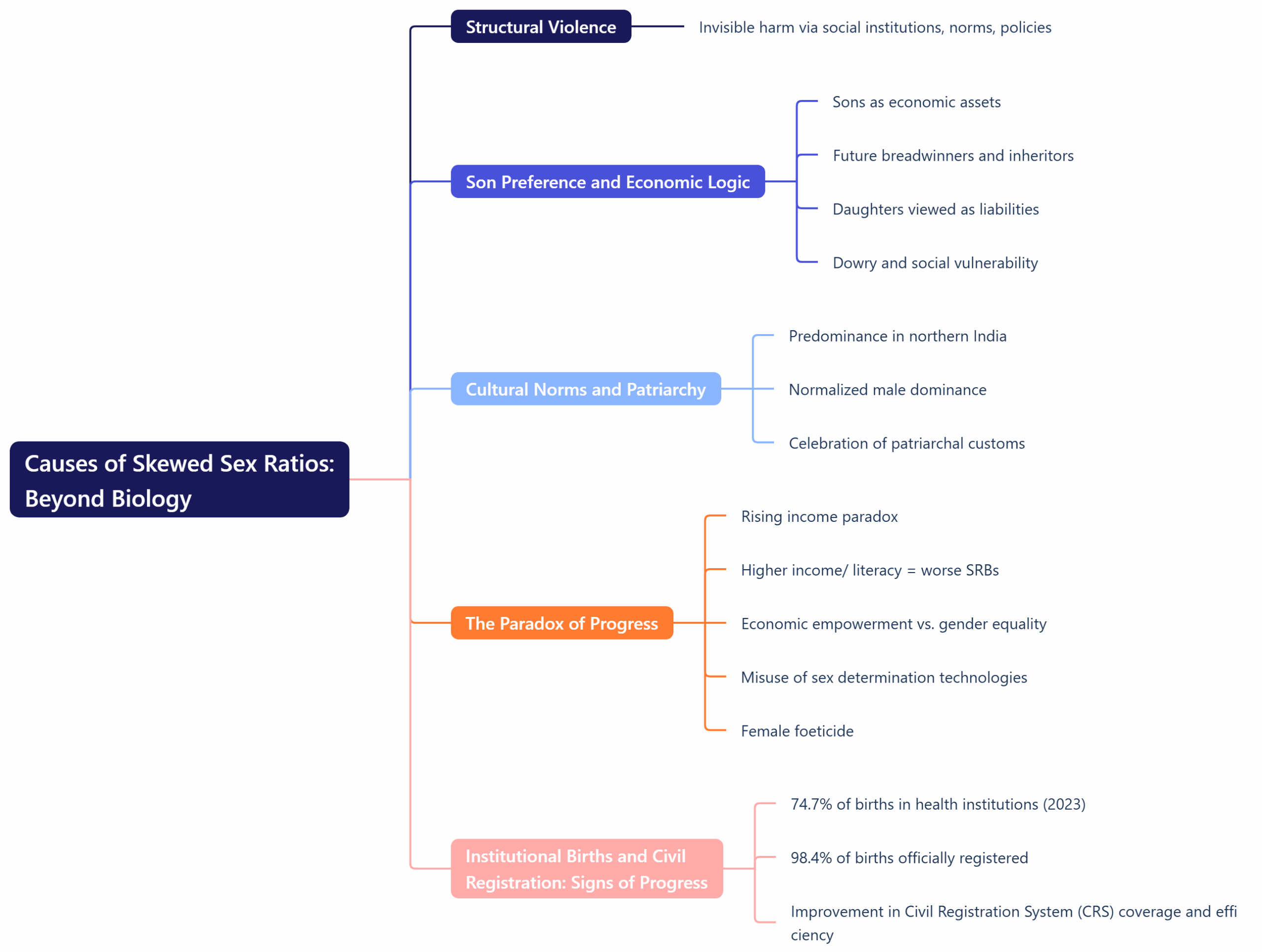
Causes of Skewed Sex Ratios: Beyond Biology
To understand the skewed sex ratio, we must look at structural violence—the slow, invisible harm caused by social institutions, norms, and policies.
Sons are still viewed as economic assets, future breadwinners, and inheritors of family property. Daughters, by contrast, are seen through the prism of dowry and social vulnerability, reinforcing their perceived lesser value.
Indian society, particularly in northern states, is steeped in patriarchal customs. From the household to the state level, male dominance is normalized, perpetuated, and often celebrated.
Perhaps the most disturbing trend is the “rising income paradox”: states with higher income and literacy levels often have worse SRBs. Economic empowerment has not necessarily led to gender equality. Instead, it has enabled more sophisticated misuse of technologies for sex determination and female foeticide.
The report offers hopeful signs as well:
These statistics point to growing access to maternal healthcare and the success of policies promoting institutional deliveries. They also reflect a maturing administrative infrastructure that is moving towards digital and real-time registration, minimizing human error and increasing transparency. Solutions: Reimagining Gender Justice
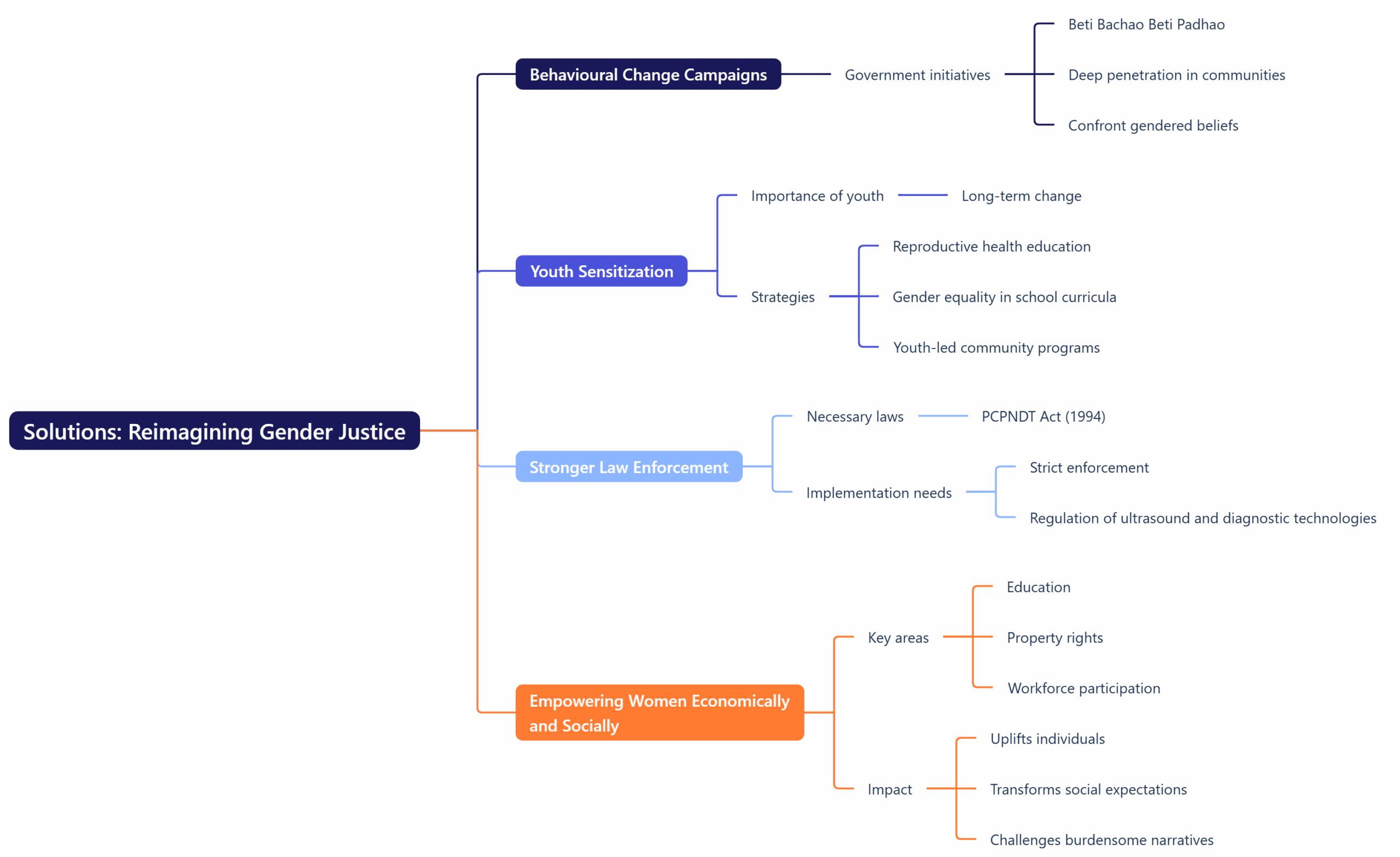
Improving sex ratios and gender equity requires both policy and cultural reform.
Government initiatives like Beti Bachao Beti Padhao must go beyond slogans. They need to penetrate deep into village communities, urban slums, and elite spaces alike, confronting the gendered beliefs that shape reproductive choices.
Long-term change rests with the younger generation. Reproductive health education, school curricula on gender equality, and youth-led community programs can help reshape attitudes.
Laws like the PCPNDT Act (1994) need strict implementation. Additionally, regulating ultrasound and diagnostic technologies under the Drugs and Cosmetics Act is a much-needed move to curb misuse.
Empowering women through education, property rights, and workforce participation not only uplifts individuals but also transforms social expectations. A daughter who is economically independent challenges the narrative of daughters as “burdens.” The State and the Statistic: Role of InstitutionsThe Registrar General of India plays a pivotal role in data generation. The Civil Registration System (CRS) ensures that every life—whether born or lost—is counted. This universal recording is critical for:
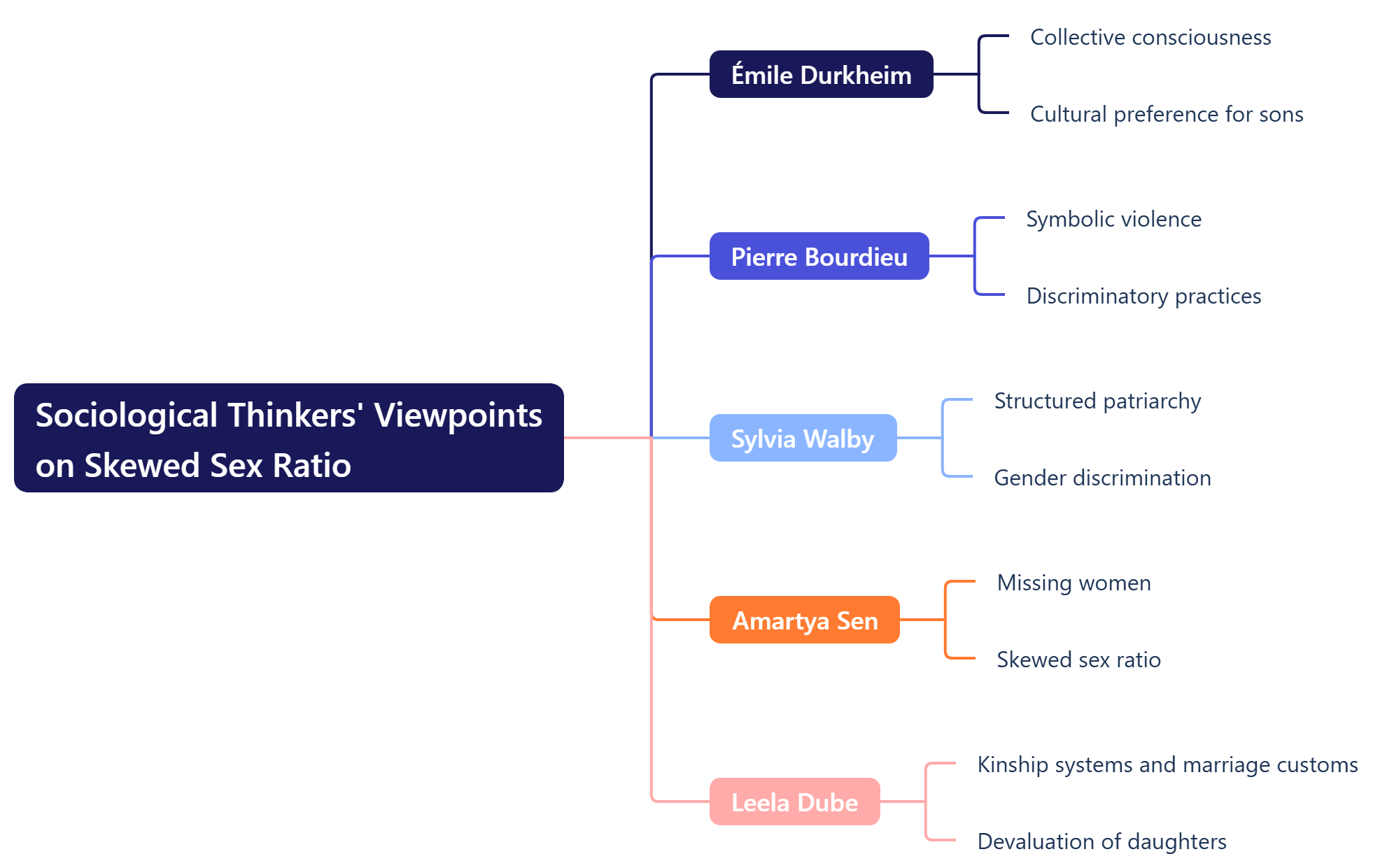
As India moves towards a more digitally integrated CRS, we can expect better quality data, which is foundational for evidence-based governance. Sociological Thinkers’ Viewpoints on Skewed Sex Ratio
Conclusion: Towards a Qualitative Population PolicyIndia has made remarkable strides in terms of quantitative goals—reducing birth rates, increasing institutional deliveries, and registering vital events. But true progress lies not in controlling how many people are born or die, but in improving the quality of life for every individual, regardless of gender. The 2023 report is not just about statistics—it’s a call to conscience. A society that still fails to value its daughters equally must confront its deepest prejudices. The path forward is not only through law and policy but through a cultural awakening—a collective recognition that every birth is sacred, and every life, equal. |



To Read more topics, visit: www.triumphias.com/blogs
One comment