



Reliable Data as a Tool to Combat Air Pollution in India
(Relevant for GS paper-3, Environmental Conservation)
|
Air pollution in India has escalated into a public health crisis, with cities like Delhi consistently ranking among the most polluted globally. According to a report by IQAir, India alone accounts for six of the nine most polluted cities, with Byrnihat being the worst . The Air Quality Index (AQI) in Delhi has reached alarming levels, peaking at 494, categorized as “severe plus” . These figures underscore the urgent need for accurate, reliable, and authentic air quality data to inform policy decisions, public health responses, and environmental strategies The Importance of Data Authenticity
Accurate air quality data is crucial for developing effective environmental policies and regulations. Without authentic data, policymakers may implement measures that are either insufficient or misdirected, failing to address the root causes of pollution.
Reliable data enables health authorities to issue timely advisories and warnings, protecting vulnerable populations such as children, the elderly, and those with pre-existing respiratory conditions. For instance, the System of Air Quality and Weather Forecasting and Research (SAFAR) provides real-time AQI updates and health advisories to the public
Accessible and trustworthy data empowers citizens to take proactive measures to reduce exposure to harmful pollutants. Initiatives like SAFAR also organize awareness drives, educating the public about self-mitigation strategies. Challenges to Data Authenticity
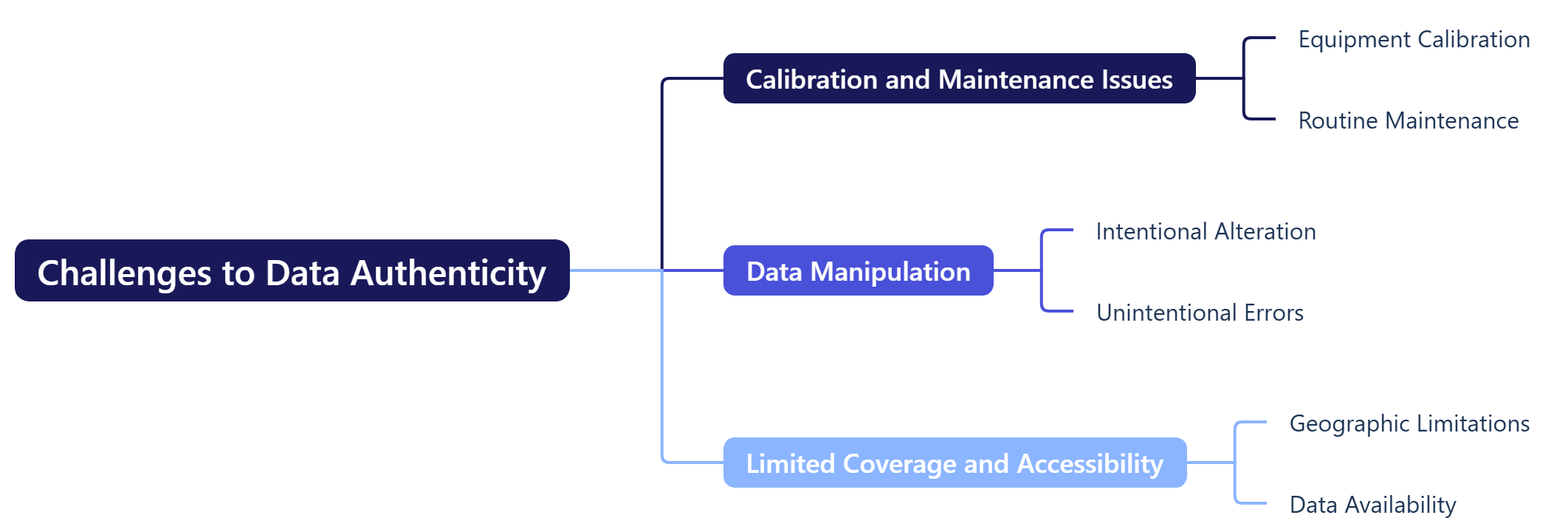
Many air quality monitoring stations suffer from inadequate calibration and maintenance. This leads to inaccurate readings, undermining the reliability of the data collected. A senior official from the Central Pollution Control Board (CPCB) admitted that industries often set up monitoring units merely to meet regulatory requirements, without ensuring proper maintenance or calibration .
There have been instances where data is manipulated to present a more favorable image of air quality, especially in areas with stringent regulatory oversight. Such practices not only mislead the public but also hinder effective policy implementation.
Despite advancements, air quality monitoring in India remains limited in coverage, particularly in rural and remote areas. This creates gaps in data, making it challenging to assess the full extent of pollution and its impacts. Enhancing Data Authenticity: Technological Interventions
Blockchain technology offers a promising solution to ensure data authenticity. By creating an immutable ledger of air quality data, blockchain can prevent tampering and ensure transparency. This technology can be integrated into existing monitoring systems to enhance data credibility.
Utilizing high-precision sensors can significantly improve the accuracy of air quality measurements. These sensors, when properly calibrated and maintained, can provide real-time data with minimal error margins.
Satellite imagery and remote sensing technologies can offer comprehensive data on air quality across vast areas. For example, the Indian Space Research Organisation (ISRO) has developed protocols to monitor burnt areas from farm fires, a significant contributor to seasonal pollution . Institutional Frameworks Promoting Data Authenticity
SAFAR is an initiative by the Indian Institute of Tropical Meteorology (IITM) and the India Meteorological Department (IMD), aimed at providing real-time air quality information and forecasts. The system employs sophisticated instruments to monitor pollutants like PM2.5,PM10, NOx, SO2, and ozone, among others . SAFAR also implements stringent quality control measures, including regular calibration and maintenance of instruments, to ensure data reliability .
The CPCB, along with SPCBs, is responsible for monitoring and regulating air quality across the country. They conduct joint studies in over 270 locations, ensuring standardized data collection and analysis. However, challenges persist in ensuring consistent data quality across all monitoring stations Policy Recommendations
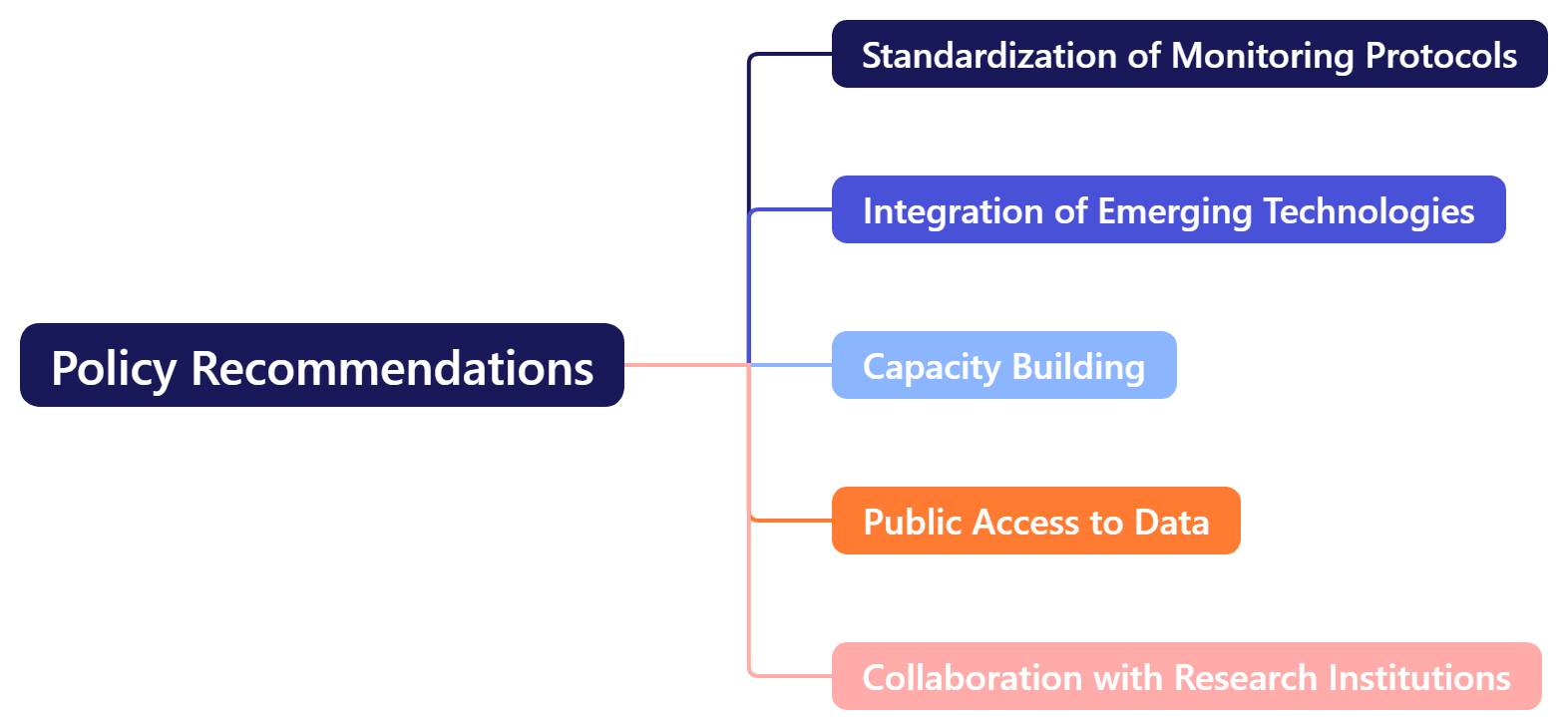
Standardization of Monitoring ProtocolsEstablishing uniform standards for calibration, maintenance, and data reporting across all monitoring stations can enhance data reliability. Integration of Emerging TechnologiesIncorporating technologies like blockchain and advanced sensors into existing monitoring frameworks can bolster data authenticity. Capacity BuildingTraining personnel in the operation and maintenance of air quality monitoring equipment ensures consistent data quality. Public Access to DataMaking air quality data publicly accessible fosters transparency and encourages community participation in pollution mitigation efforts. Collaboration with Research InstitutionsEngaging with academic and research institutions can facilitate the development of innovative solutions for data authenticity and pollution control. ConclusionEnsuring data authenticity in air quality monitoring is paramount for effective pollution control and public health management. By addressing existing challenges and leveraging technological advancements, India can build a robust framework for accurate and reliable air quality data. This, in turn, will empower policymakers, health authorities, and citizens to take informed actions towards a cleaner and healthier environment. |





One comment