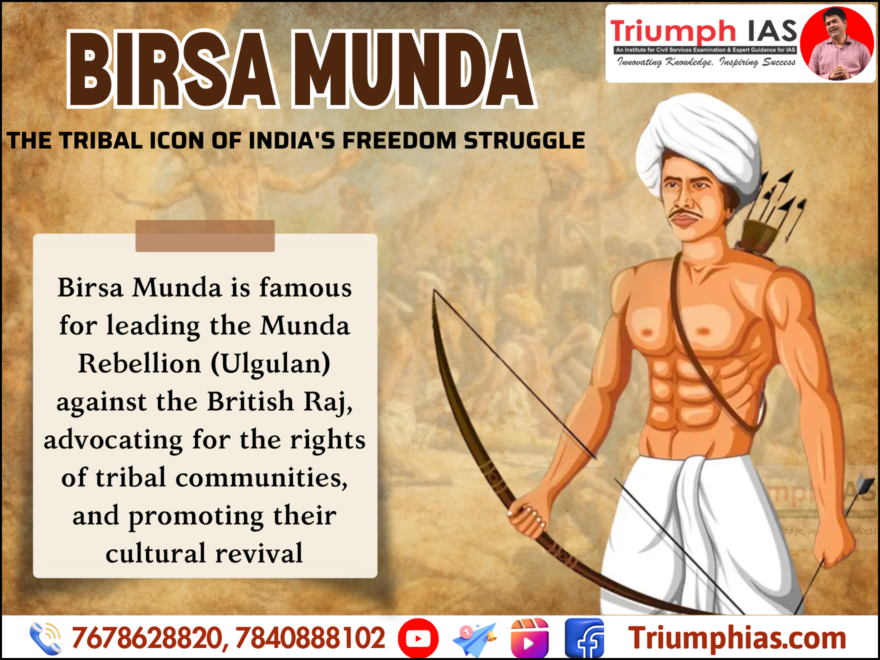
In the annals of Indian history, Birsa Munda stands as a symbol of resistance against British colonialism and exploitation of tribal communities. Revered as ‘Dharti Aaba’ (Father of the Earth), his legacy is crucial for students preparing for the UPSC Civil Services Examination, particularly under topics related to Tribal Movements, Freedom Fighters, and Modern Indian History.
Who was Birsa Munda?
Birth: 15 November 1875, Ulihatu, Bengal Presidency (present-day Jharkhand)
Community: Belonged to the Munda tribe
Movement: Leader of the Ulgulan (Great Tumult) against British rule and missionary interference
Birsa Munda is among the most significant tribal freedom fighters of India, leading a socio-religious and political movement that challenged both colonial rule and feudal practices in the Chotanagpur region.
The Munda Rebellion – Ulgulan (1899–1900)
Causes of the Revolt:
British land policies: Alienation of tribal land to moneylenders and landlords
Missionary activities: Erosion of tribal culture and religion
Forced labor: Tribal people subjected to Begari (bonded labor)
Cultural suppression: British attempts to dismantle tribal governance and customs
Objectives:
Restoration of tribal land rights
Assertion of the Munda Raj (tribal self-rule)
Rejection of foreign culture and religion
Outcomes:
Though the movement was eventually suppressed, it led to the Chotanagpur Tenancy Act, 1908, protecting tribal land rights.
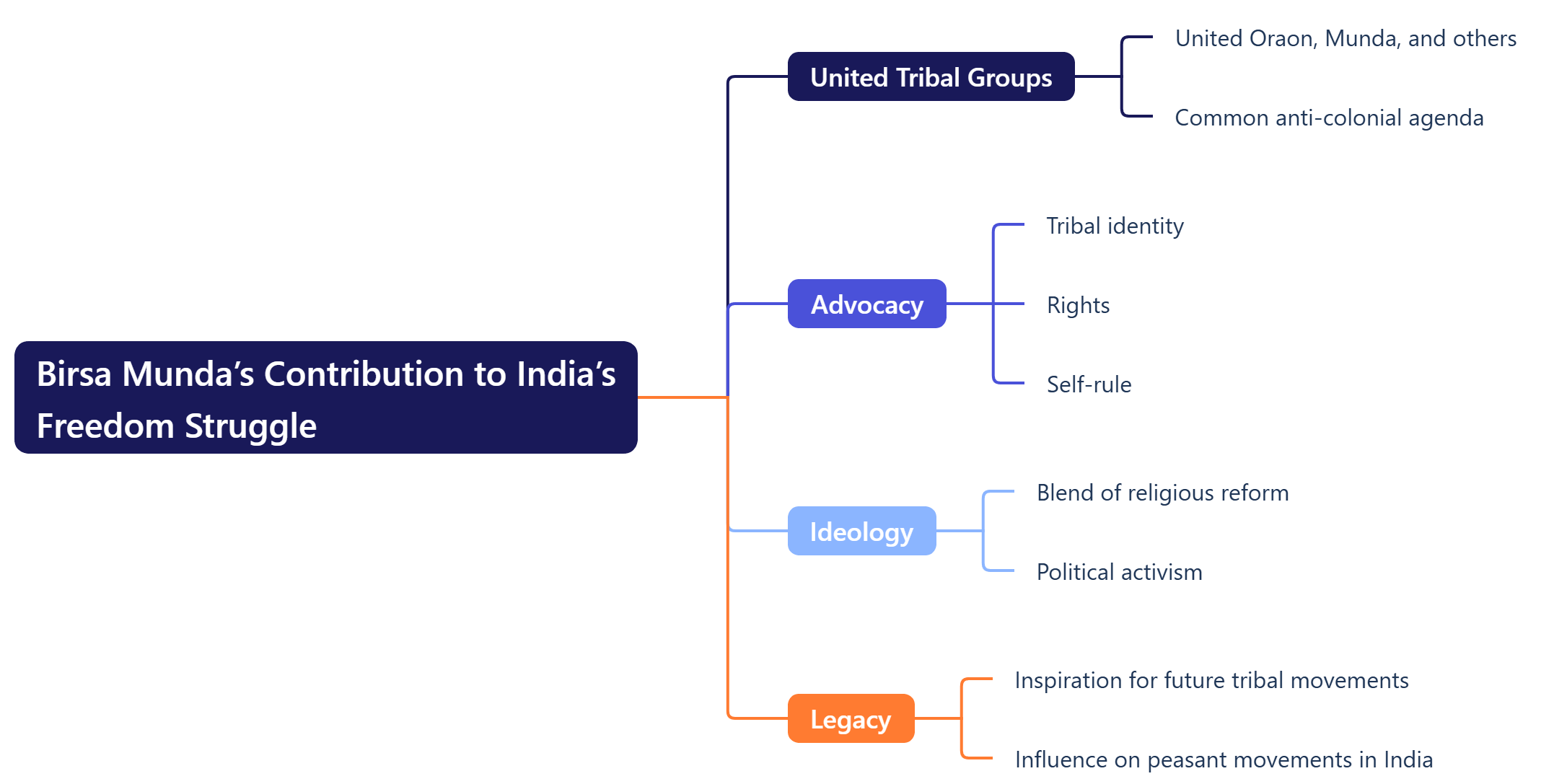
Birsa Munda’s Contribution to India’s Freedom Struggle
United Oraon, Munda, and other tribal groups under a common anti-colonial agenda
Advocated tribal identity, rights, and self-rule
Preached a unique blend of religious reform and political activism
Inspired future tribal and peasant movements in India
Death and Legacy
Arrested: February 1900
Death: 9 June 1900,in Ranchi Jail under mysterious circumstances at the young age of 25
Legacy:
Birsa Munda Jayanti (15 November) is observed as Jharkhand Foundation Day and Jan Jatiya Gaurav Divas.
His life has been included in NCERT textbooks, museum exhibitions, and Tribal Freedom Fighters Galleries launched by the Government of India.
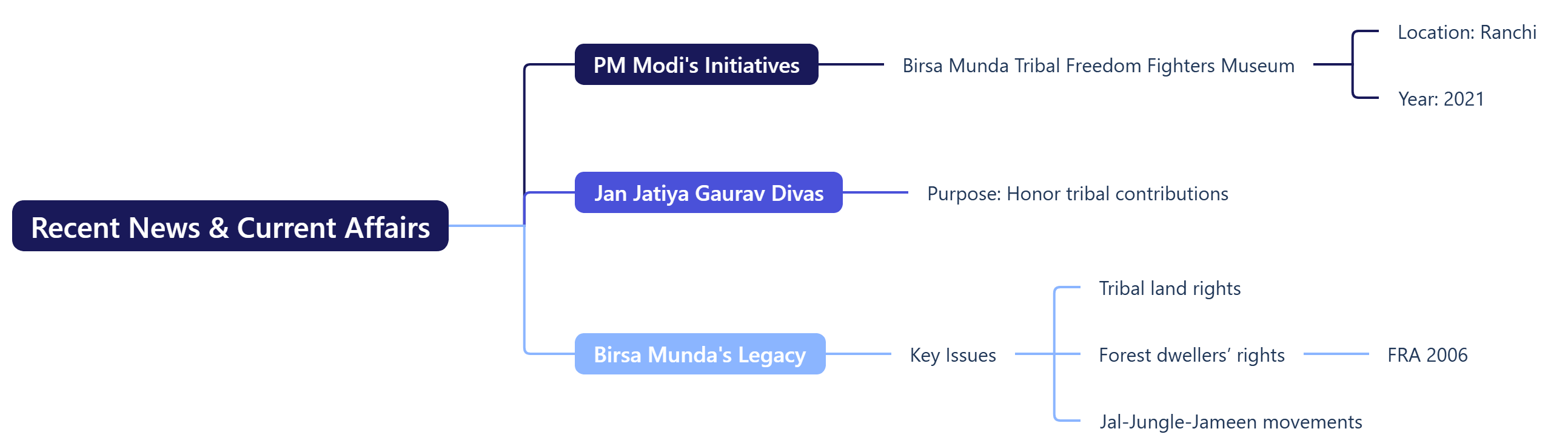
Recent News & Current Affairs:
PM Modi inaugurated the Birsa Munda Tribal Freedom Fighters Museum in Ranchi (2021)
Jan Jatiya Gaurav Divas officially recognized to honor tribal contributions
Birsa’s legacy frequently cited during debates on tribal land rights, forest dwellers’ rights (FRA 2006), and Jal-Jungle-Jameen movements
Conclusion
Birsa Munda is not just a historical figure but a symbol of indigenous resistance, tribal rights, and national pride. For UPSC aspirants, studying his life offers valuable insights into the intersection of tribal identity, colonial exploitation, and grassroots mobilization—themes that remain deeply relevant in contemporary India.
To Read more topics like Birsa Munda: The Tribal Icon of India’s Freedom Strugglein Public Posts, visit: www.triumphias.com/blogs








3 comments