


Temple Entry for Dalits in India
(Relevant for Sociology Paper I: Politics and Society and Sociology Paper II: Caste System; Social Movements in Modern India)

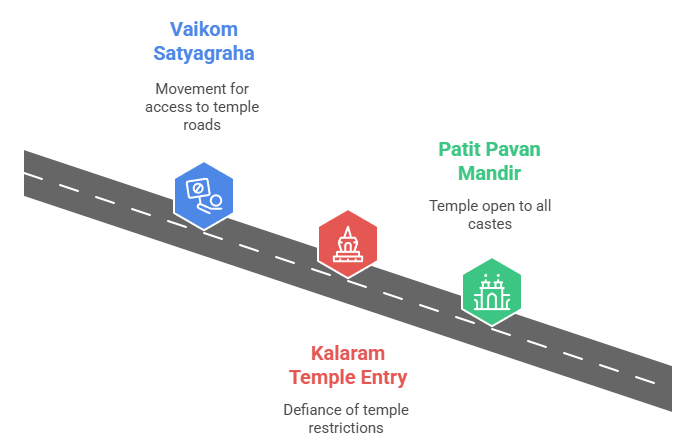
Introduction: Temple Entry for Dalits in IndiaIn a country deeply entrenched in caste hierarchies, the denial of temple entry to Scheduled Castes (SCs), particularly Dalits, symbolizes the cruelest manifestation of social exclusion. While the Constitution of India prohibits untouchability, reality paints a different picture. Temple entry for Dalits remains a contested domain where centuries of discrimination clash with modern egalitarian ideals. Historical Background & Temple Entry Movements
Since independence, despite legal abolishment of untouchability (Article 17) and the Untouchability Offense Act, social practice often lagged behind statutory protections. Constitutional and Legal Safeguards
Despite these laws, caste-based denial continues, especially in rural and semi-urban areas. Recent Incidents Reflecting Persistent Discrimination
These cases underscore the slow, often painful march towards caste-neutral religious access. Sociological Analysis
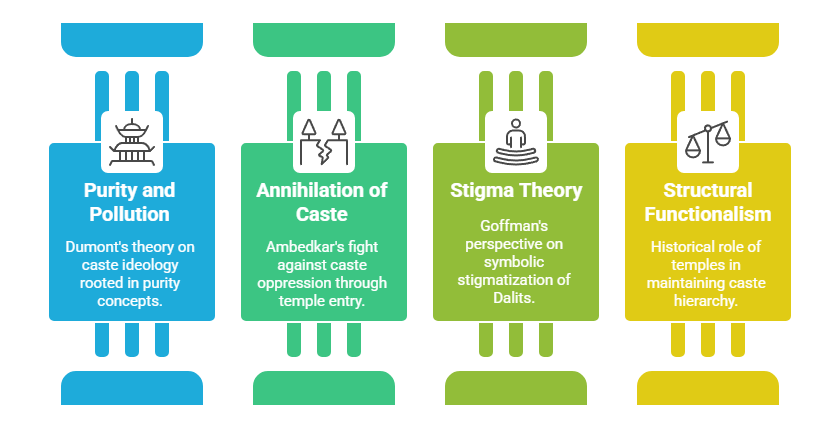
In Homo Hierarchicus, Dumont explains how caste ideology is rooted in the concept of purity. Dalits are excluded from temples to maintain ritual purity, reinforcing symbolic dominance.
Ambedkar saw Hindu temples as symbols of caste oppression. He argued that unless caste is annihilated, legal reforms alone cannot bring equality. His advocacy for Dalit temple entry was a political, not just religious, act of emancipation.
Dalits are stigmatized not just economically but symbolically. Exclusion from temples reinforces the idea that they are “outsiders” to social purity and divine grace.
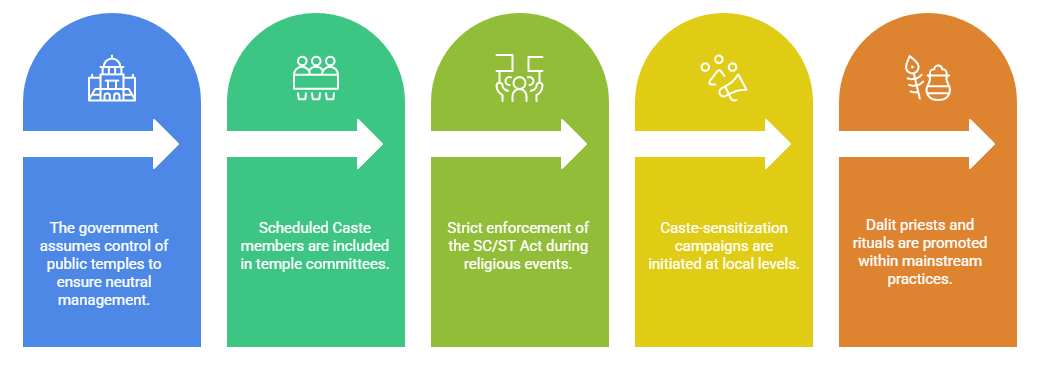
Temples historically functioned to uphold the Varna system. Denial of access to SCs preserved hierarchical equilibrium but is dysfunctional in modern democratic India. Intersectionality in ExclusionThe denial of temple entry is not experienced uniformly. Dalit women, for instance, face double exclusion—as untouchables and as women. Cases of sexual violence, social boycott, and humiliation are more severe when women assert their right to temple access. Role of the State and Civil SocietyWhile legal reforms exist, their enforcement is often weak. Dominant castes control temple committees, police fail to act, and political will is often absent. However, civil society groups, Dalit rights organizations, and progressive religious leaders have made significant contributions in mobilizing support. Suggested Measures:
Temple Entry as a Symbol of Social InclusionTemples are not just religious sites but also social institutions. Entry to temples signifies:
By denying entry, the dominant castes maintain not just religious control, but also a socio-political hierarchy. ConclusionScheduled Caste temple entry is not merely a question of access—it is a question of dignity, rights, and social justice. The journey from Vaikom to modern-day courts reflects both progress and persistent resistance. Understanding this issue through a sociological lens is crucial to critically engage with questions on caste, religion, and social change in India. The call for equal access to sacred spaces is a call to uphold the Constitution, to ensure social harmony, and most importantly, to affirm the humanity of every Indian, regardless of caste. PYQsPaper I
Paper II
|



To Read more topics, visit: www.triumphias.com/blogs
One comment