Air pollution remains a pressing environmental and public health challenge in India. According to the 2024 IQAir World Air Quality Report, India ranks as the fifth most polluted country globally, with an average PM2.5 concentration of 50.6 µg/m³—over ten times the World Health Organization’s (WHO) recommended annual guideline of 5 µg/m³. Delhi continues to be the most polluted capital city worldwide, with an average PM2.5 concentration of 91.8 µg/m³.
Effective policy-making and public health interventions hinge on the availability of accurate, real-time air quality data. However, challenges such as inadequate monitoring infrastructure, data gaps, and limited transparency hinder efforts to mitigate air pollution effectively.
The Importance of Data Authenticity
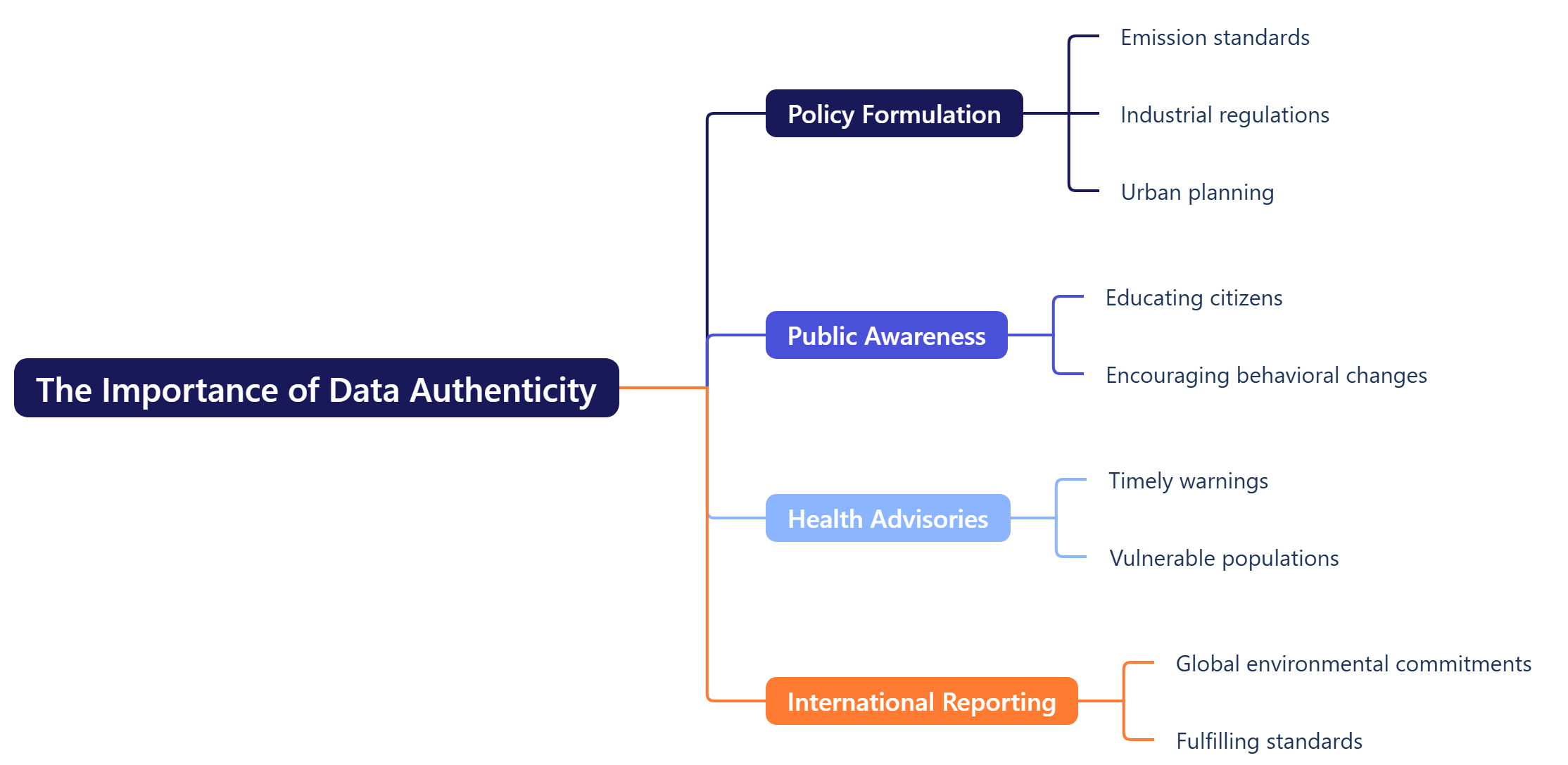
Authentic and reliable air quality data are essential for:
Policy Formulation: Informed decisions on emission standards, industrial regulations, and urban planning.
Public Awareness: Educating citizens about pollution levels to encourage behavioral changes.
Health Advisories: Issuing timely warnings to vulnerable populations during high pollution episodes.
International Reporting: Fulfilling commitments to global environmental agreements and standards.
Current Monitoring Infrastructure
India has made strides in expanding its air quality monitoring network. As of 2024, the country operates 1,524 air quality monitoring stations, including 558 Continuous Ambient Air Quality Monitoring Stations (CAAQMS) and 966 manual stations, covering 550 cities across 28 states and 7 Union Territories. This marks an increase of 62 stations compared to 2023.
However, the National Clean Air Programme (NCAP) target of 1,500 manual stations by 2024 remains unmet, with a shortfall of 534 stations. Moreover, data quality issues persist due to poor maintenance and non-compliance with Central Pollution Control Board (CPCB) siting guidelines.
Challenges in Data Authenticity
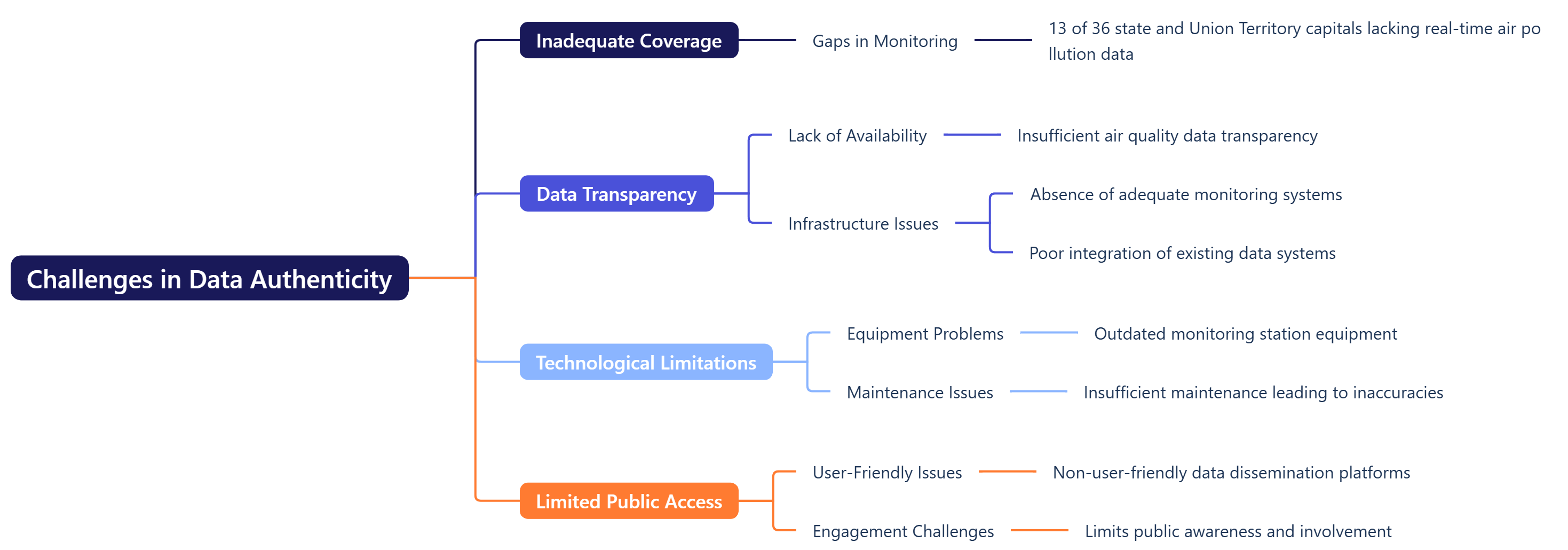
Inadequate Coverage: In January 2024, 13 out of 36 state and Union Territory capitals lacked real-time data on air pollution levels, highlighting significant gaps in monitoring infrastructure.
Data Transparency: There is a lack of transparent data availability on air quality levels across the country, partly due to the absence of an adequate air quality monitoring infrastructure and the lack of integration of existing systems.
Technological Limitations: Many monitoring stations suffer from outdated equipment and insufficient maintenance, leading to data inaccuracies.
Limited Public Access: Data dissemination platforms are often not user-friendly, limiting public engagement and awareness.
Initiatives to Enhance Data Authenticity
National Clean Air Programme (NCAP): Launched in 2019, NCAP aims to reduce particulate matter pollution by 20–30% in 122 Indian cities by 2024. It emphasizes enhancing the air quality monitoring network and ensuring data transparency.
PRANA Portal: The Ministry of Environment, Forest and Climate Change has developed the PRANA (Portal for Regulation of Air-pollution in Non-Attainment cities) platform to monitor and manage air quality data effectively.
Satellite Monitoring: The Indian Space Research Organisation (ISRO) is developing protocols to measure burnt areas using satellite imagery, aiming to improve the detection of farm fires that contribute to air pollution.
Artificial Intelligence (AI) Integration: Researchers are exploring AI and machine learning models, such as Extreme Spatiotemporal Graph Convolution Networks (E-STGCN), to forecast air quality and identify pollution hotspots.
Recommendations for Strengthening Data Authenticity
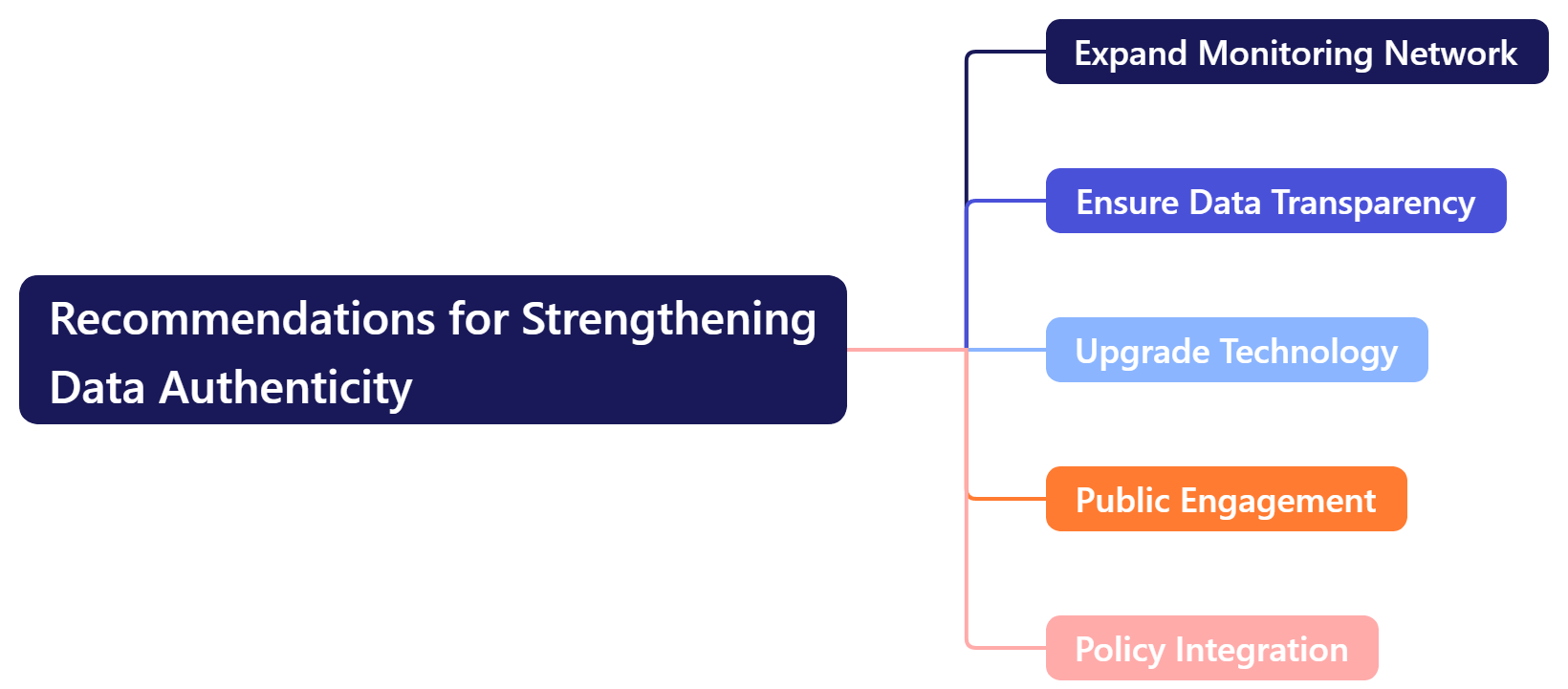
Expand Monitoring Network: Accelerate the installation of air quality monitoring stations, especially in underserved regions, to achieve comprehensive coverage.
Ensure Data Transparency: Develop independent platforms for real-time, unfiltered AQI data to prevent manipulation and promote public trust.
Upgrade Technology: Invest in advanced monitoring technologies and regular maintenance to ensure data accuracy and reliability.
Public Engagement: Enhance public access to air quality data through user-friendly platforms and educational campaigns to raise awareness and encourage community participation.
Policy Integration: Incorporate authentic air quality data into policy-making processes to develop targeted interventions and track progress effectively.
Conclusion
Authentic and reliable air quality data are the cornerstone of effective air pollution management in India. By addressing challenges in monitoring infrastructure, data transparency, and public engagement, India can make significant strides in combating air pollution and safeguarding public health. Collaborative efforts between government agencies, research institutions, and the public are essential to achieve cleaner air and a healthier environment for all.
To Read more topics like Strengthening Air Pollution Control through Data Integrityin Public Posts, visit: www.triumphias.com/blogs









One comment