(Relevant for Sociology Paper I – Social Stratification and Social Mobility; Social Change in Modern Society and Sociology Paper II – Challenges of Social Transformation)
In the Indian context, social equity refers to the fair and just distribution of resources—such as education, healthcare, land, and employment—across different social groups, particularly those historically disadvantaged due to caste, gender, religion, or region. It is a cornerstone of inclusive development and social justice. However, resource allocation in India often reflects entrenched inequalities, raising critical questions for sociological inquiry and policy intervention.
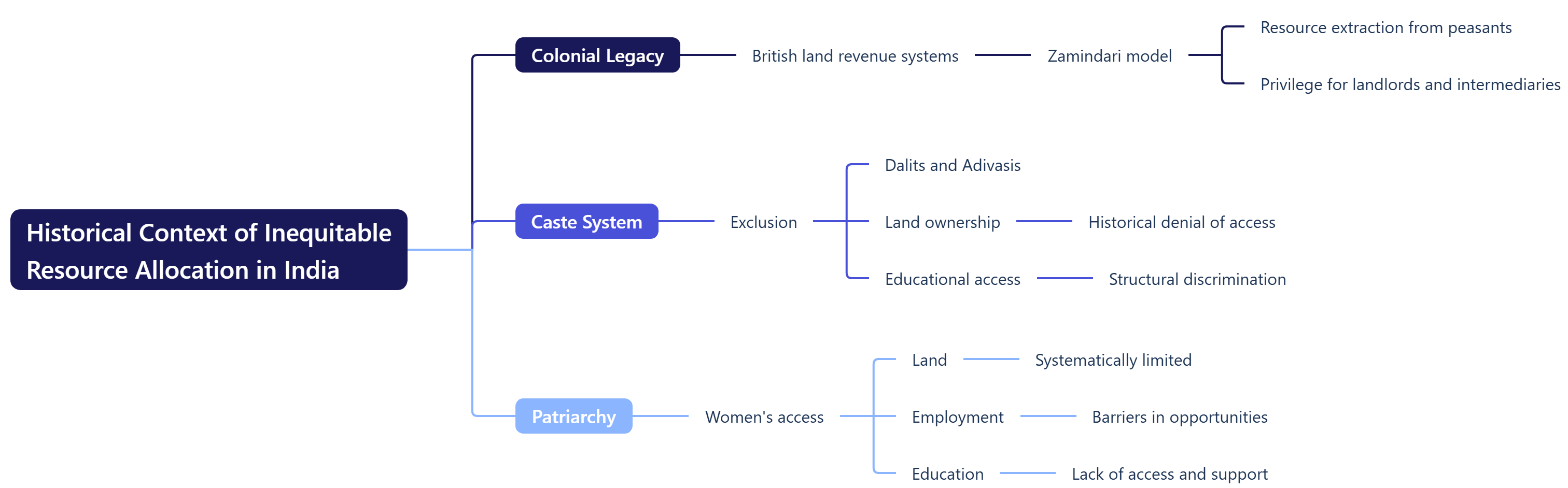
Historical Context of Inequitable Resource Allocation in India
Colonial Legacy: British land revenue systems like the Zamindari model institutionalized resource extraction from peasants while privileging landlords and intermediaries.
Caste System: Dalits and Adivasis have historically been excluded from land ownership and educational access due to structural discrimination.
Patriarchy: Women’s access to land, employment, and education has been systematically limited.
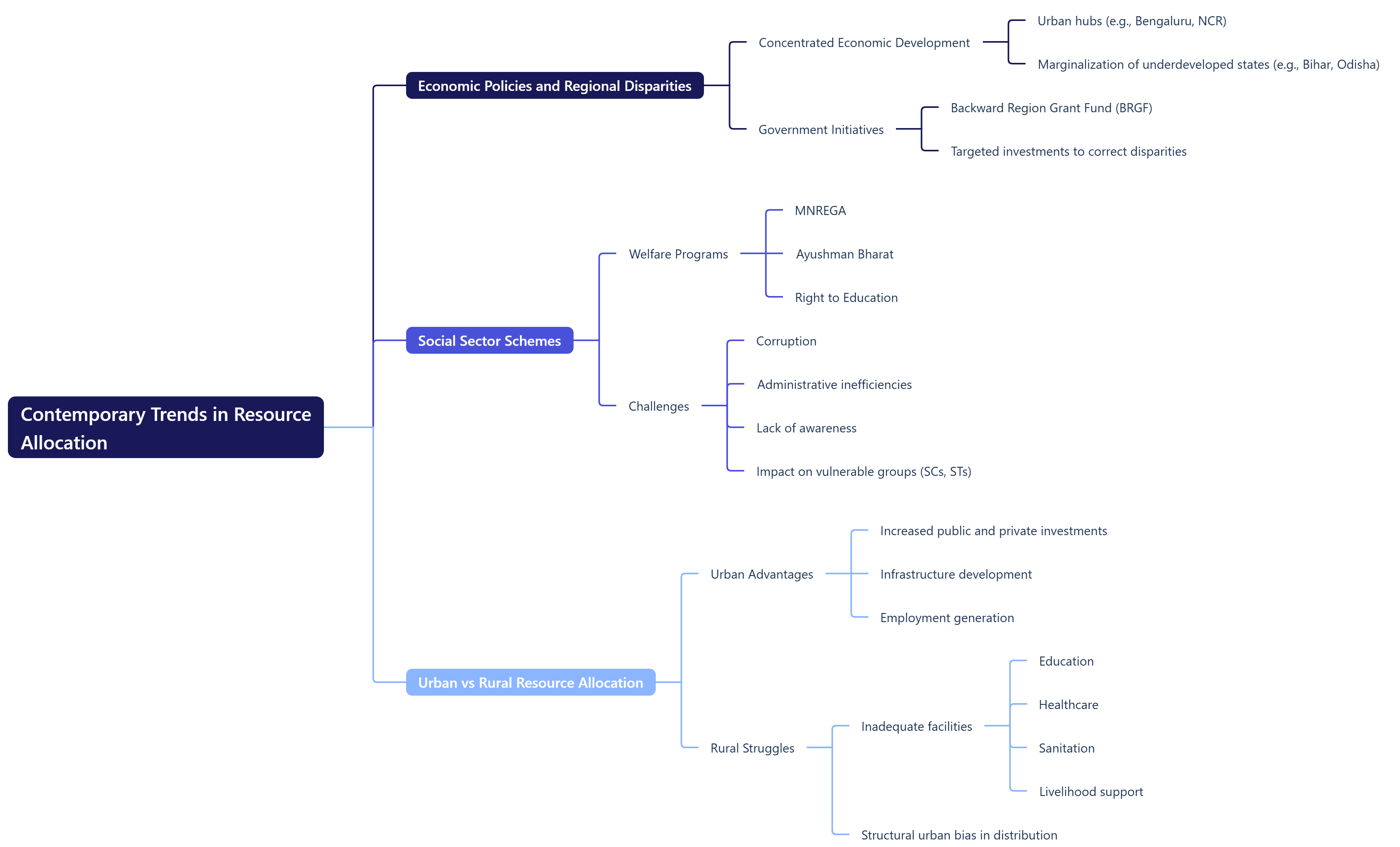
Contemporary Trends in Resource Allocation
Economic Policies and Regional Disparities: Since liberalization, economic development has concentrated in urban hubs like Bengaluru and the NCR, while underdeveloped states such as Bihar and Odisha remain economically marginalized. To address such imbalances, the government introduced schemes like the Backward Region Grant Fund (BRGF), aimed at correcting regional disparities through targeted investments.
Social Sector Schemes: Welfare programs like MNREGA, Ayushman Bharat, and the Right to Education seek to ensure equitable access to basic entitlements. However, their reach is often undermined by corruption, administrative inefficiencies, and lack of awareness—challenges that disproportionately affect vulnerable groups such as Scheduled Castes (SCs) and Scheduled Tribes (STs).
Urban vs Rural Resource Allocation: Urban areas receive a greater share of both public and private investment, which fuels infrastructure development and employment generation. In contrast, rural regions continue to struggle with inadequate facilities in education, healthcare, sanitation, and livelihood support, reflecting a structural urban bias in resource distribution.
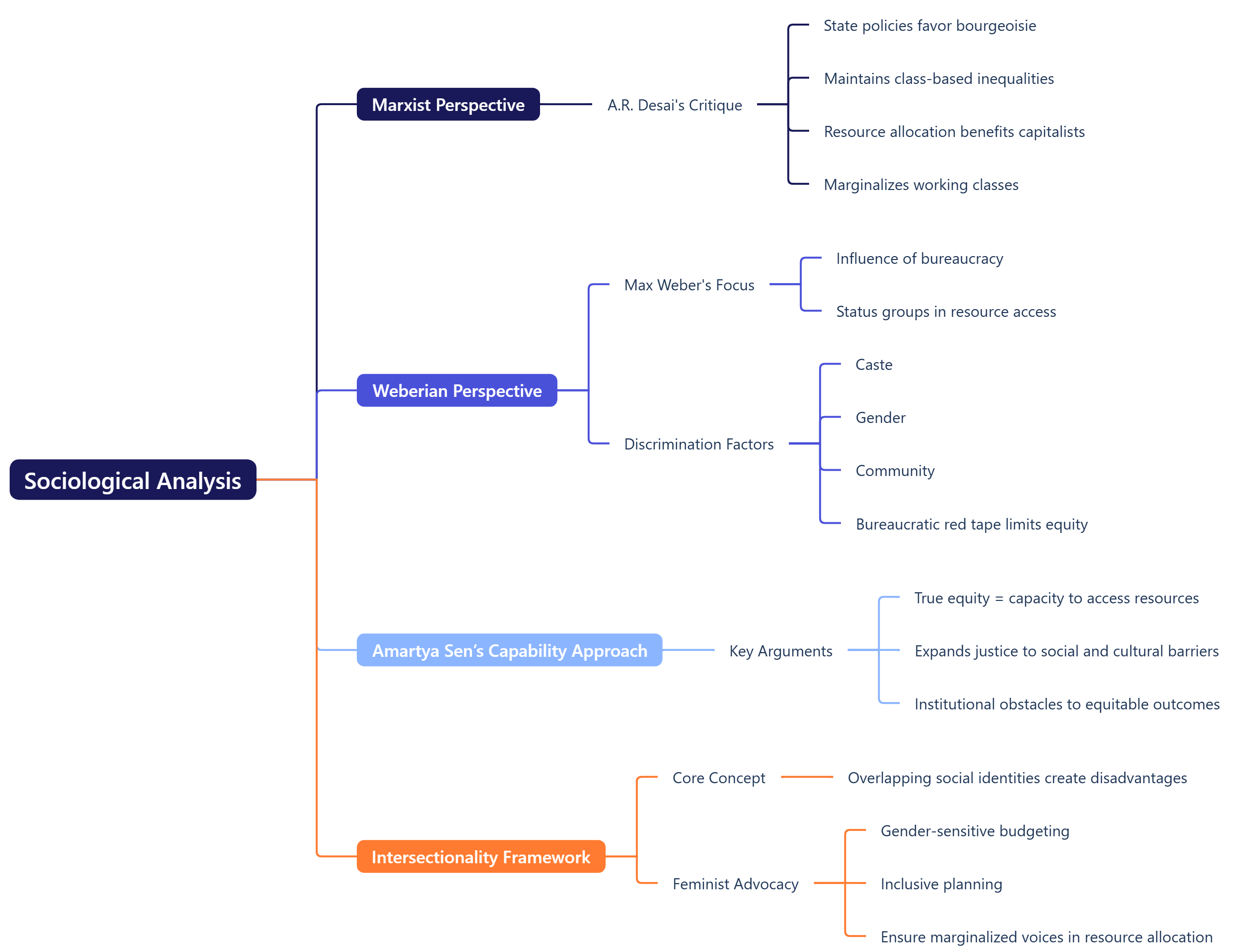
Sociological Analysis
Marxist Perspective: A.R. Desai critiques that state policies under capitalism tend to favor the bourgeoisie, maintaining class-based inequalities. Resource allocation, especially in urban-industrial sectors, benefits capitalists while sidelining the working classes.
Weberian Perspective: Max Weber emphasizes the influence of bureaucracy and status groups in shaping access to resources. Discrimination based on caste, gender, and community, combined with bureaucratic red tape, limits the effectiveness of equitable resource distribution.
Amartya Sen’s Capability Approach: Sen argues that true equity lies not just in resource availability but in people’s actual capacity to access and utilize them. His approach expands the idea of justice to include social, cultural, and institutional barriers that prevent equitable outcomes.
Intersectionality Framework: Intersectionality highlights how overlapping social identities—like caste, gender, and location—create compounded forms of disadvantage. Feminist sociologists advocate for policies like gender-sensitive budgeting and inclusive planning to ensure marginalized voices are heard in resource allocation processes.
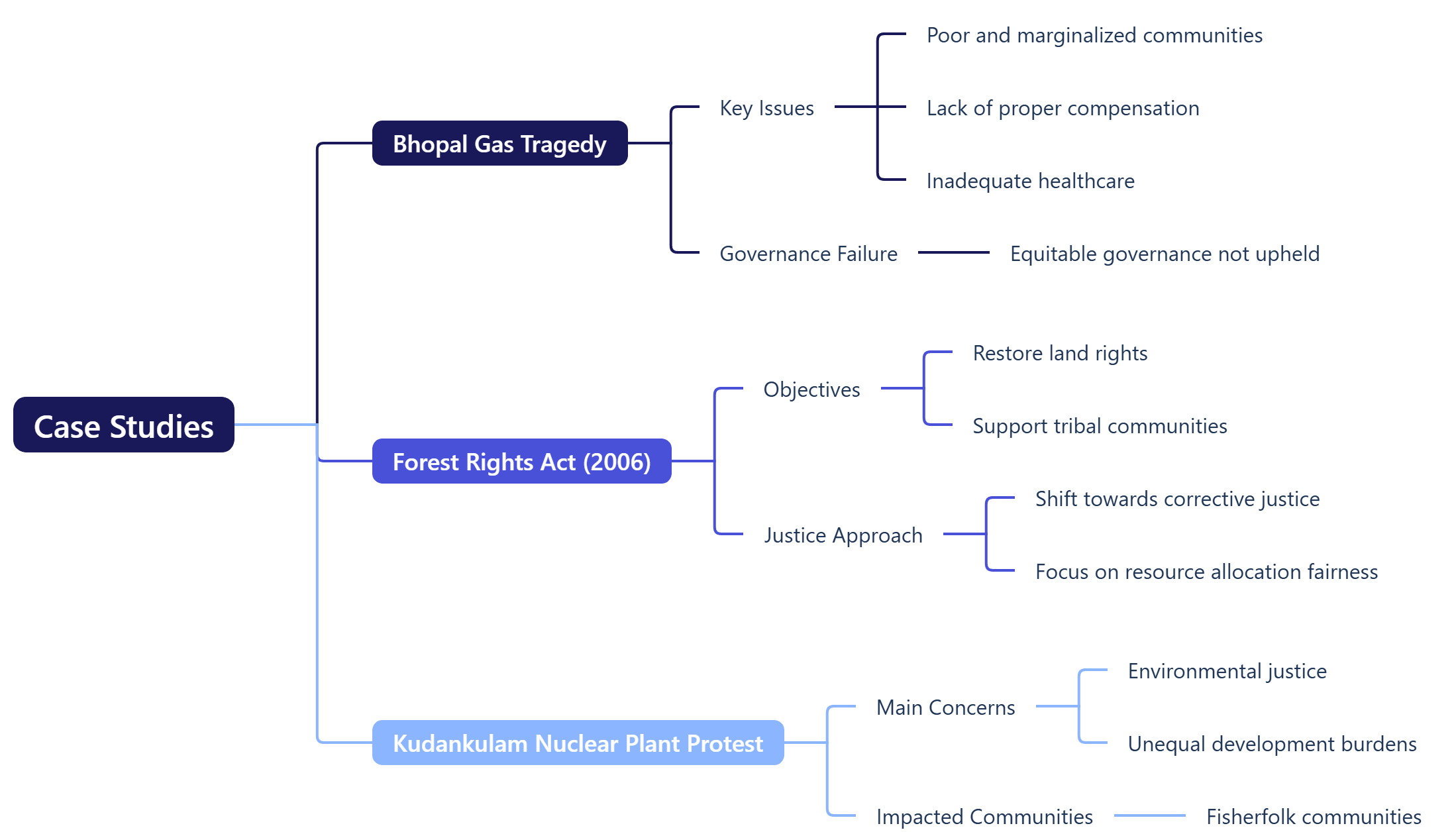
Case Studies
Bhopal Gas Tragedy: Illustrates how poor and marginalized were left without proper compensation and healthcare—failure of equitable governance.
Forest Rights Act (2006): Aims to restore land rights to tribal communities, showing a shift towards corrective justice in resource allocation.
Kudankulam Nuclear Plant Protest: Highlights issues of environmental justice and unequal burden of development on fisherfolk communities.
Government Measures toward Social Equity
Scheduled Castes Sub Plan (SCSP) and Tribal Sub Plan (TSP): Targeted funding toward the development of SC/ST communities.
EWS Quota (103rd Amendment): Reservation for economically weaker sections irrespective of caste—attempt to redefine equity.
Gender Budgeting: Seeks to allocate resources for women-specific needs but lacks rigorous implementation.
Conclusion:
Ensuring social equity in resource allocation is not just a moral imperative but a constitutional mandate. India’s developmental trajectory must go beyond GDP growth to prioritize distributive justice, participatory planning, and affirmative action. Understanding the sociological underpinnings of inequality is essential for analyzing policy effectiveness and designing inclusive solutions.
PYQs
Paper I:
Examine Amartya Sen’s Capability Approach as a critique of conventional resource-based models of development. (2022)
Examine the relationship between class, status, and power in the context of resource distribution. (2020)
Critically analyze the role of bureaucracy in maintaining or reducing social inequality. (2019)
Explain the concept of social exclusion. How is it different from social inequality? (2018)
How do different sociological perspectives explain social inequality? (2016)
Discuss Marx’s theory of class conflict. How relevant is it in understanding contemporary inequalities? (2015)
Paper II:
How does urban bias in policy-making impact resource allocation and rural development? (2023)
Analyze how gender-sensitive budgeting can promote social equity in India. (2020)
Critically analyze the impact of economic liberalization on social inequality in India. (2016)