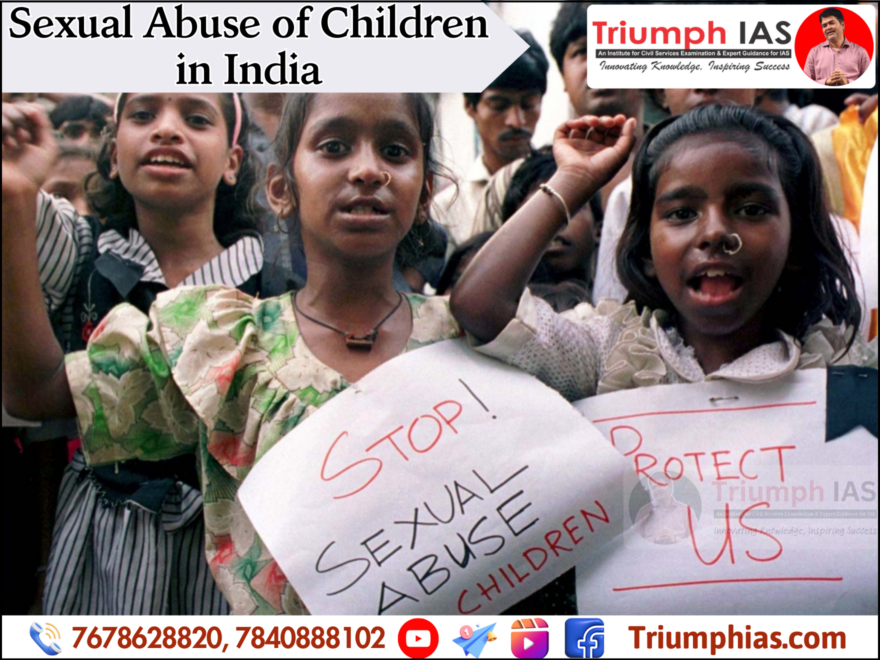
Child sexual abuse in India is a deeply rooted social issue that reflects the darker side of our social institutions. According to the National Crime Records Bureau (NCRB), over 50% of sexual violence cases in India involve children. This heinous crime not only violates the dignity of the child but also reflects the structural problems within the patriarchal society, inadequate legal enforcement, and failure of institutions like family and school.
Current Affairs Context
Recently, multiple high-profile cases of child sexual abuse in shelter homes and educational institutions have shocked the nation. These incidents have highlighted lapses in implementation of the Protection of Children from Sexual Offences (POCSO) Act, and a disturbing trend of silence and victim-blaming. The growing influence of social media has also exposed online sexual exploitation of children.
Sociological Analysis
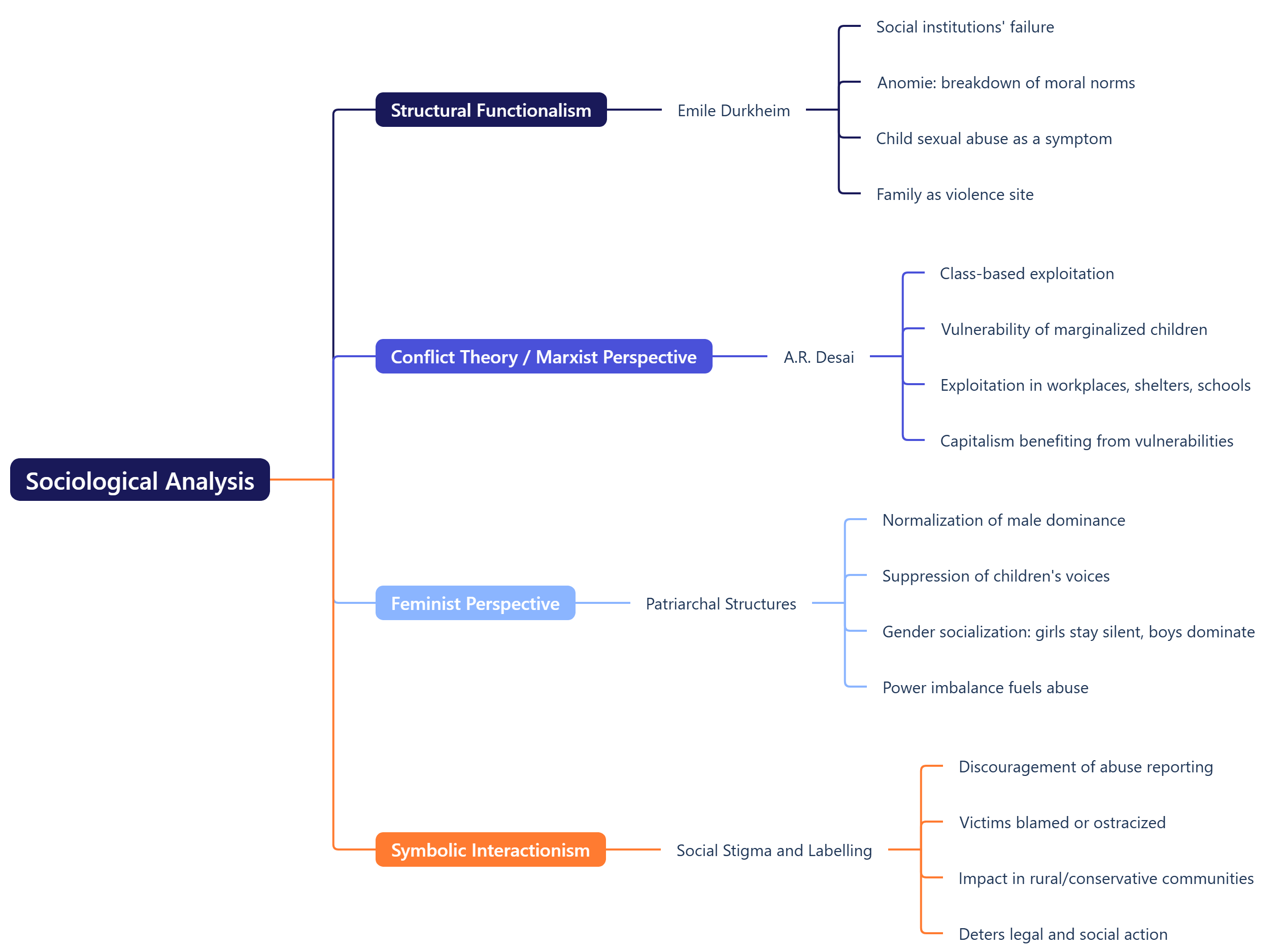
Structural Functionalism: According to Emile Durkheim, when social institutions (like family, education) fail to perform their intended functions, it leads to anomie—a breakdown of moral norms. Child sexual abuse is a symptom of this moral breakdown, especially when the family becomes a site of violence rather than protection.
Conflict Theory / Marxist Perspective: From A.R. Desai’s Marxist perspective, the issue is also linked to class-based exploitation. Children from marginalized and poor families are more vulnerable in workplaces, shelters, and even schools. Capitalist structures exploit these vulnerabilities for profit or power.
Feminist Perspective: Feminist theorists argue that patriarchal structures normalize male dominance and suppress children’s voices, particularly girl children. Gender socialization from a young age teaches girls to stay silent and boys to dominate. This power imbalance fuels abuse and silences victims.
Symbolic Interactionism: This perspective examines how social stigma and labelling of victims discourage reporting of abuse. Victims are often blamed or ostracized, especially in close-knit rural or conservative communities, which deters legal and social action.
Educational disruption: Dropouts and fear of institutions
Long-term impact: Affects adulthood, relationships, and trust
Government and Legal Measures
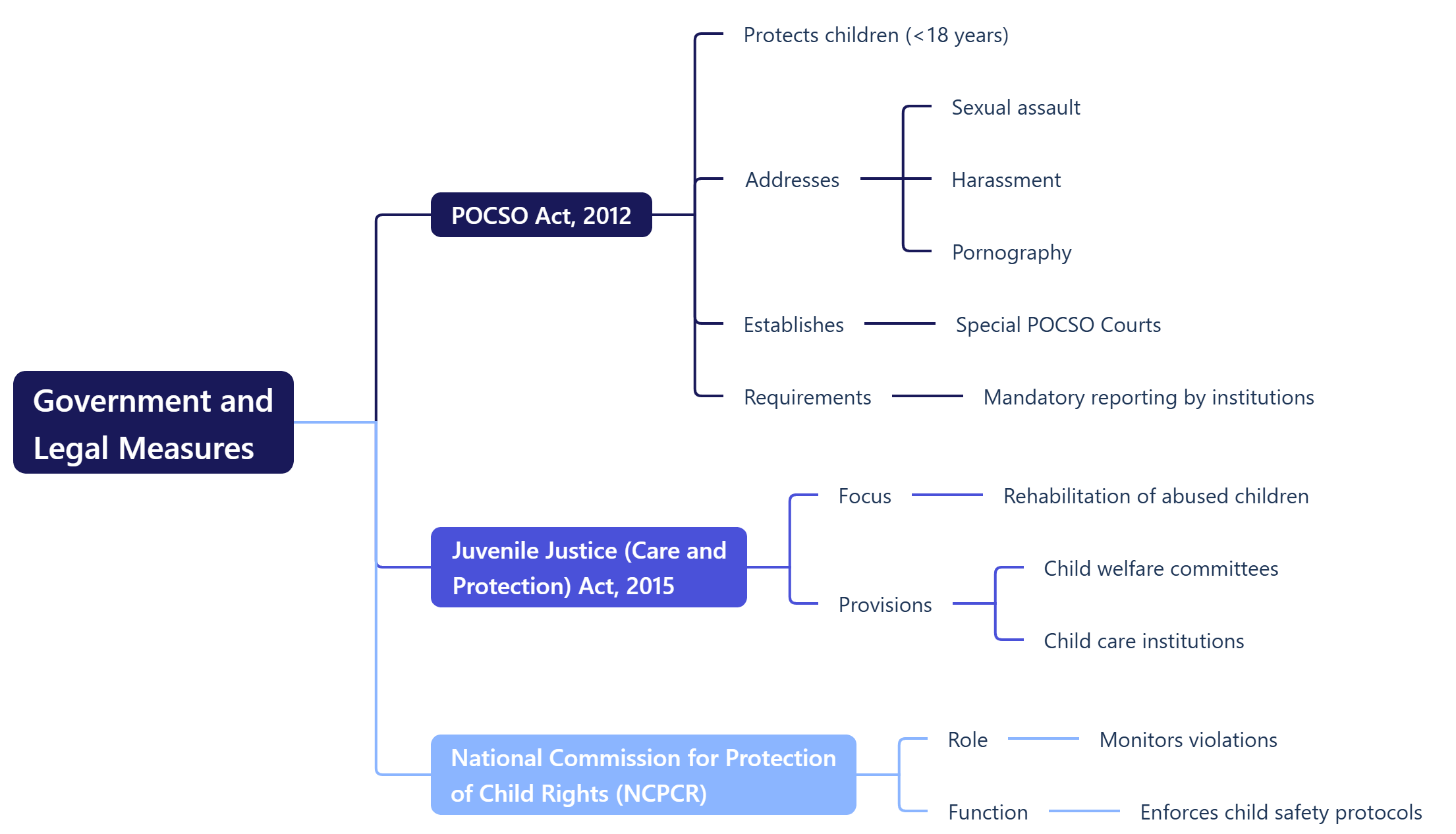
POCSO Act, 2012
Protects children (<18 years) from sexual assault, harassment, and pornography
Establishes Special POCSO Courts
Mandatory reporting by institutions
Juvenile Justice (Care and Protection) Act, 2015
Focuses on rehabilitation of abused children
Provides child welfare committees and child care institutions
National Commission for Protection of Child Rights (NCPCR)
Monitors violations and enforces child safety protocols
Issue:
Despite strong laws,
Implementation is weak due to corruption,
Lack of awareness,
Victim shaming.
Sociological Solutions
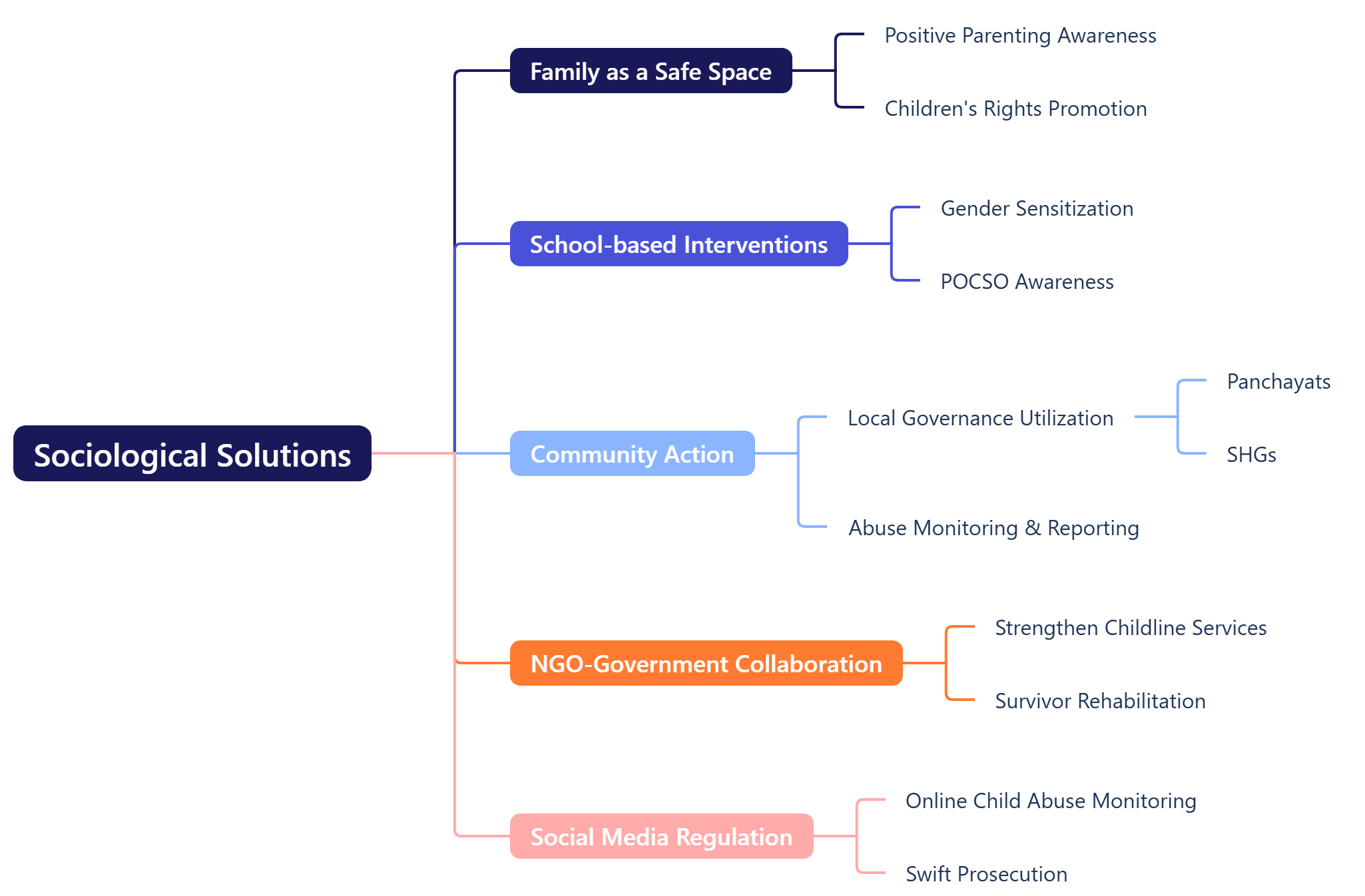
Family as a safe space: Promote awareness of positive parenting and children’s rights.
School-based interventions: Include gender sensitization and POCSO awareness in curricula.
Community action: Use of local governance (Panchayats, SHGs) to monitor and report abuse.
NGO-Government collaboration: Strengthen childline services and survivor rehabilitation.
Social media regulation: Monitor online child abuse and prosecute swiftly.
Conclusion
The sexual abuse of children in India is not merely a criminal issue—it is a grave sociological crisis that reflects deep-seated structural flaws in our social, familial, and institutional systems. Despite comprehensive laws like the POCSO Act and Juvenile Justice Act, implementation gaps, cultural silence, and patriarchal norms continue to endanger children’s safety and dignity. A holistic response requires more than punitive measures; it demands a transformative change in social attitudes, community participation, and institutional accountability. Only when families become safe havens, schools empower rather than suppress, and society upholds the rights of every child, can we hope to build a future free from the trauma of abuse.
PYQs
Paper 1 –
Discuss the role of family in the reproduction of social inequalities. (2023)
Examine the impact of patriarchy on the process of socialization of children in Indian society. (2022)
Discuss the sociological perspectives on deviance. Illustrate with examples. (2021)
Critically examine the relevance of Durkheim’s concept of anomie in understanding contemporary social problems. (2020)
Examine the role of social norms and values in the perpetuation of gender-based violence. (2018)
Examine the impact of social disorganization on youth deviance and crime. (2016)
Paper 2 –
Discuss the changing nature of child-parent relationships in contemporary Indian society. (2023)
Examine the challenges to child protection in India and the role of social institutions in addressing them. (2022)
Critically examine the effectiveness of child protection laws like POCSO in ensuring child rights in India. (2021)
What are the major issues related to children and youth in India? Suggest sociological measures for improvement. (2020)
Explain how patriarchy and caste intersect to increase the vulnerability of children and women in India. (2019)
Discuss how media and technology have contributed to the rise in crimes against children in India. (2018)
Evaluate the role of NGOs and civil society in promoting child rights and preventing abuse. (2017)
How effective are government policies in tackling gender-based violence and child abuse in rural India? (2016)
To Read more topics like Sexual Abuse of Children in Indiain Public Posts, visit: www.triumphias.com/blogs








One comment