Promoting Active Participation of the Specially-abled in India | Sociology Optional Coaching | Vikash Ranjan Classes | Triumph IAS | UPSC Sociology Optional
India, home to over 26.8 million persons with disabilities (PwDs) as per the 2011 Census, is making concerted efforts to promote inclusivity and empowerment for this significant segment of its population. While strides have been made in policy formulation and societal awareness, challenges persist in implementation and accessibility.
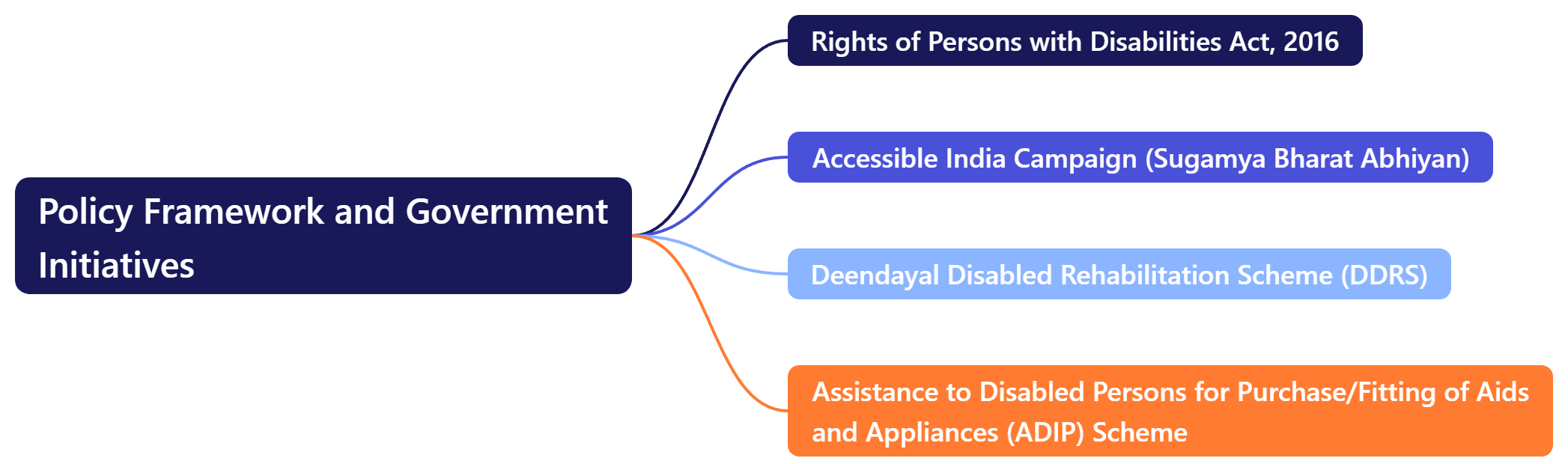
Policy Framework and Government Initiatives
The Indian government has instituted several policies and programs aimed at the welfare and empowerment of PwDs:
Rights of Persons with Disabilities Act, 2016: This comprehensive legislation expanded the recognized categories of disabilities from 7 to 21 and emphasized the rights of PwDs to education, employment, and accessibility.
Accessible India Campaign (Sugamya Bharat Abhiyan): Launched in 2015, this initiative aims to make public spaces, transportation systems, and information and communication technologies accessible to all. However, progress has been slower than anticipated. As of recent reports, only 28% of public buildings and less than 10% of transportation systems have been retrofitted for accessibility.
Deendayal Disabled Rehabilitation Scheme (DDRS): Provides financial assistance to NGOs for the rehabilitation of PwDs, focusing on education, vocational training, and community-based rehabilitation.
Assistance to Disabled Persons for Purchase/Fitting of Aids and Appliances (ADIP) Scheme: Facilitates the provision of assistive devices to enhance mobility and independence among PwDs.
Employment and Economic Inclusion
Employment remains a critical area for the empowerment of PwDs. Corporate India is increasingly recognizing the value of an inclusive workforce:
According to a survey by Avtar Group, the proportion of Indian companies focusing on hiring PwDs has risen from 58% in 2019 to 98% in recent years.
Companies like ITC have employed over 390 PwDs across various roles and have implemented infrastructure modifications like Braille signage and accessible facilities.
Amazon, in collaboration with Sarthak Educational Trust, launched the Global Resource Centre in Gurugram, providing training, assistive technologies, and job placement services for PwDs.
Education and Skill Development
Education is a cornerstone for empowerment, yet challenges persist:
A UNESCO report highlighted that out of 78.64 lakh children with disabilities in India, a significant number have never attended any educational institution.
The National Fellowship for PwDs offers scholarships for higher education, aiming to bridge this gap. Skill development programs under the PM-DAKSH Yojana provide vocational training to enhance employability among PwDs.
Electoral Participation and Civic Inclusion
In a landmark move, the Election Commission of India facilitated home voting for elderly and disabled citizens during the 2024 national elections. Over 17 million voters registered for this initiative, ensuring greater participation in the democratic process.
Challenges and Areas for Improvement
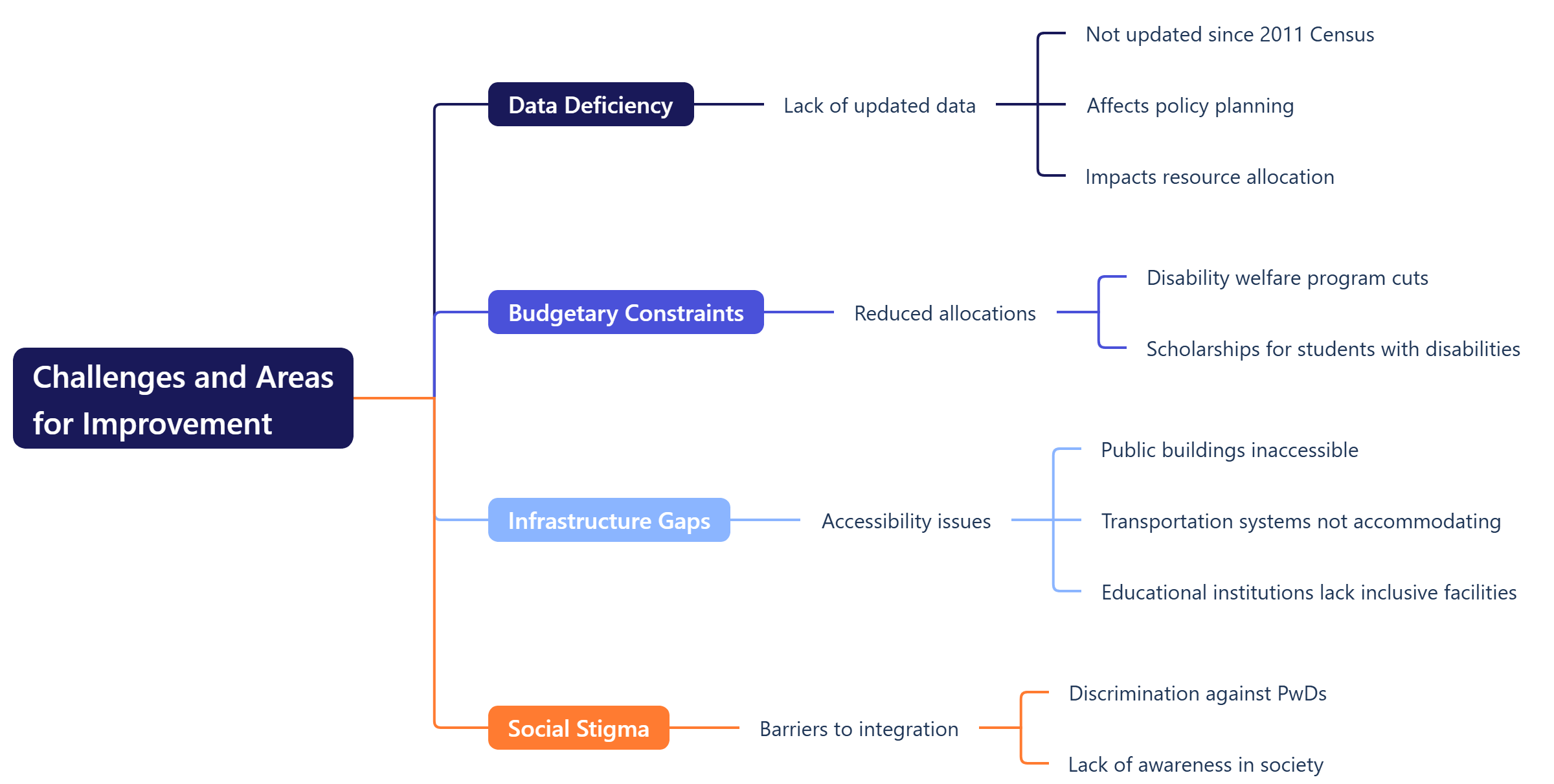
Despite these initiatives, several challenges hinder the full empowerment of PwDs:
Data Deficiency: The absence of updated data since the 2011 Census hampers effective policy planning and resource allocation.
Budgetary Constraints: Allocations for disability welfare programs have seen reductions, with scholarships for students with disabilities decreasing from ₹155 crore in 2023–24 to ₹142.68 crore.
Infrastructure Gaps: Many public buildings and transportation systems remain inaccessible, and educational institutions often lack necessary facilities for inclusive learning.
Social Stigma: Discrimination and lack of awareness continue to impede the societal integration of PwDs.
Inspiring Stories of Resilience
Highlighting individual achievements can inspire broader societal change:
Shams Aalam: An Indian para swimmer who set a world record for the longest open water swim by a paraplegic swimmer in 2024, exemplifying determination and excellence.
Vicky Roy’s Photography Project: Capturing stories of individuals like Bikram Bhattarai, who, despite being born without arms, pursued his passion for art, drawing with his feet. This project aims to challenge stigmas and promote inclusivity.
Conclusion
India’s journey towards the active empowerment of persons with disabilities is marked by significant policy initiatives and inspiring individual stories. However, to realize the vision of an inclusive society, concerted efforts are required to address existing challenges, ensure effective implementation of policies, and foster a culture of acceptance and support. Empowering PwDs is not just a matter of social justice but a step towards harnessing the full potential of the nation’s human resources.
To Read more topics like Promoting Active Participation of the Specially-abled in Indiain Public Posts, visit: www.triumphias.com/blogs






One comment