


Relevant for Sociology Optional Paper 1, Paper 2, and GS Paper I (Indian Society)
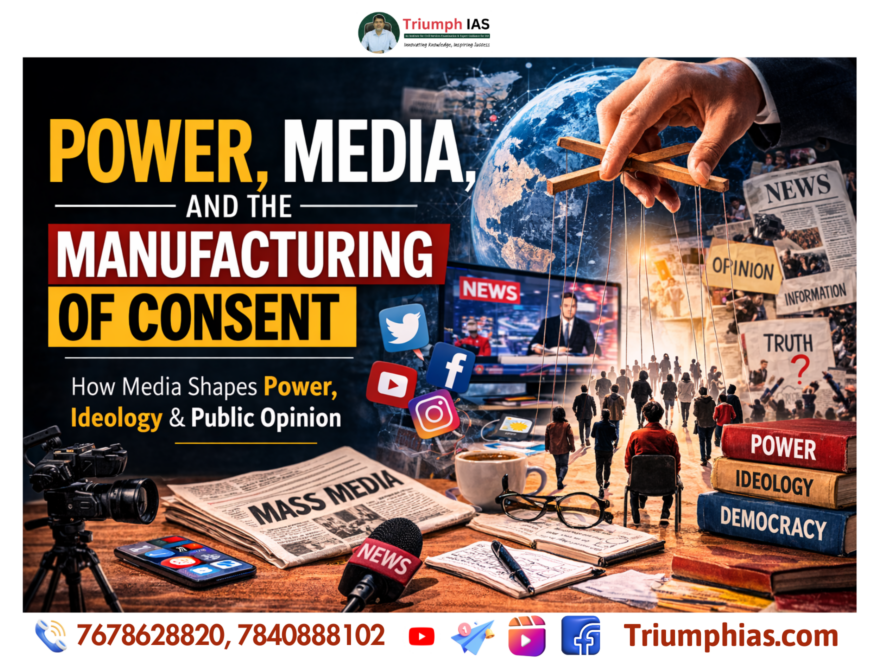
IntroductionIn modern societies, power is not exercised only through political institutions or economic control; it is also mediated through communication systems that shape public perception. The relationship between power, media, and the manufacturing of consent has become one of the central concerns in contemporary sociology. The concept highlights how dominant groups influence public opinion by controlling narratives, framing issues, and regulating the flow of information. The term “manufacturing consent” was popularised by the political economists Edward S. Herman and Noam Chomsky in their influential propaganda model. According to this perspective, media institutions in capitalist societies often serve the interests of powerful elites rather than functioning as neutral transmitters of information. Through selective reporting, agenda setting, and framing, media organisations subtly shape the boundaries of acceptable public debate.
DimensionMedia as an Instrument of PowerSociologists view media as a crucial institution in the production and reproduction of power relations. Ownership patterns in media industries often concentrate control in the hands of corporate groups and political actors. This concentration of ownership can influence the type of information that reaches the public. News coverage may prioritise issues that align with elite interests while marginalising dissenting voices. The agenda-setting theory illustrates this phenomenon. Media may not dictate what people think, but it significantly influences what people think about. By repeatedly highlighting certain issues—such as national security, economic reforms, or political controversies—the media shapes public priorities. Consequently, citizens may accept dominant policy frameworks without questioning the underlying power structures. Ideology and Cultural HegemonyThe process of manufacturing consent can also be understood through Antonio Gramsci’s concept of cultural hegemony. Gramsci argued that ruling classes maintain power not merely through coercion but through ideological leadership. By shaping cultural norms and common sense, elites secure the voluntary consent of subordinate groups. Mass media plays a vital role in sustaining this hegemony. Television debates, news narratives, films, and digital content often reinforce dominant ideologies about nationalism, development, consumerism, or social hierarchy. Over time, these narratives become normalized, making existing power relations appear natural and inevitable. For example, representations of economic policies in media discourse may emphasise growth and efficiency while downplaying issues of inequality or labour exploitation. In this way, the media helps construct a worldview that legitimises the prevailing social order.
Digital Media and the New Landscape of ConsentThe rise of digital media platforms has complicated the traditional understanding of media power. Social media networks have created new spaces for alternative voices, grassroots activism, and citizen journalism. Movements such as environmental campaigns, gender justice activism, and democratic protests often gain visibility through digital platforms. However, digital media also introduces new mechanisms of influence. Algorithms, data surveillance, and targeted political advertising can shape users’ exposure to information. Echo chambers and misinformation can further polarise public opinion. Thus, while digital media expands participation, it also generates new forms of ideological control and information manipulation. Media Literacy and Democratic AccountabilityFrom a sociological perspective, the solution to the problem of manufactured consent lies not only in institutional reform but also in critical media literacy. Citizens must develop the capacity to evaluate sources, question narratives, and recognise ideological biases in media representations. Democratic societies require pluralistic media systems where diverse viewpoints can coexist. Regulatory frameworks, independent journalism, and public service broadcasting can help counter excessive concentration of media power. Ultimately, the relationship between media and power reflects broader struggles over knowledge, ideology, and democratic participation. ConclusionThe concept of manufacturing consent reminds us that power operates not only through visible political institutions but also through subtle cultural and informational processes. Media institutions play a crucial role in shaping public consciousness and legitimising social arrangements. For sociology, analysing media power provides valuable insights into how authority, ideology, and communication intersect in contemporary societies. Understanding this relationship is essential for strengthening democratic accountability and fostering an informed citizenry. |


UPSC Civil Services (Mains) Question
“Media institutions play a significant role in shaping public opinion and legitimising dominant power structures.” Discuss with reference to the concept of ‘Manufacturing of Consent’. (250 words)
To Read more topics, visit: www.triumphias.com/blogs
Read more Blogs:
4 comments
Comments are closed.