


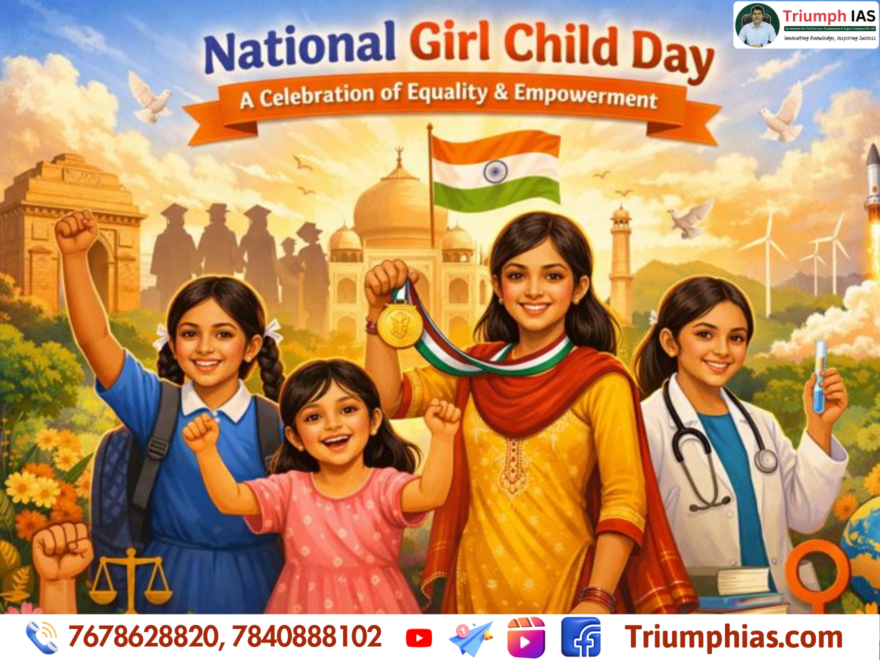
National Girl Child Day: A Celebration of Equality and Empowerment in India
(Relevant for Sociology Paper 2)
|
Every year on 24 January, India observes National Girl Child Day, a significant national occasion dedicated to highlighting the rights, challenges, and immense potential of the girl child. Instituted by the Ministry of Women and Child Development in 2008, the day serves as both a celebration of progress and a reminder of the persistent inequalities faced by millions of girls across the country. In a society shaped by deep-rooted social norms, economic disparities, and historical gender biases, the girl child has often stood at the intersection of vulnerability and resilience. National Girl Child Day seeks to shift this narrative—from protection to empowerment, from charity to rights, and from symbolic gestures to structural change. Historical Context: Why the Girl Child Needs a Dedicated DayIndia’s struggle with gender inequality is not new. For decades, skewed sex ratios, female infanticide, child marriage, poor access to education, and limited healthcare for girls reflected entrenched patriarchal values. Census data over the years revealed alarming trends, particularly in child sex ratios, which underscored systematic discrimination against female children even before birth. Recognizing the urgency of the issue, the Government of India launched National Girl Child Day in 2008 to:
The day marked a policy shift—from viewing girls merely as dependents to recognizing them as equal citizens and agents of change. Why National Girl Child Day Matters TodayDespite progress in legislation and policy, the lived reality of many girls remains unequal. National Girl Child Day matters because it brings visibility to issues that often remain hidden within households and communities. Key Challenges Faced by the Girl Child in India
By focusing national attention on these challenges, National Girl Child Day acts as a catalyst for dialogue and reform. Objectives of National Girl Child DayThe observance is not merely symbolic; it is anchored in clear objectives:
Through campaigns, seminars, school programs, and media engagement, the day encourages citizens to reflect on their own attitudes and practices. Government Initiatives Supporting the Girl ChildNational Girl Child Day also serves as a platform to highlight key government schemes aimed at improving the status of girls. 1. Beti Bachao Beti Padhao (BBBP)Launched in 2015, this flagship scheme addresses declining child sex ratio while promoting education and empowerment of girls. It focuses on awareness, enforcement of laws, and community participation. 2. Sukanya Samriddhi YojanaA savings scheme designed to secure the financial future of the girl child and encourage families to invest in her education and wellbeing. 3. Samagra Shiksha AbhiyanPromotes universal access to education with special focus on girls, including residential schools, bicycles, uniforms, and scholarships. 4. POSHAN AbhiyaanAddresses malnutrition among women and children, recognizing that the health of girls is central to national development. These initiatives reflect a growing understanding that investing in girls yields intergenerational benefits. Impact and Progress: What Has Changed?Over the past two decades, India has witnessed measurable improvements:
National Girl Child Day reinforces these gains by keeping gender equality at the center of public discourse. Persistent Gaps and Structural ChallengesDespite progress, challenges remain deeply structural:
These realities underline the need for sustained, long-term efforts, not just annual observances. National Girl Child Day and Global CommitmentsIndia’s observance aligns closely with international frameworks such as:
By promoting the rights of the girl child, India contributes to global efforts toward inclusive and sustainable development. Role of Education in Empowering the Girl ChildEducation is the single most powerful tool for empowerment. Educated girls are more likely to:
National Girl Child Day emphasizes not just access to schools, but quality education, safe learning environments, and life-skills training. Community and Civil Society ParticipationGovernment action alone is not enough. NGOs, self-help groups, educators, parents, and youth play a critical role in:
National Girl Child Day provides an opportunity for collective action at the grassroots level. Changing the Narrative: From Burden to AssetPerhaps the most important contribution of National Girl Child Day is symbolic—it challenges the perception of girls as liabilities and reframes them as assets to families, communities, and the nation. Stories of girls excelling in sports, science, arts, and public service are slowly reshaping societal attitudes. Each educated and empowered girl becomes a force multiplier for development. The Way Forward: Beyond One DayTo ensure that National Girl Child Day leads to real change, India must focus on:
Empowerment must be everyday practice, not just an annual message. Conclusion: Empowering Girls, Strengthening IndiaNational Girl Child Day is more than a date on the calendar—it is a reminder of India’s moral, social, and constitutional commitment to equality. The future of the nation is inseparable from the futures of its girls. When girls are educated, healthy, and empowered, societies become more just, economies more productive, and democracies more inclusive. Celebrating the girl child is, ultimately, about celebrating humanity’s collective progress. As India moves forward, the true success of National Girl Child Day will be measured not in slogans, but in lived equality, opportunity, and dignity for every girl child. |
To Read more topics, visit: www.triumphias.com/blogs
Read more Blogs:
Global Diplomacy Takes Center Stage: The World Economic Forum at Davos