(Relevant for Sociology Paper I: Social Stratification- Gender and Society and Sociology Paper II: Population Dynamics; Challenges of Social Transformation)
Despite being a biological reality for nearly half of India’s population, menstruation remains wrapped in silence, stigma, and shame. For millions of women and girls, periods are not just a health issue but a source of social exclusion, educational disruption, and economic disadvantage. This phenomenon, termed menstrual poverty, exposes the glaring gap between India’s developmental aspirations and the lived realities of its women. From rural villages to urban slums, the inaccessibility of sanitary products, clean water, and menstrual education creates a chain of disadvantages that reinforce existing social hierarchies of gender, caste, and class. In the context of sociological inquiry, menstrual poverty is more than a hygiene concern—it is a manifestation of structural violence, a reflection of patriarchal norms, and a symbol of gendered social inequality.
What is Menstrual Poverty?
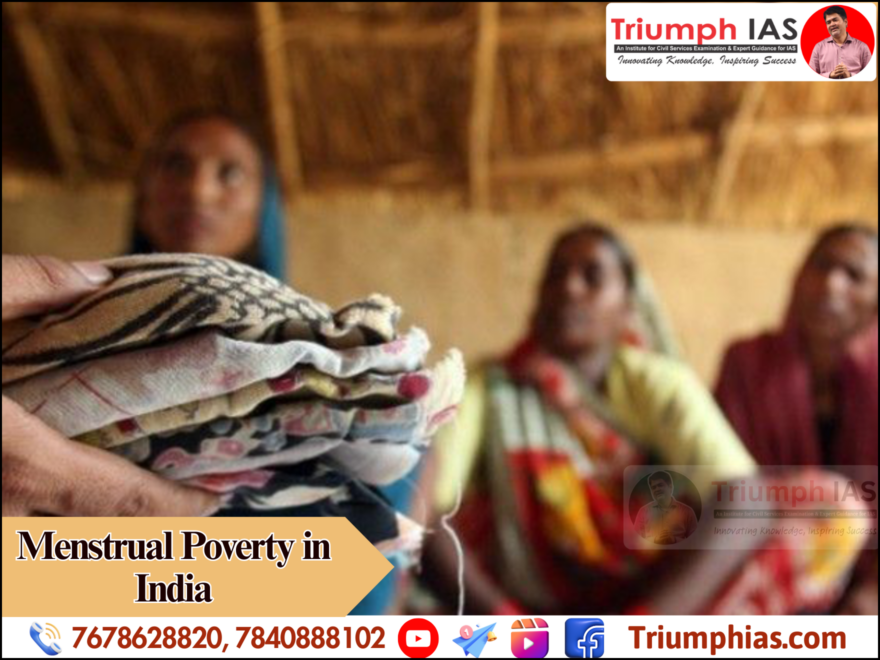
Menstrual Poverty, also known as Period Poverty, refers to the lack of access to menstrual hygiene products, adequate sanitation facilities, and awareness about menstrual health. It is not just a health issue, but also a deeply social, economic, and cultural problem affecting millions of girls and women, particularly in rural India, urban slums, and marginalized communities.
Menstrual Poverty: The Current Landscape
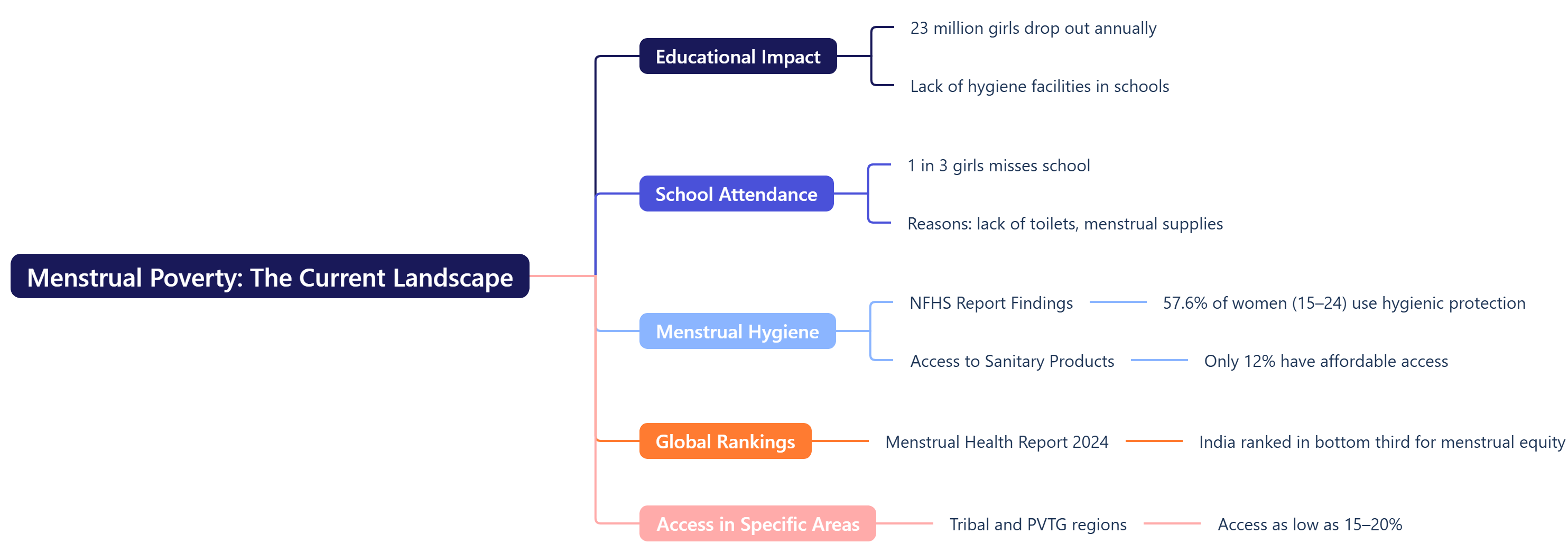
Over 23 million girls drop out of school annually due to lack of menstrual hygiene facilities (Ministry of Education, GoI). A study by WaterAid India found that 1 in 3 girls in India misses school during their periods due to lack of toilets or menstrual supplies.
As per a recent NFHS report, only 57.6% of Indian women aged 15–24 use hygienic menstrual protection.
Only 12% of menstruators in India have access to affordablesanitary products.
The Global Menstrual Health Report 2024 ranked India in the bottom third of countries for menstrual equity.
In tribal and PVTG areas, access is as low as 15–20%.
Sociological Analysis
Intersectionality and Caste-Class Disparity: Access to menstrual products is unequally distributed along the lines of caste, class, and region. Women from Dalit, Adivasi, and lower-income groups suffer the most, highlighting intersectionality as a key analytical tool. Kimberlé Crenshaw’s theory of intersectionality is useful in understanding how caste, class, and gender compound menstrual exclusion.
Gender Socialization and Patriarchy: Menstruation is often stigmatized due to patriarchal values that frame it as impure. Girls are often excluded from kitchens, temples, and schools, reflecting Emile Durkheim’s notion of ‘sacred and profane’, reinforcing social taboos.
Structural Functionalism and Social Institutions: According to Talcott Parsons, institutions such as the family, education, and religion are supposed to ensure socialization and well-being. However, these institutions perpetuate menstrual taboos instead of breaking them.
Feminist Perspective: Radical Feminists argue that period poverty is a form of systemic gender oppression that restricts women’s autonomy and access to education and work. Menstrual equity is a demand for justice and dignity, not charity.
Cultural Lag – Ogburn’s Theory: While India has progressed technologically, social attitudes toward menstruation lag behind. This mismatch, called cultural lag, creates a gap where access exists, but utilization remains limited due to shame or taboo.
Social Exclusion Theory: Menstruating girls are excluded from temples, kitchens, public spaces, and even schools. This creates spatial, emotional, and educational segregation, contributing to long-term gender inequality.
Health Inequality and Social Determinants: From a Sociology of Health perspective, poor menstrual hygiene leads to UTIs, reproductive infections, and infertility—conditions ignored due to gender bias in healthcare.
Development and Sanitation Policies
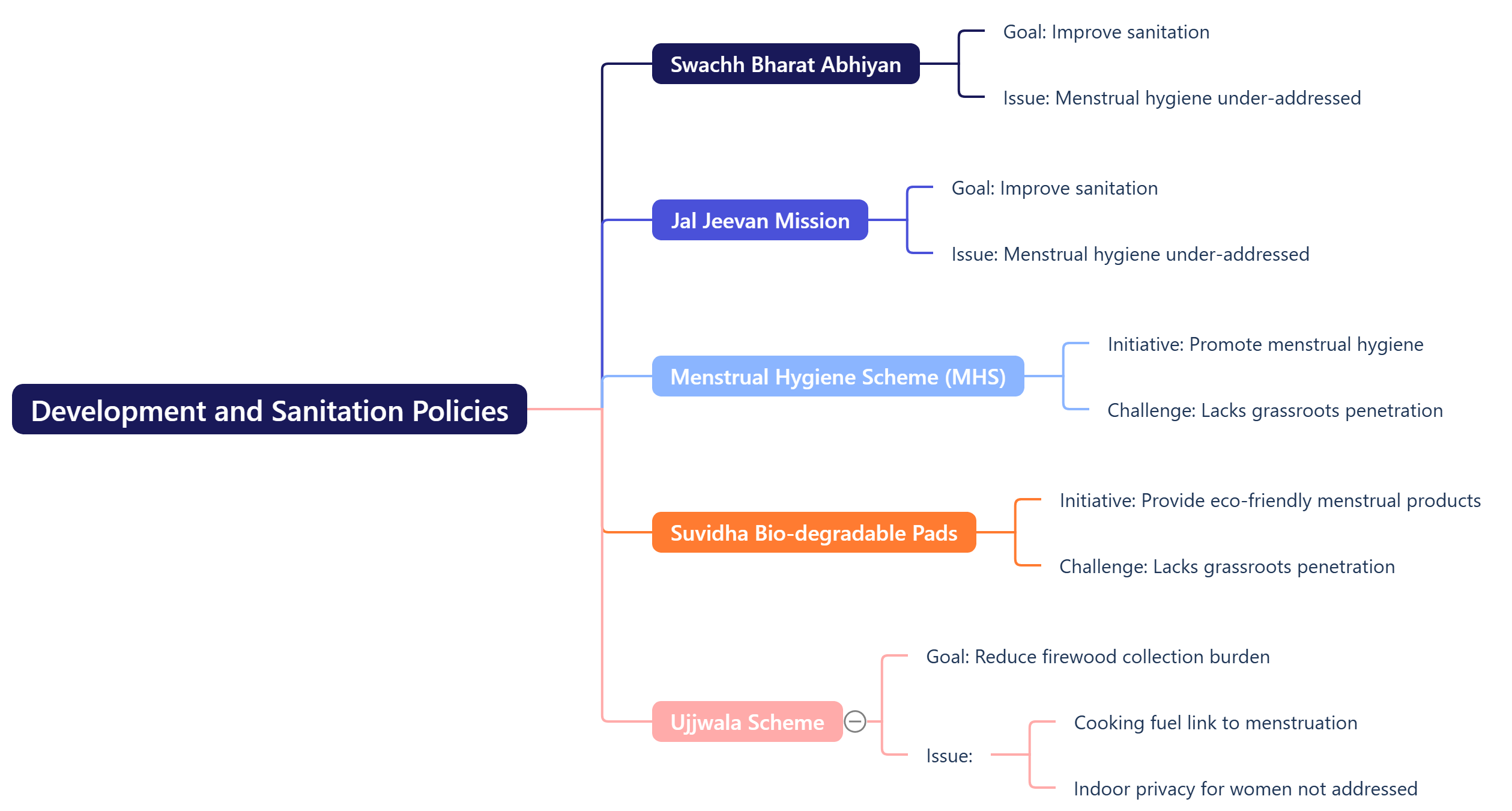
Swachh Bharat Abhiyan and Jal Jeevan Mission aimed at improving sanitation, but menstrual hygiene is still under-addressed.
Menstrual Hygiene Scheme (MHS) and initiatives like Suvidha Bio-degradable Pads are steps forward but lack grassroots penetration.
Ujjwala Scheme reduces the burden of firewood collection but still does not address the link between cooking fuel, menstruation, and indoor privacy for women.
Real-Life Case Study for UPSC Answer Writing
In Coimbatore, Tamil Nadu (2024), a Dalit girl was forced to skip school for a week each month due to lack of toilets and sanitary pads. Her community collectively approached local NGOs, which initiated a community-based pad bank.
This example can be used to showcase community mobilization and NGO-government collaboration in sociology case studies.
Way Forward:
Menstrual Education in Schools – integrating with NEP 2020
Universal Access to Pads and Cups – via Anganwadis and ASHA workers
Removing Social Taboos – through community leaders and religious heads
Decentralised Pad Production Units – enabling women entrepreneurs
Conclusion
Menstrual poverty is not merely a personal hardship—it is a societal failure that reflects deep-rooted patriarchal attitudes, health inequities, and structural exclusion. It silences girls in classrooms, marginalizes women in workplaces, and reinforces caste and gender hierarchies in everyday life.
Addressing this issue requires more than distributing sanitary pads—it demands a transformative shift in mindset, policy focus, and grassroots action. By integrating menstrual health into public health discourse, educational curricula, and community development programs, India can move toward true gender equality and dignity for all.
PYQs
Paper I –
Explain the concept of social exclusion. How does it affect marginalized groups in modern society? (2016)
Discuss how social institutions perpetuate gender inequality. (2017)
How do patriarchy and gender stratification shape access to health and education? (2018)
Examine the relationship between gender and poverty in contemporary societies. (2019)
Discuss the feminist critique of health systems in relation to women’s health issues. (2020)
Paper II –
How does patriarchy influence women’s access to education and healthcare in India? (2015)
Examine how social taboos and cultural practices influence the reproductive health of Indian women. (2017)
Explain the role of caste and gender in access to health and sanitation in rural India. (2020)
Discuss the impact of social movements on women’s health rights and dignity in India. (2023)
To Read more topics like Menstrual Poverty in India in Public Posts, visit: www.triumphias.com/blogs