Maternity Leave is a Constitutional Right, Even for Third Child | Sociology Optional Coaching | Vikash Ranjan Classes | Triumph IAS | UPSC Sociology Optional
Maternity Leave is a Constitutional Right, Even for Third Child
Maternity Leave is a Constitutional Right, Even for Third Child
(Relevant for Sociology Paper I: Politics and Society and Sociology Paper II: Systems of Kinship in India; Social Movements in Modern India; Population Dynamics)
In a landmark judgment that reaffirms reproductive rights and gender equality, the Supreme Court of India ruled that maternity leave is a constitutional right, even in the case of a third child. This ruling addresses ambiguities in service rules that previously denied maternity benefits beyond the second childbirth, affecting especially women in government and public sector employment. This blog explores the constitutional significance, policy implications, and sociological impact of the ruling, particularly through the lens of gender justice, labor rights, and social structure in India.
What Did the Supreme Court Rule?
The Supreme Court declared that Article 15 and Article 42 of the Constitution ensure women’s rights to maternity leave, even if it is their third childbirth. It emphasized that “a child is a child, and a mother is a mother”, rejecting arbitrary service rules that restrict benefits to only two children.
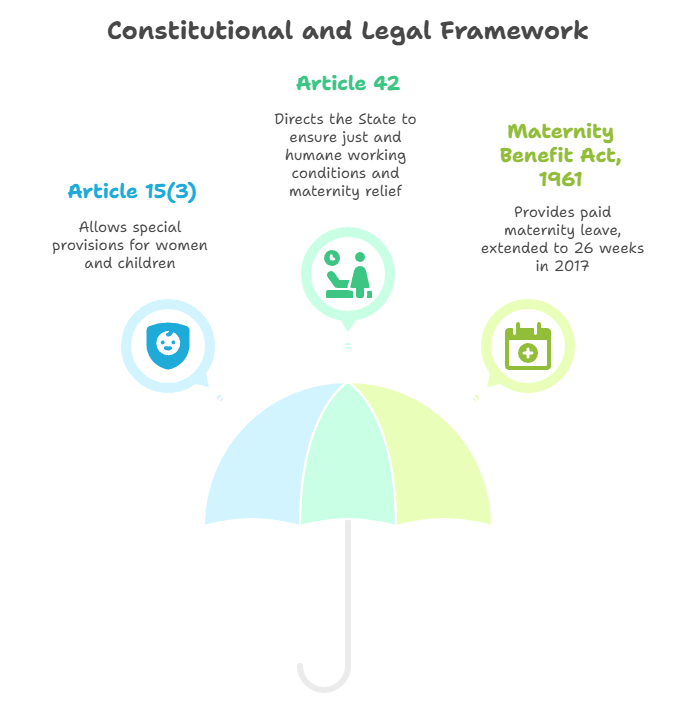
Constitutional and Legal Framework
Article 15(3): Permits the State to make special provisions for women and children.
Article 42: Directs the State to make provisions for securing just and humane conditions of work and for maternity relief.
Maternity Benefit Act, 1961: Ensures paid maternity leave for working women, recently amended in 2017 to extend leave to 26 weeks (for first two children).
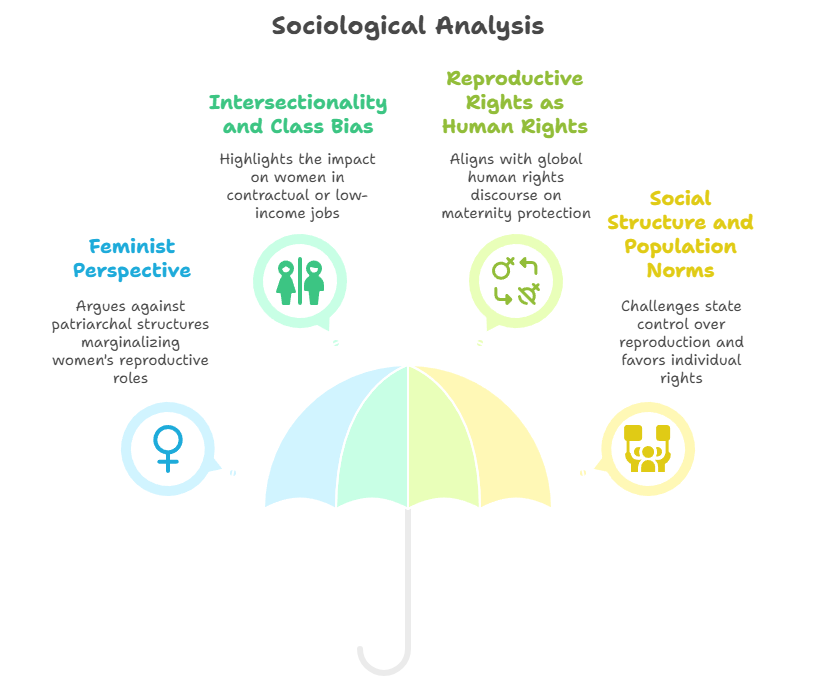
Sociological Analysis
Feminist Perspective on Maternity Rights: Feminist theorists like Ann Oakley and Sylvia Walby argue that patriarchal structures in workplaces marginalize women’s reproductive roles. Denying maternity leave for a third child is a form of institutionalized gender discrimination, reinforcing the idea that motherhood beyond two children is deviant or undeserving.
Intersectionality and Class Bias: Women in contractual, informal, or low-income jobs—often from lower castes and classes—face the brunt of restrictive maternity policies. This ruling benefits a broad spectrum of women, especially those in public service or government-linked employment, making reproductive justice more accessible.
Reproductive Rights as Human Rights: This judgment aligns with global human rights discourse that views maternity protection as essential to women’s dignity. From a sociological lens, reproductive autonomy is linked with bodily integrity, family planning rights, and freedom from state control over fertility.
Social Structure and Population Norms: Restricting benefits after two children mirrors India’s population control mindset, which sociologists like Michel Foucault would interpret as biopolitics—state control over bodies and reproduction. This ruling challenges that, favoring individual rights over demographic engineering.
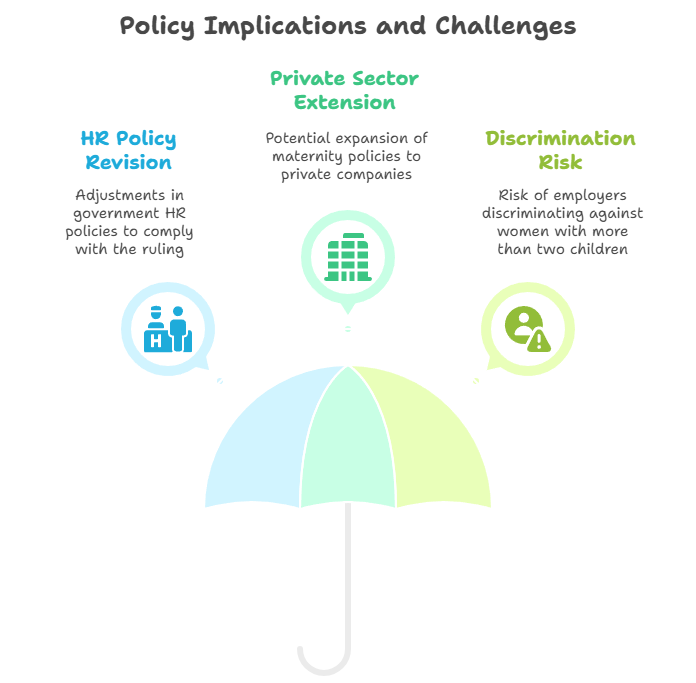
Policy Implications and Challenges
Revision of HR policies in central and state government services to align with the ruling.
Possible extension to private sector maternity policies, as the judgment sets a constitutional precedent.
Risk of employers discriminating against women with more than two children in hiring or promotion, needing stricter enforcement of non-discrimination clauses.
Conclusion
The Supreme Court’s recognition of maternity leave as a constitutional right even for the third child is a progressive step towards gender justice and reproductive autonomy. It shifts the discourse from population control to human dignity and maternal welfare. This judgment, when implemented effectively, can help deconstruct patriarchal workplace norms and uphold the rights of working mothers in India.
PYQs
Paper 1
Examine the role of the state in regulating reproduction and sexuality. (2017)
Discuss the interface between biology and society in understanding gender roles. (2019)
Paper 2
Discuss how the Indian Constitution has been instrumental in promoting gender equality. (2015)
Examine the implications of Maternity Benefit (Amendment) Act, 2017 on working women in India. (2018)
“Despite legal provisions, women continue to face discrimination at workplaces.” Examine with examples. (2020)
How does the intersection of caste, class, and gender affect access to health and maternity benefits in India? (2019)
Analyze the role of judiciary in safeguarding women’s reproductive rights in India. (2021)
Discuss the sociological implications of state population policies on women’s reproductive autonomy. (2017)
Examine the role of women’s movements in demanding labor rights and maternity benefits in India. (2022)









One comment