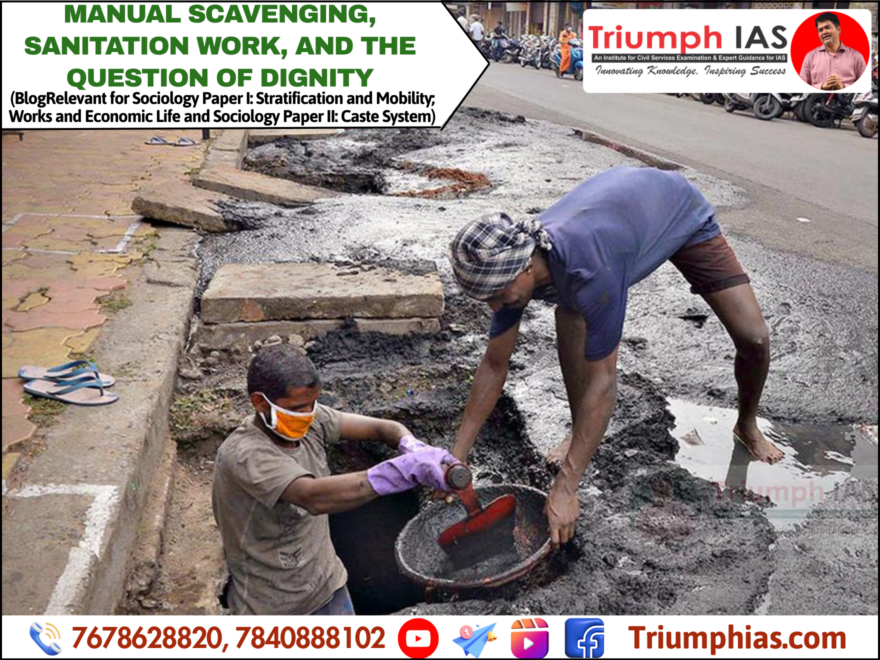
Manual scavenging, the practice of manually cleaning, carrying, and disposing of human excreta, remains a pressing social issue in India despite legal prohibitions. This dehumanizing occupation is deeply intertwined with caste-based discrimination and socio-economic marginalization, raising critical questions about human dignity and social justice.
Understanding Manual Scavenging
Manual scavenging involves the manual handling of human waste from dry latrines, sewers, and septic tanks. Despite the enactment of the Prohibition of Employment as Manual Scavengers and their Rehabilitation Act, 2013, the practice persists in various parts of India. According to the Socio-Economic and Caste Census 2011, over 180,000 households were engaged in manual scavenging.
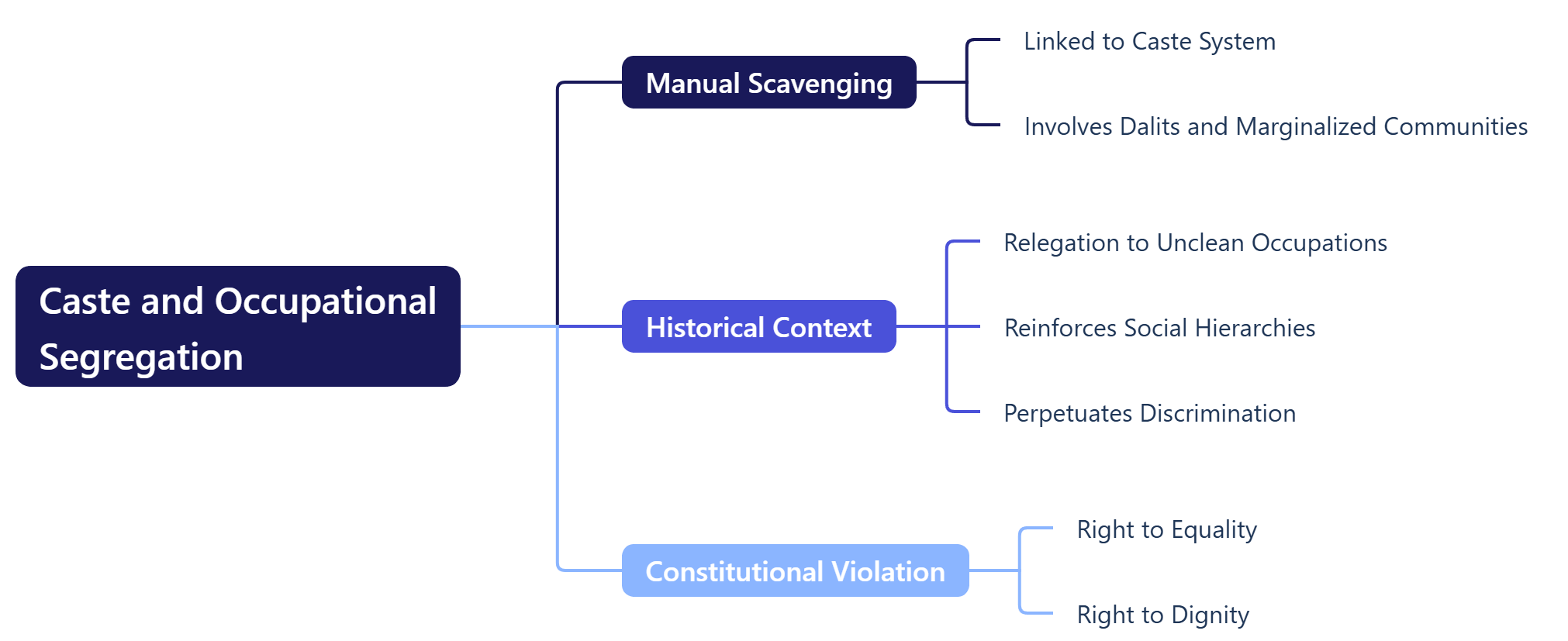
Caste and Occupational Segregation
The persistence of manual scavenging is closely linked to the caste system. Historically, Dalits and other marginalized communities have been relegated to occupations considered “unclean,” reinforcing social hierarchies and perpetuating discrimination. This occupational segregation violates the constitutional right to equality and dignity.
Health Hazards and Human Rights Violations
Manual scavengers face severe health risks, including exposure to toxic gases and infectiousdiseases.Between 2018 and 2023, 339 individuals lost their lives while engaged in this hazardous occupation. These conditions not only endanger physical health but also constitute a violation of basic human rights.
Legal Framework and Implementation Gaps
While laws like the 2013 Act aim to eradicate manual scavenging, implementation remains inadequate. The Supreme Court has issued directives to ban manual scavenging in metropolitan cities, yet enforcement is inconsistent. Lack of political will, insufficient rehabilitation measures, and societal apathy contribute to the continuation of this practice.
Government Initiatives and Their Limitations
Programs like the Swachh Bharat Mission and NAMASTE (National Action for Mechanized Sanitation Ecosystem) aim to modernize sanitation practices and eliminate manual scavenging. However, these initiatives often fail to address the root causes, such as caste-based discrimination and lack of alternative employment opportunities.
Sociological Analysis
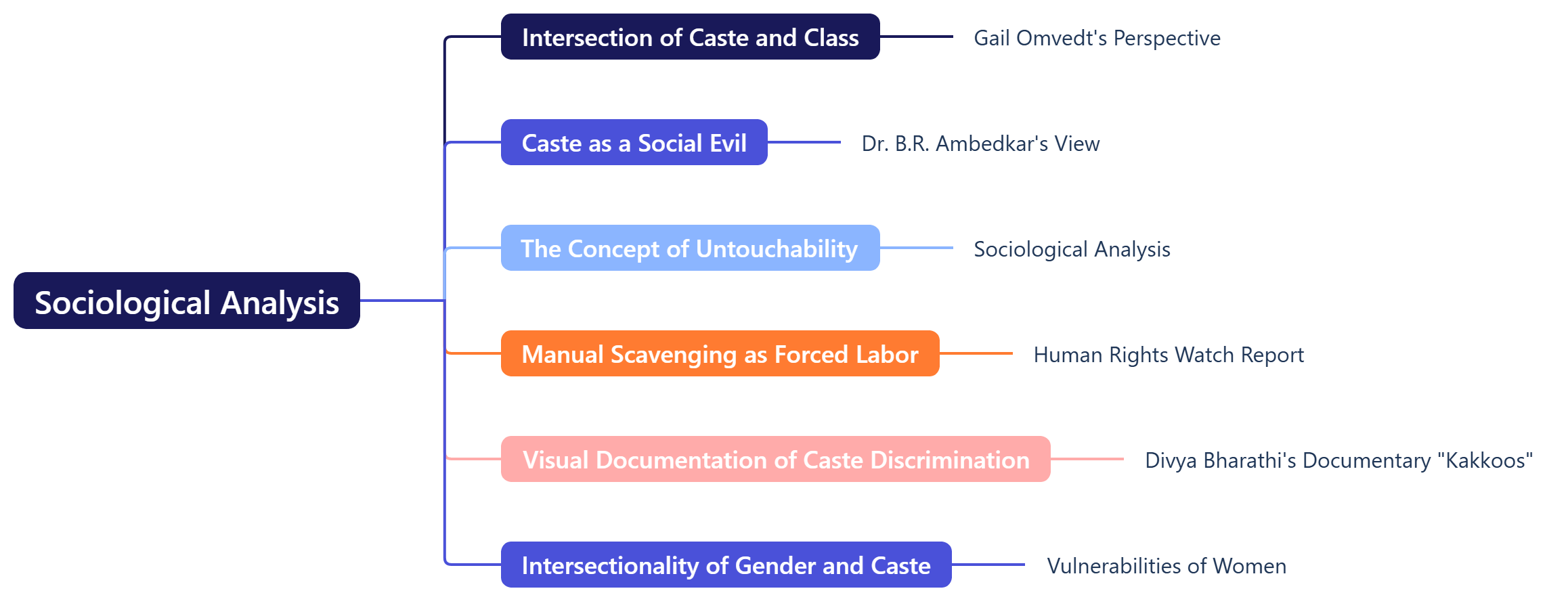
Intersection of Caste and Class: Gail Omvedt emphasized the intersectionality of caste and class in perpetuating manual scavenging. She argued that Dalits are often trapped in this occupation due to economic exploitation and lack of viable alternativ The caste system not only dictates one’s occupation but also limits access to education and alternative employment, perpetuating a cycle of poverty and marginalization.
Caste as a Social Evil: Dr. B.R. Ambedkar viewed the caste system as a fundamental social evil that enforces occupational roles, such as manual scavenging, on specific communities. He advocated for the annihilation of caste to achieve social justice and equality, emphasizing that true reform requires dismantling the hierarchical structures that assign degrading occupations to marginalized groups.
The Concept of Untouchability: Sociologists analyzed manual scavenging as a manifestation of untouchability, where the occupation itself becomes a marker of social exclusion. He argued that despite legal prohibitions, the practice persists due to deep-rooted societal norms that devalue certain communities, thereby violating the constitutional promise of dignity and equality.
Manual Scavenging as Forced Labor: Human Rights Watch reported that manual scavenging continues due to caste-based discrimination, causing significant physical and emotional suffering for those involved. They highlighted that this practice is not a form of employment but an injustice comparable to slavery, calling for strict enforcement of laws and rehabilitation of affected communities.
Visual Documentation of Caste Discrimination: Activist and filmmaker Divya Bharathi’s documentary “Kakkoos” sheds light on the daily lives of manual scavengers, exposing the systemic caste discrimination that underpins this practice. The film illustrates how societal structures and state mechanisms perpetuate manual scavenging, despite legal bans, by failing to provide alternative livelihoods and social support.
Intersectionality of Gender and Caste: Studies have shown that women engaged in manual scavenging face double discrimination due to their caste and gender. They are often subjected to more hazardous work conditions and social stigma, highlighting the need for policies that address the intersectional nature of their oppression.
Path Forward
To eradicate manual scavenging:
Strengthen Legal Enforcement: Ensure strict implementation of existing laws and hold violators accountable.
Promote Social Inclusion: Implement awareness campaigns to challenge caste-based prejudices and promote dignity of labor.
Provide Alternative Livelihoods: Offer skill development and employment opportunities to rehabilitate affected individuals.
Invest in Technology: Adopt mechanized cleaning methods to eliminate the need for manual scavenging.
Conclusion
The persistence of manual scavenging in India is not merely a sanitation issue but a complex social problem rooted in historical caste hierarchies and systemic discrimination. Sociological analyses underscore the necessity of addressing the structural and cultural factors that sustain this practice. Comprehensive reforms, including strict law enforcement, social awareness, and economic rehabilitation, are essential to uphold the dignity and rights of those affected.
PYQs
Paper I:
“Human dignity remains a far-fetched utopia unless the poorest, forced to adopt manual scavenging as a means of subsistence, are liberated.” Comment.[2016]
Discuss the concept of social exclusion and its relevance in understanding the plight of manual scavengers in India.[2018]
How does B.R. Ambedkar’s perspective on caste and occupation help in understanding the persistence of manual scavenging in India?[2019]
Analyze the role of caste in perpetuating occupational segregation with reference to manual scavenging.[2020]
Explain how the concept of ‘untouchability’ has evolved in modern India, particularly in the context of sanitation work.[2021]
Paper II:
Examine the constitutional and legal measures taken to eradicate manual scavenging in India. How effective have they been?[2015]
Discuss the role of civil society and social movements in addressing the issue of manual scavenging in India.[2017]
Evaluate the impact of government schemes like the Swachh Bharat Mission on the lives of sanitation workers.[2018]
Analyze the socio-economic factors that contribute to the persistence of manual scavenging despite legal prohibitions.[2019]
Discuss the challenges faced in rehabilitating manual scavengers and integrating them into mainstream society.[2020]
Assess the role of education and skill development programs in providing alternative livelihoods to manual scavengers.[2021]
Critically examine the intersectionality of caste and gender in the context of sanitation work in India. [2022]
Discuss the implications of the Prohibition of Employment as Manual Scavengers and their Rehabilitation Act, 2013, on the dignity of sanitation workers.[2023]
To Read more topics like Manual Scavenging, Sanitation Work, and the Question of Dignityin Public Posts, visit: www.triumphias.com/blogs