



Free Trade Agreements and India’s Rise on the Global Stage
(Relevant for GS paper-3, Effect of Policies and Politics of other Countries on India)
|
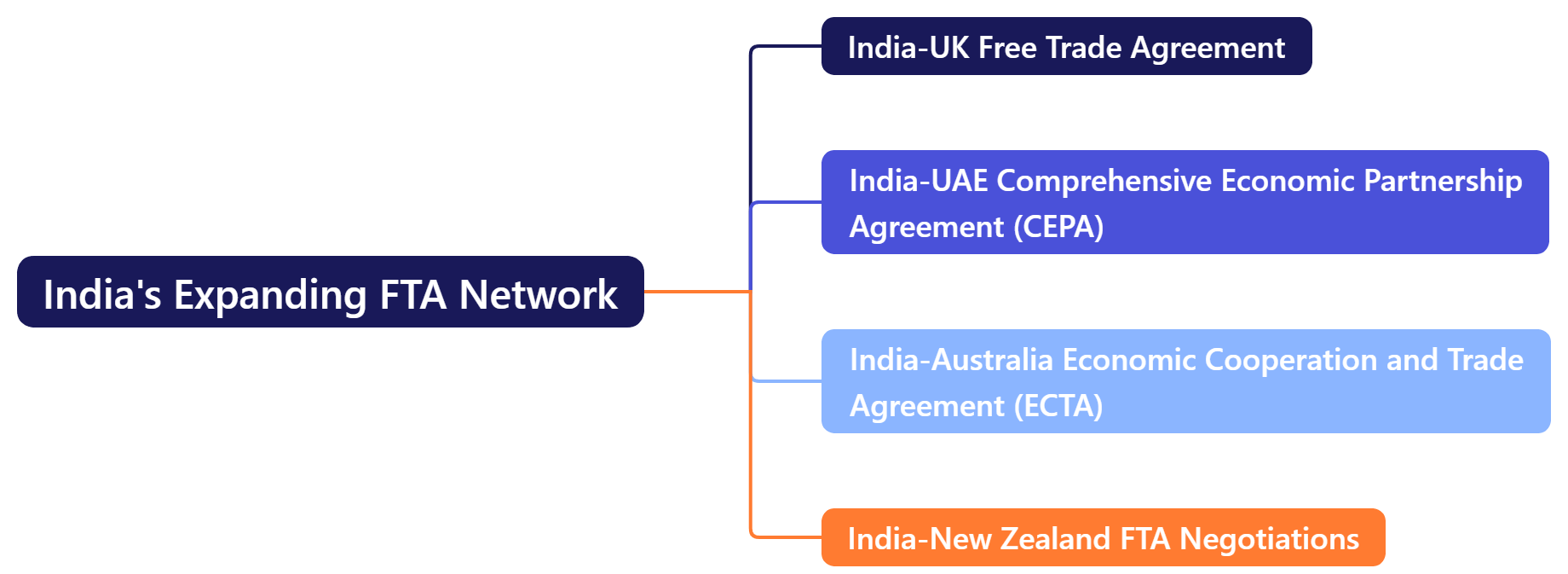
In an era marked by shifting geopolitical dynamics and evolving trade paradigms, India’s strategic engagement through Free Trade Agreements (FTAs) has become a cornerstone of its foreign policy and economic expansion. As of 2025, India has actively pursued and signed multiple FTAs, aiming to bolster its global trade footprint, enhance economic growth, and secure its position as a pivotal player in international commerce. Understanding Free Trade Agreements (FTAs)FTAs are treaties between two or more countries that facilitate trade by reducing or eliminating tariffs, import quotas, and preferences on most (if not all) goods and services traded between them. For India, FTAs serve as instruments to access new markets, attract foreign investment, and integrate into global value chains. India’s Expanding FTA Network
As of 2025, India has 13 active FTAs and is in negotiations for several more, reflecting a proactive approach to diversify trade partnerships and reduce dependency on traditional markets.
Finalized in May 2025 after years of negotiation, the India-UK FTA is a landmark deal that eliminates tariffs on 99% of Indian exports to the UK. In return, the UK will see a 90% tariff reduction for goods exported to India, with most becoming tariff-free within a decade. Key sectors benefiting include Indian textiles, footwear, and gems, while the UK gains access to Indian markets for items like chocolates and cosmetics. Notably, tariffs on automotive goods were reduced from 100% to 10%, benefiting companies like Tata Motors but raising concerns about competition from Chinese automobiles.
Implemented in 2022, the India-UAE CEPA has significantly boosted bilateral trade. India’s exports to the UAE grew by 12% in the first year of the CEPA’s implementation. The agreement ensures duty-free access to over 90% of India’s exports, including textiles, gems, and pharmaceuticals, enhancing competitiveness in these sectors.
The ECTA offers substantial tariff eliminations on key sectors, bolstering investor confidence. It provides India access to advanced Australian technology in sectors like renewable energy, crucial for India’s energy transition. The agreement is also expected to reduce carbon emissions in India, promoting environmental and economic sustainability.
In March 2025, India and New Zealand agreed to enter into free trade negotiations, aiming to enhance economic cooperation. The discussions focus on sectors like agriculture, education, and technology, with the potential to open new markets for Indian products and services. Strategic and Economic Impacts of FTAs
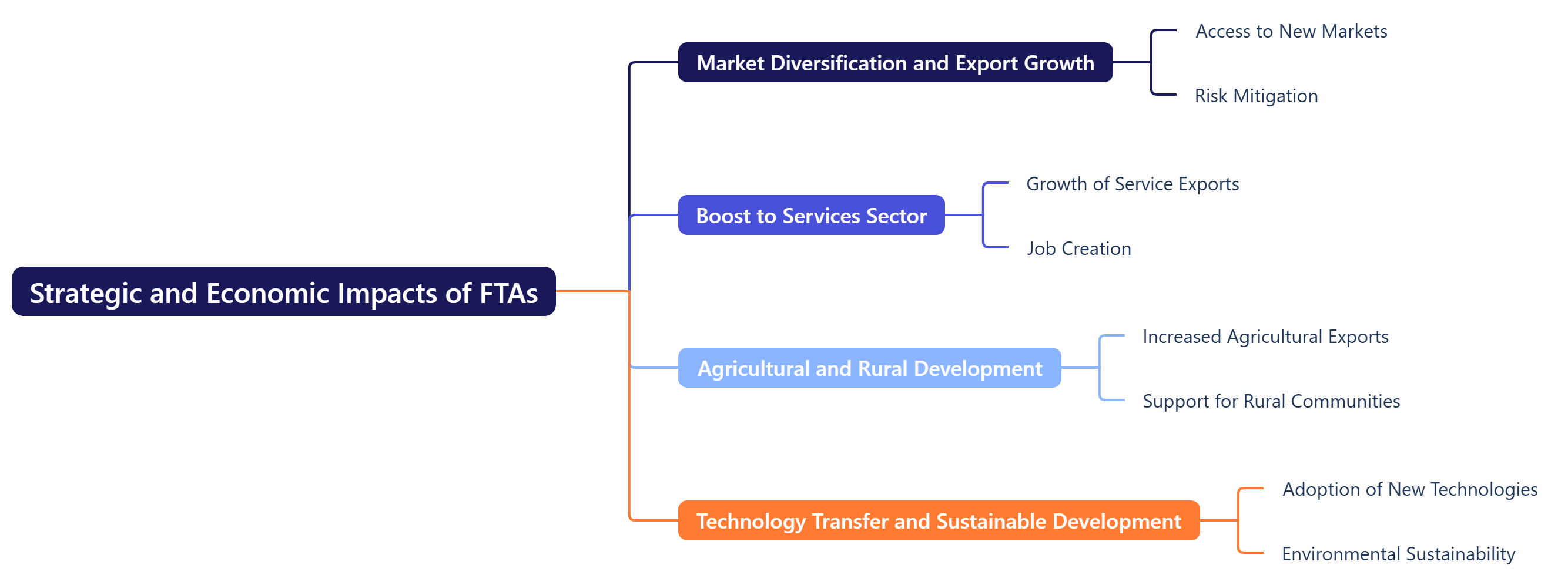
FTAs have enabled India to diversify its export markets, reducing reliance on traditional partners. For instance, the India-UK FTA is expected to increase bilateral trade by $34 billion annually by 2040.
Agreements like the India-UK FTA provide better access for Indian services, including IT and healthcare. Such provisions generate employment for Indian professionals abroad and increase remittances. India’s IT exports, constituting nearly 25% of total services exports, are expected to see growth, with the UK accounting for 17% of this share post-FTA.
FTAs open new markets for Indian agricultural exports, improving rural income levels. The India-Mauritius CECPA has enhanced India’s agricultural exports by cutting tariffs on products like sugar and tea, providing farmers with new export opportunities.
FTAs facilitate technology transfer, especially in sectors like manufacturing, green energy, and digital infrastructure. The India-Australia ECTA provides India access to advanced Australian technology in sectors like renewable energy, crucial for India’s energy transition. Challenges and Considerations
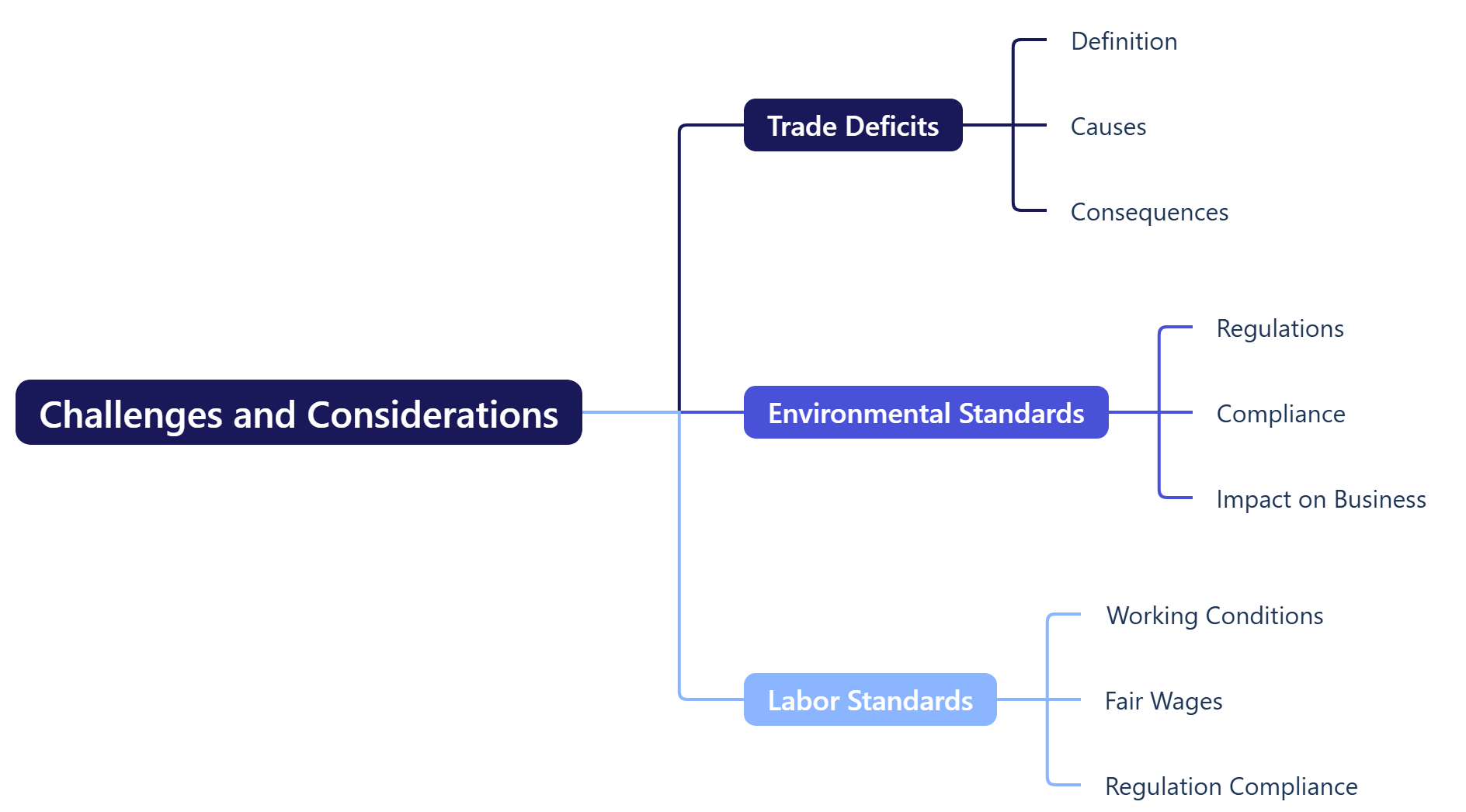
One of the key concerns with India’s FTAs is the growing trade deficits with several partner countries, particularly ASEAN and UAE. While India gains preferential access to markets like the UAE, it faces increasing import intensity, especially from ASEAN. The India-ASEAN FTA has led to a significant rise in imports to $44 billion in FY23, compared to $8 billion in FY13.
Many of India’s FTAs, such as those with the EU and the UK, have incorporated clauses on labor rights and environmental standards. However, India’s reluctance to fully embrace these standards often limits the effectiveness of such agreements in promoting sustainable trade. The India-UK FTA includes provisions for labor rights, yet India has resisted fully binding labor provisions, fearing the negative impact on domestic policy autonomy. ConclusionIndia’s proactive engagement in FTAs reflects its commitment to integrating into the global economy and enhancing its trade competitiveness. While these agreements offer substantial benefits, including market access, investment opportunities, and technology transfer, careful consideration of potential challenges is essential. Balancing economic growth with sustainable development and equitable trade practices will be crucial as India continues to shape its global presence through strategic trade partnerships. |





To Read more topics like Free Trade Agreements and India’s Rise on the Global Stage in Public Posts, visit: www.triumphias.com/blogs
Read more Blogs:
Journey of the MPs Code of Conduct | Ethics for UPSC Civil Services Examination | Triumph IAS
Neuroscience of Religion | Ethics for UPSC Civil Services Examination | Triumph IAS
2 comments