India is home to one of the largest tribal populations in the world, with more than 705 officially recognized Scheduled Tribes (STs), constituting about 8.6% of the total population (Census 2011). These communities, spread across remote and forested areas, possess unique cultures, languages, and ways of life. Despite constitutional protections and welfare schemes, many tribes continue to face socio-economic marginalization, limited access to education and healthcare, and threats to their land and identity. As India progresses economically, it is imperative to ensure that tribal communities are not left behind.
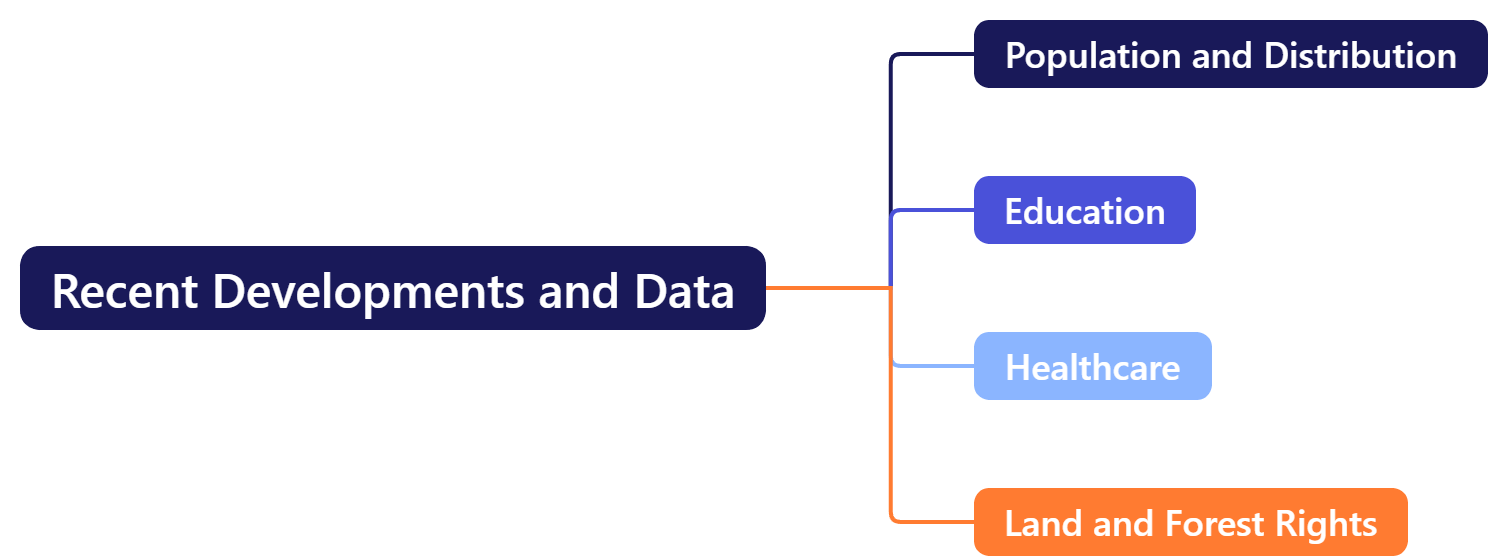
Recent Developments and Data
Population and Distribution: Tribal populations are primarily concentrated in states like Madhya Pradesh, Odisha, Jharkhand, Chhattisgarh, Maharashtra, and the North-Eastern states. In 2023, the Ministry of Tribal Affairs highlighted that around 50% of STs live below the poverty line, compared to 22% of the general population.
Education: According to the Unified District Information System for Education (UDISE) 2022-23, the literacy rate among STs remains low at around 59%, compared to the national average of 77%. Dropout rates are particularly high at the secondary level, especially among tribal girls.
Healthcare: As per the National Family Health Survey (NFHS-5), STs exhibit higher levels of malnutrition, anemia, and maternal mortality. Only 40% of tribal women have access to institutional deliveries, and tribal areas often lack adequate healthcare infrastructure.
Land and Forest Rights: The Forest Rights Act (2006) was a landmark legislation to grant legal recognition of tribal rights over forest land and resources. However, as of 2024, implementation remains patchy. Only about 50% of the potential forest rights claims have been granted, leading to growing discontent and insecurity.
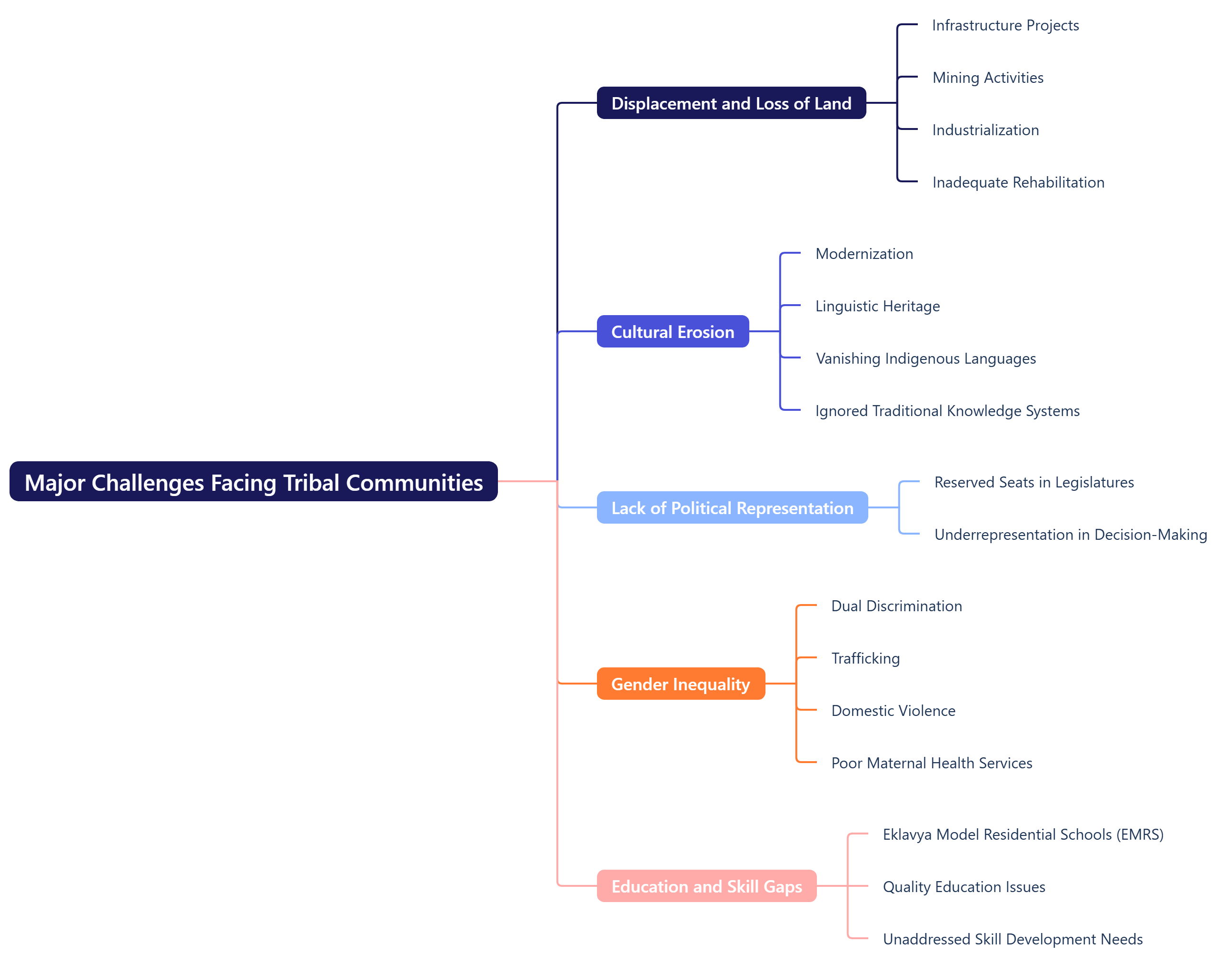
Major Challenges Facing Tribal Communities
Displacement and Loss of Land: Large-scale infrastructure projects, mining, and industrialization have led to the displacement of tribal communities. For instance, in Odisha and Chhattisgarh, mining activities have displaced thousands, often without adequate rehabilitation.
Cultural Erosion: Modernization and mainstreaming policies often neglect the cultural and linguistic heritage of tribes. Indigenous languages are vanishing, and traditional knowledge systems are being ignored.
Lack of Political Representation: While seats are reserved in legislatures, tribal voices are often underrepresented in decision-making processes, especially at higher administrative levels.
Gender Inequality: Tribal women face dual discrimination—as women and as members of marginalized communities. Issues like trafficking, domestic violence, and poor access to maternal health services remain rampant.
Education and Skill Gaps: Despite schemes like Eklavya Model Residential Schools (EMRS), quality education remains elusive. Moreover, skill development programs often do not cater to the unique needs of tribal youth.
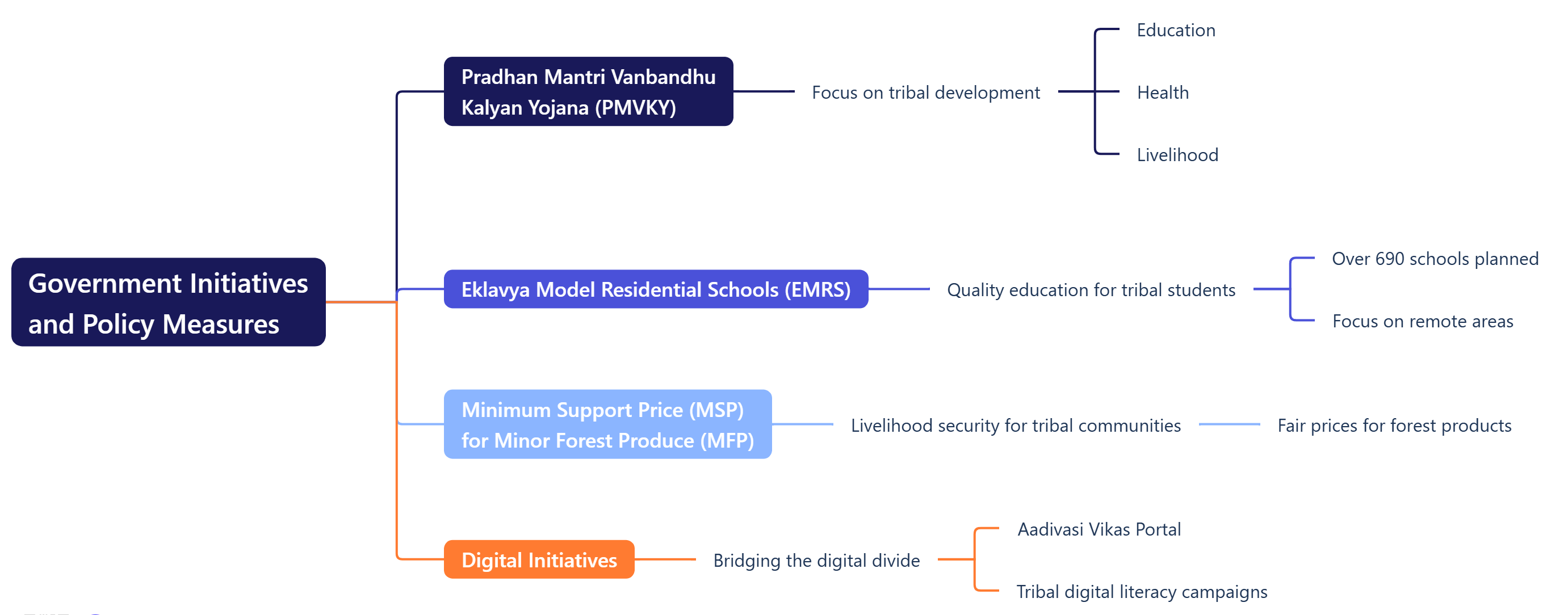
Government Initiatives and Policy Measures
Pradhan Mantri Vanbandhu Kalyan Yojana (PMVKY): Aims at the overall development of tribal people by focusing on education, health, and livelihood.
Eklavya Model Residential Schools (EMRS): Over 690 EMRS are planned across India to provide quality education to tribal students in remote areas.
Minimum Support Price (MSP) for Minor Forest Produce (MFP): Helps tribes earn fair prices for forest products, thus improving livelihood security.
Digital Initiatives: The “Aadivasi Vikas Portal” and tribal digital literacy campaigns aim to bridge the digital divide.
Suggestions and Way Forward
Strengthening Implementation of Forest Rights Act: Fast-tracking the recognition of individual and community forest rights with transparent grievance redressal mechanisms is critical.
Promoting Tribal-Led Development: Policies must encourage tribal self-governance through Gram Sabhas, ensuring that development projects consider the consent and needs of local communities.
Preservation of Tribal Languages and Culture: Including tribal languages in school curricula and promoting indigenous art and crafts through tourism and e-commerce can safeguard cultural identity.
Inclusive Education Reforms: Increasing access to quality education with trained local teachers, use of tribal languages in early education, and gender-sensitive policies will reduce dropout rates.
Health Infrastructure in Tribal Areas: Deploying mobile health units, recruiting local tribal health workers, and improving nutrition programs can address health disparities.
Skill Development and Livelihood Opportunities: Tailored skill training programs linked with local economies (e.g., forest produce processing, handicrafts, eco-tourism) can boost tribal employment.
Monitoring and Evaluation: Regular third-party audits of tribal schemes, better data collection, and feedback mechanisms can improve policy effectiveness.
Recent Examples
Janjatiya Gaurav Divas (15 November) was declared in 2021 to honor tribal freedom fighter Birsa Munda and celebrate tribal contributions to the nation.
In 2023, Madhya Pradesh launched the PESA Act implementation in tribal areas, empowering Gram Sabhas with more decision-making powers.
The National Education Policy (NEP) 2020 emphasizes the inclusion of underrepresented groups, including tribal communities, in mainstream education.
Conclusion
India’s tribal communities are an integral part of the nation’s heritage and ecological guardianship. Ensuring their future requires a balanced approach that respects their rights, protects their culture, and promotes equitable development. As India moves toward becoming a $5 trillion economy, tribal inclusion must remain central to our growth narrative. A tribal-friendly policy framework, effective ground-level implementation, and genuine community participation can together secure a sustainable and dignified future for India’s tribal population.
To Read more topics like Ensuring a Sustainable Future for Indigenous Tribes in Indiain Public Posts, visit: www.triumphias.com/blogs








One comment