In an increasingly digitised world, the concept of digital citizenship has gained immense relevance. It refers to the responsible and ethical use of digital technology by individuals in a manner that upholds democratic values, human dignity, and societal norms. In India, the rise of social media, digital governance, and online activism has transformed the traditional notions of citizenship and participation, ushering in both new opportunities and emerging threats.
What is Digital Citizenship?
Digital citizenship can be defined as the norms of appropriate, responsible behaviour with regard to technology use, especially in online spaces. It involves understanding digital rights and responsibilities, promoting respectful communication, and using digital tools to engage in civic life.
Key Elements of Digital Citizenship:
Digital literacy: Understanding how to access, evaluate, and create digital content.
Digital rights and responsibilities: Respecting privacy, freedom of expression, and laws.
Online safety and security: Avoiding cyber threats and practicing digital hygiene.
Civic participation: Using technology for informed political engagement and activism.
Digital ethics: Respecting others in digital communication and avoiding harmful behaviours.
Digital Citizenship in India:
India is home to over 850 million internet users, making it the second-largest digital market globally. Initiatives like Digital India, e-Governance, MyGov, and online education platforms have revolutionised service delivery and public participation.
However, with increased digital penetration, India also faces challenges like:
Misinformation and fake news
Online hate speech and cyberbullying
Digital divide between rural-urban, rich-poor, and gender lines
Online radicalisation and trolling
Data privacy concerns and surveillance
Sociological Analysis
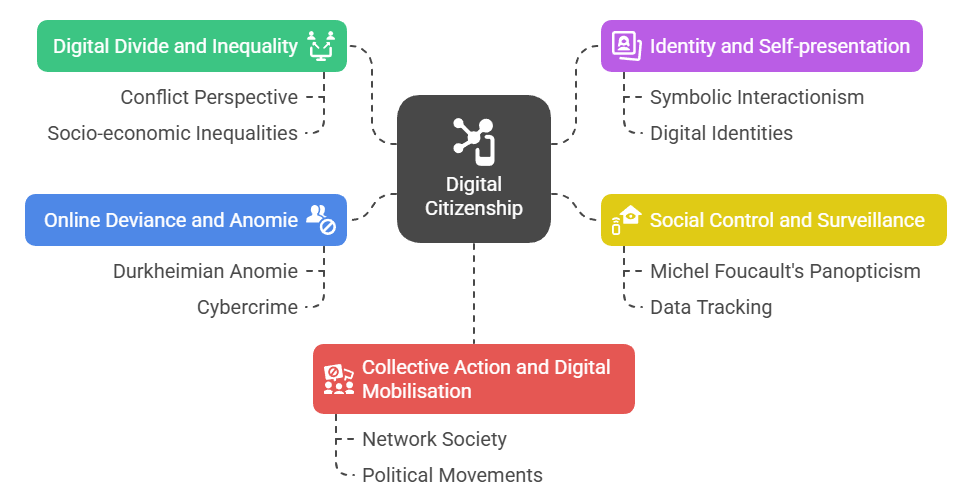
Digital Divide and Inequality: From a conflict perspective, digital citizenship is not equally accessible. The poor, rural, elderly, and marginalized communities have limited digital literacy and access to the internet. This creates a digital divide which mirrors existing socio-economic inequalities, leading to exclusion from online education, digital payments, and e-governance.
Identity and Self-presentation: According to symbolic interactionism, individuals present a curated version of themselves online, much like Erving Goffman’s dramaturgical model. Social media platforms allow users to construct digital identities, which may not always align with their real-life self. This creates complexities in authenticity, self-esteem, and interpersonal relations. Online spaces can also allow marginalised groups, like LGBTQ+ communities, to express their identities more freely, thus promoting digital inclusivity.
Social Control and Surveillance: Michel Foucault’s concept of panopticism is highly relevant in the age of digital citizenship. The constant possibility of surveillance through CCTV, mobile apps, and data tracking creates a self-regulating citizen, raising questions about freedom and autonomy.
Online Deviance and Anomie: In Durkheimian terms, the internet can become a space of anomie—a normless zone—leading to deviant behaviours like trolling, cybercrime, and online harassment. Lack of face-to-face accountability reduces social constraints, enabling behaviour that would be unacceptable in offline spaces.
Collective Action and Digital Mobilisation: Digital citizenship has enabled new forms of political participation. Movements like #MeToo, CAA-NRC protests, Farmers’ protests, and environmental activism gained momentum through online platforms. This reflects Manuel Castells’ concept of the network society, where power is exercised through communication flows rather than institutions.
Dimensions of Digital Citizenship in India
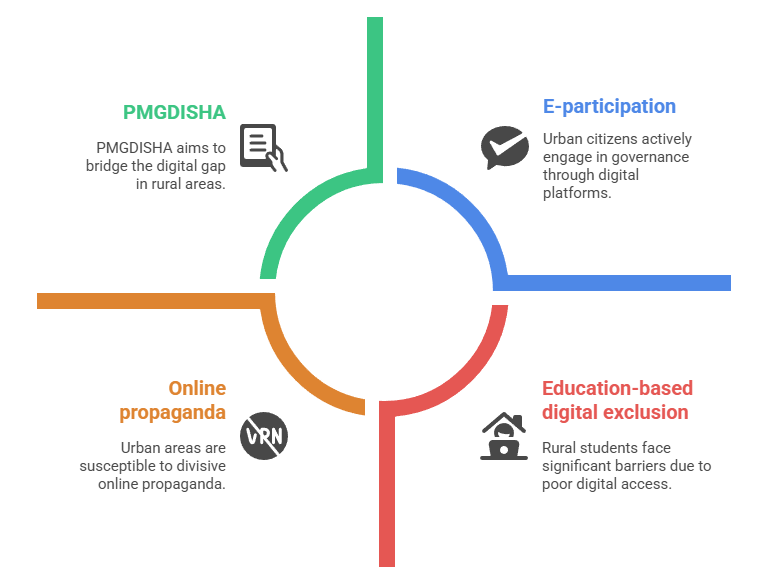
Political Citizenship: Digital platforms allow for e-participation, such as online petitions, digital voting campaigns, and government engagement through apps like MyGov. However, the rise of online propaganda and IT cell-based polarisation undermines healthy democratic debate.
Educational Citizenship: During the pandemic, digital tools became essential for remote learning. However, poor digital access among rural and tribal students exposed the education-based digital exclusion. This impacts long-term human capital formation and equality.
Parental and Youth Citizenship: Children and teenagers often lack the maturity to navigate digital spaces. Exposure to online predators, gaming addiction, or inappropriate content requires digital parenting and education. Sociologists warn against digital alienation that separates youth from real-world community engagement.
Urban vs Rural Digital Citizenship: Urban citizens are more likely to participate in online commerce, banking, and governance, while rural populations often rely on informal networks. Government programs like PMGDISHA (Pradhan Mantri Gramin Digital Saksharta Abhiyan) aim to bridge this rural-urban digital gap.
Challenges to Digital Citizenship in India
Lack of digital literacy, especially among the elderly, rural women, and marginalized groups.
Cybercrime, including identity theft, financial fraud, and online harassment.
Data misuse by corporations and surveillance by governments.
Algorithmic bias and echo chambers that restrict exposure to diverse viewpoints.
Over-dependence on screens, leading to digital addiction and mental health issues.
Government Initiatives Promoting Digital Citizenship
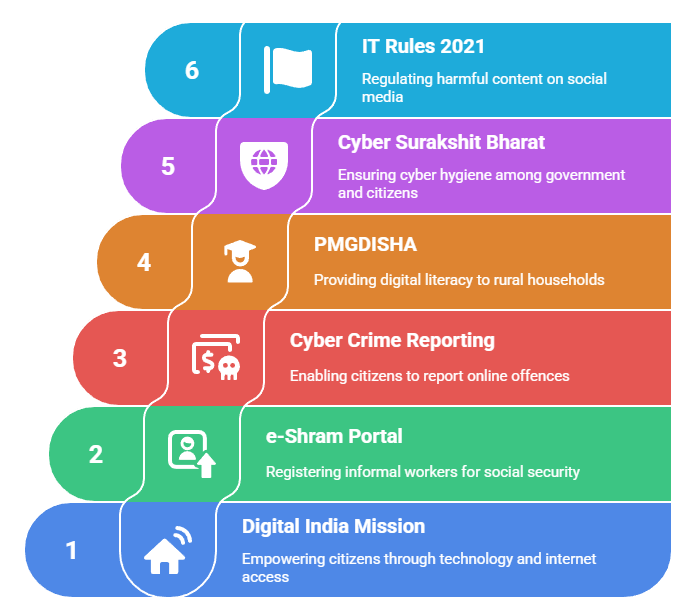
Digital India Mission: Aims to empower citizens through technology and universal internet access.
e-Shram Portal: Registers informal workers for social security using digital identity.
National Cyber Crime Reporting Portal: Enables digital citizens to report online offences.
PMGDISHA: Digital literacy for rural households.
Cyber Surakshit Bharat: Ensures cyber hygiene among government departments and citizens.
Information Technology Rules, 2021: Mandate social media platforms to regulate harmful content and ensure accountability.
Way Forward:
Digital Literacy Campaigns: Introduce digital civics education at school and community levels to promote safe and ethical internet use.
Gender-Inclusive Digital Access: Promote internet access for rural women, who are often excluded due to patriarchal controls.
Online Legal Awareness: Educate citizens on cyber laws, privacy rights, and grievance redressal mechanisms to strengthen civic confidence.
Strengthening Data Protection Laws: Enforce the Digital Personal Data Protection Act, 2023 effectively to safeguard digital rights and privacy.
Ethical Tech Practices: Encourage platform accountability, AI transparency, and community moderation to reduce digital harms.
Conclusion
Digital citizenship in India is a double-edged sword—it holds the potential to democratise access, empower citizens, and strengthen governance, but it also amplifies existing social divides, new forms of deviance, and threats to privacy. A sociological understanding of digital citizenship is vital to address these challenges through informed policy and civic participation.
PYQs
Paper I –
Examine the sociological consequences of the digital divide in society. – (2020)
How do symbolic interactionists explain the construction of self in the digital age? – (2021)
Explain the concept of ‘surveillance society’ in the context of modern digital technologies. – (2022)
What are the implications of digital technology for social relationships and identity formation in contemporary society? – (2023)
Paper II
Examine how digital initiatives like Digital India are reshaping citizenship in the Indian context. – (2017)
Explain how digital surveillance influences state-citizen relationships in India. – (2020)







One comment