



Competitive Federalism: India’s Emerging Model of State Rivalry
(Relevant for Sociology Paper 2: Politics and Society)
|
The announcement of Google’s largest AI data centre outside California in Andhra Pradesh exemplifies India’s transition into a competitive federal economy, where States actively compete to attract global investment. Unlike cooperative federalism, which emphasizes collaboration between the Centre and States, competitive federalism leverages healthy rivalry to improve governance, infrastructure, and economic outcomes. Understanding Competitive FederalismCompetitive federalism refers to a governance model in which States strive to outperform each other on development and investment metrics. This competition covers multiple areas—policy clarity, infrastructure, skilled labour, and ease of doing business. While cooperative federalism focuses on synergy, competitive federalism emphasizes performance-based rivalry, incentivizing innovation and accountability at the sub-national level. Pre-1991 LandscapePrior to liberalization, India’s investment allocation was largely top-down, flowing from New Delhi. States competed less on merit and more on access to central power corridors. Industrial geography was determined by licensing systems, bureaucratic discretion, and political patronage rather than efficiency or innovation. Although liberalization in 1991 dismantled some licensing restrictions and partially decentralized economic power, meaningful competition was slow due to:
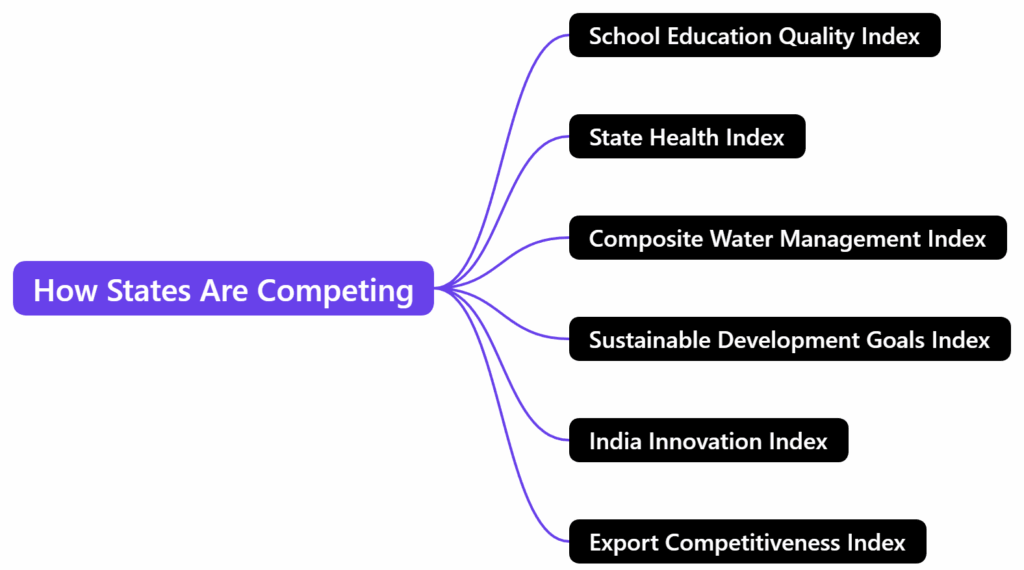
By the 2010s, however, States became engines of investment mobilisation, as reflected in World Bank (2023) and OECD (2021) studies on territorial competitiveness. Rise of Competitive FederalismThe concept gained momentum with the establishment of NITI Aayog in 2015, replacing the Planning Commission. NITI Aayog’s mandate includes fostering competitive federalism through transparent rankings, performance indices, and policy benchmarks. Today, States compete on competence rather than connections. Key criteria include policy predictability, governance credibility, infrastructure quality, and availability of skilled labour. This trend aligns with NITI Aayog (2022) and IDFC Institute (2019) observations, which show widening divergence among States in business climate indicators. How States Are Competing
NITI Aayog has launched multiple indices to benchmark State performance:
Even sub-State regions are benchmarked under the Aspirational Districts Programme, encouraging competition at micro-levels. Examples of Competitive Federalism
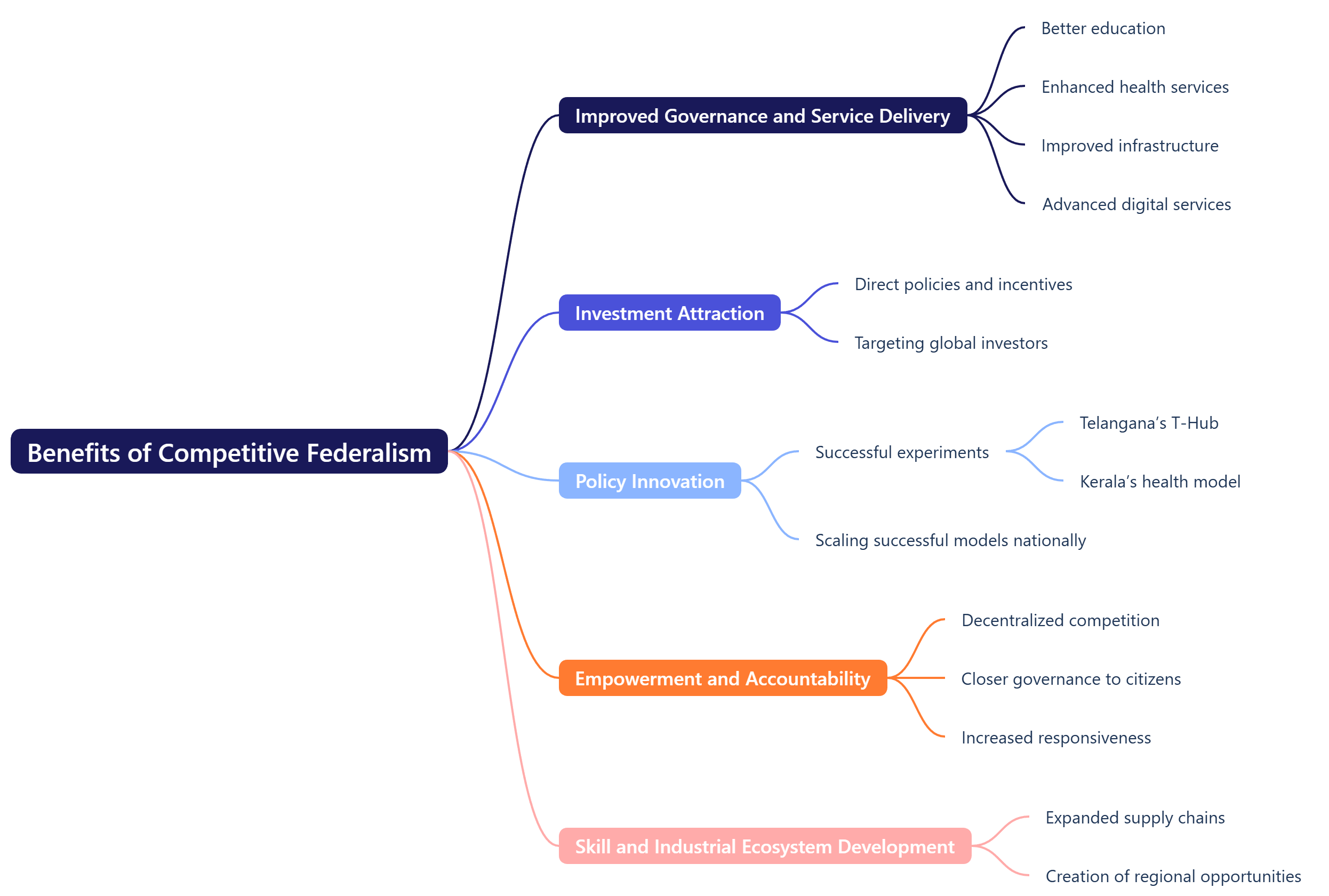
These cases mirror competitive federal models in OECD federations, as discussed in Brookings (2020) and UNESCAP (2022) reports. Benefits of Competitive Federalism
Competitive federalism yields multiple social, economic, and governance benefits:
According to DPIIT (2024), such competition accelerates policy harmonization, fostering a more dynamic federal structure. Risks of Competitive FederalismDespite its advantages, competitive federalism carries risks:
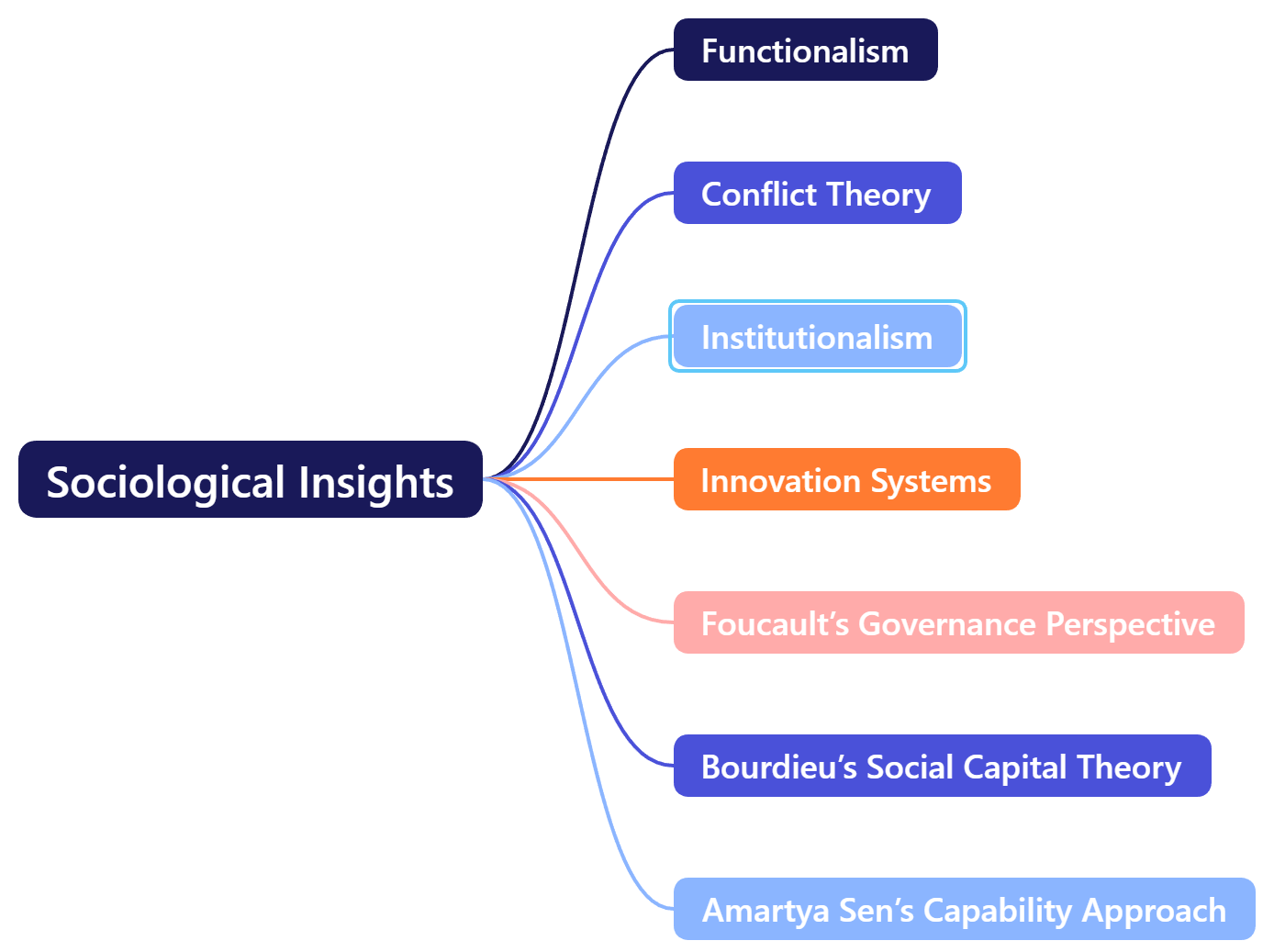
Sociological Insights
Competitive federalism is not only an economic phenomenon but also a sociological one. Several frameworks help understand its implications:
Sociological Implications
Way Forward: India’s New Federal CompactIndia has moved from permission-based investment to persuasion-based competition, with State leaders pitching directly to CEOs rather than ministries. This model ensures that:
Examples include Andhra Pradesh’s ease-of-doing-business performance, Tamil Nadu’s workforce quality, Gujarat’s infrastructure, Punjab’s enterprise culture, Uttar Pradesh’s scale, and Jharkhand’s mineral resources. Collectively, they create a federation of opportunities, balancing competition with national development goals. ConclusionCompetitive federalism represents a paradigm shift in India’s federal governance. It combines decentralization, accountability, and innovation while leveraging inter-State rivalry to enhance service delivery and attract investment. Sociologically, it reshapes power dynamics, reduces patronage politics, and fosters citizen-centric governance. Economically, it positions States as active agents of national competitiveness. In essence, India’s competitive federalism is a model of development through rivalry, where the success of one State contributes to the prosperity of the nation as a whole. By aligning governance, economics, and social theory, it offers a comprehensive framework for sustainable and inclusive growth. |



To Read more topics, visit: www.triumphias.com/blogs
Read more Blogs:
India’s Top 1% and the Sociological Dimensions of Wealth Inequality
Remembering the Roots: How India is Reclaiming Tribal Histories Through Memory and Modernity
One comment