



Ambedkar Vision for Land Reform: Caste, Agrarian Economy, and Dalit Empowerment in India
(Relevant for Sociology Paper I: Social Stratification, Social Change in Modern Society and Sociology Paper II: Caste system; Rural and agrarian social structure, Rural and agrarian transformation in India, Social movements among Dalits)
IntroductionAs we celebrated Ambedkar Jayanti on 14 April 2025, it is crucial to revisit Dr. B.R. Ambedkar’s radical ideas on land ownership, caste-based exclusion, and India’s agrarian social structure. While Ambedkar is rightly remembered as the architect of the Indian Constitution and a champion of Dalit rights, his lesser-known but equally powerful ideas on land reform, rural economy, and caste oppression deserve renewed attention, especially for those preparing for the UPSC Sociology optional paper. Land and Caste: The Nexus in India’s Agrarian Structure
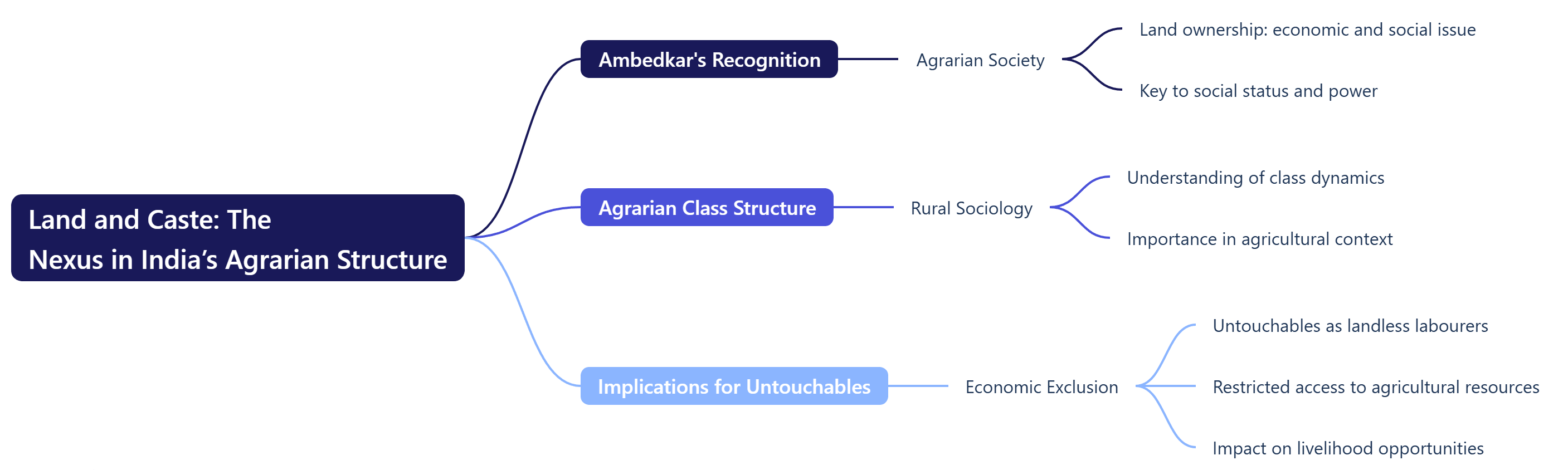
Ambedkar recognized that in a predominantly agrarian society like India, land ownership was not just an economic issue but also a question of social status and power. His work shows a deep understanding of agrarian class structure, a key concept in rural sociology. “In an agricultural country, agriculture can be the main source of living. But this source is not open to the Untouchable. They are forced to be landless labourers.” Land Ownership as Social Emancipation
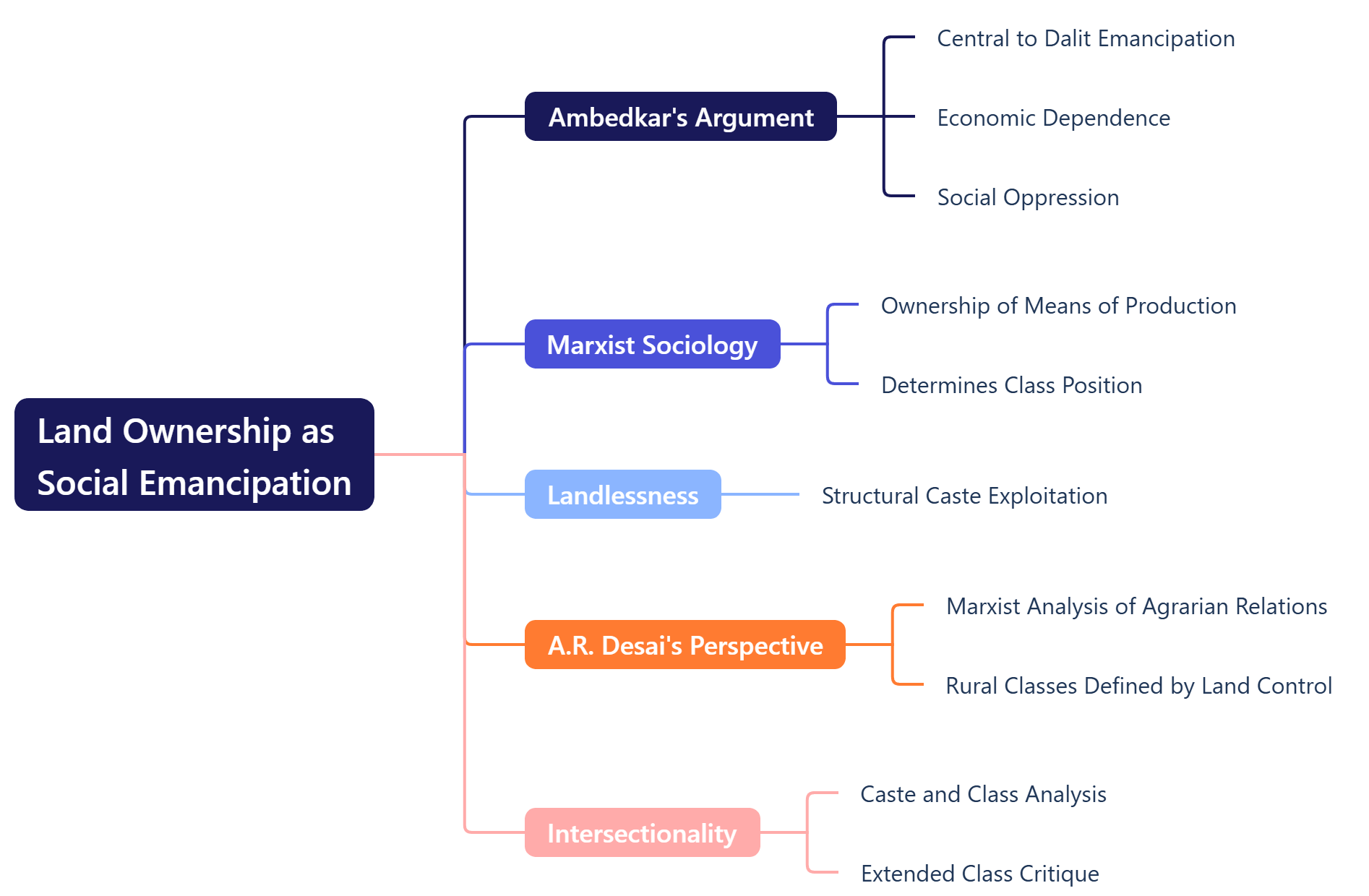
Ambedkar argued that land was central to Dalit emancipation. Without access to land, Dalits remained economically dependent and socially oppressed. This aligns with Marxist sociology, where ownership of means of production determines class position. For Ambedkar, landlessness was a structural form of caste exploitation. Ambedkar’s critique can be analyzed using A.R. Desai’s Marxist perspective on agrarian relations, where rural classes are defined by their control over land. Ambedkar extended this class critique to highlight the intersectionality of caste and class. Opposition to Zamindari and Peasant ProprietorshipAmbedkar was vehemently opposed to the Zamindari system, seeing it as a feudal remnant perpetuating caste hierarchies. Surprisingly, he also opposed the idea of peasant proprietorship, arguing it would benefit upper-caste peasants while excluding landless Dalits. He advocated for state ownership and redistribution of land, even calling for nationalisation of land and collectivised agriculture—ideas that aligned with Fabian socialism and state-led development strategies in early post-independence India. Separate Settlements and Alternative LivelihoodsAmbedkar’s proposal for separate villages for Dalits stemmed from his understanding of the structural violence embedded in traditional Hindu villages. The ‘Ghettoisation of Dalits’ outside the village boundary ensured their exclusion from not just land, but also dignity, education, and employment. He even suggested migration to more progressive regions like Sindh and Indore to escape caste-based oppression—an early call for spatial mobility as a tool of social mobility. Caste, Class and Rural Inequality
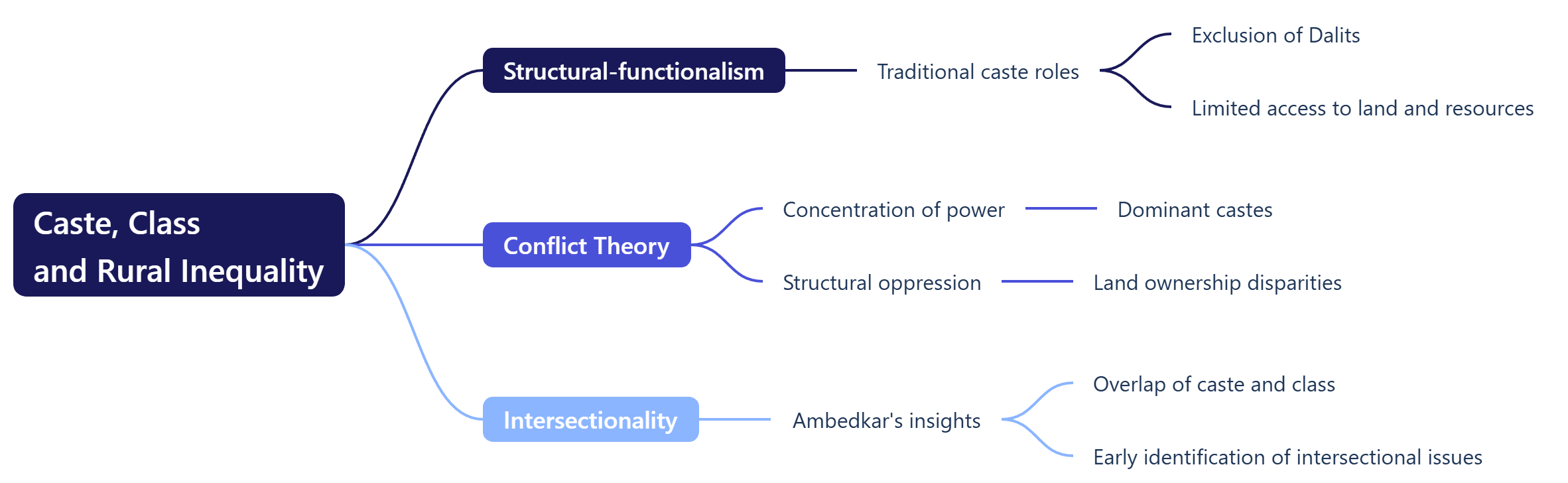
Ambedkar’s agrarian vision intersects key sociological debates on social stratification, rural inequality, and marginalization of Scheduled Castes. His ideas can be examined using:
ConclusionFor Ambedkar, land reform was not a standalone policy issue—it was intrinsic to annihilating caste and establishing a just democratic order. His vision continues to be relevant in contemporary India, where agrarian distress, rural inequality, and caste discrimination remain pressing issues. PYQsPaper 1:
Paper 2
|





One comment