


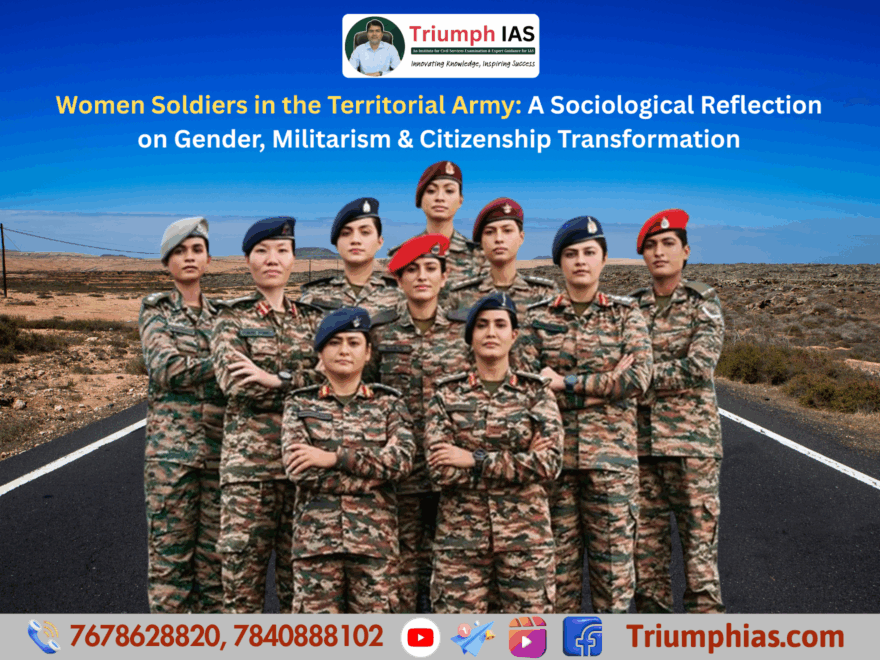
Women Soldiers in the Territorial Army: A Sociological Reflection on Gender, Militarism & Citizenship Transformation
(Relevant for Sociology Paper 1: Stratification and Mobility)
|
The decision to induct women soldiers into the Territorial Army (TA) Home & Hearth battalions marks more than a defence policy shift—it symbolizes a profound sociological transformation in the gendered structure of military institutions and national identity. While the military has historically been one of the strongest bastions of patriarchy, the growing inclusion of women indicates a reconfiguration of symbolic boundaries around power, citizenship, and gender roles in India. In this context, examining this development through a sociological lens reveals deeper implications for democracy, gender justice, and military culture. Militaries as Patriarchal InstitutionsMilitary sociologists such as Cynthia Enloe, Carol Cohn, and Mady Segal argue that armed forces have long represented a hyper-masculine institution, reinforcing ideas of courage, aggression, discipline, bravery, and national defense as inherently male characteristics. Enloe notes that militaries require strict gender hierarchies to maintain obedience structures, and thus women’s entry often becomes contested terrain. Similarly, Pierre Bourdieu interprets the military as a field where masculine symbolic power is reproduced through cultural capital such as physical aggression, combat training, and emotional hardness. The induction of women soldiers into TA battalions challenges this cultural capital structure, questioning who is considered physically capable, emotionally resilient, or worthy of defending the nation. Gender and Social Construction of Strength
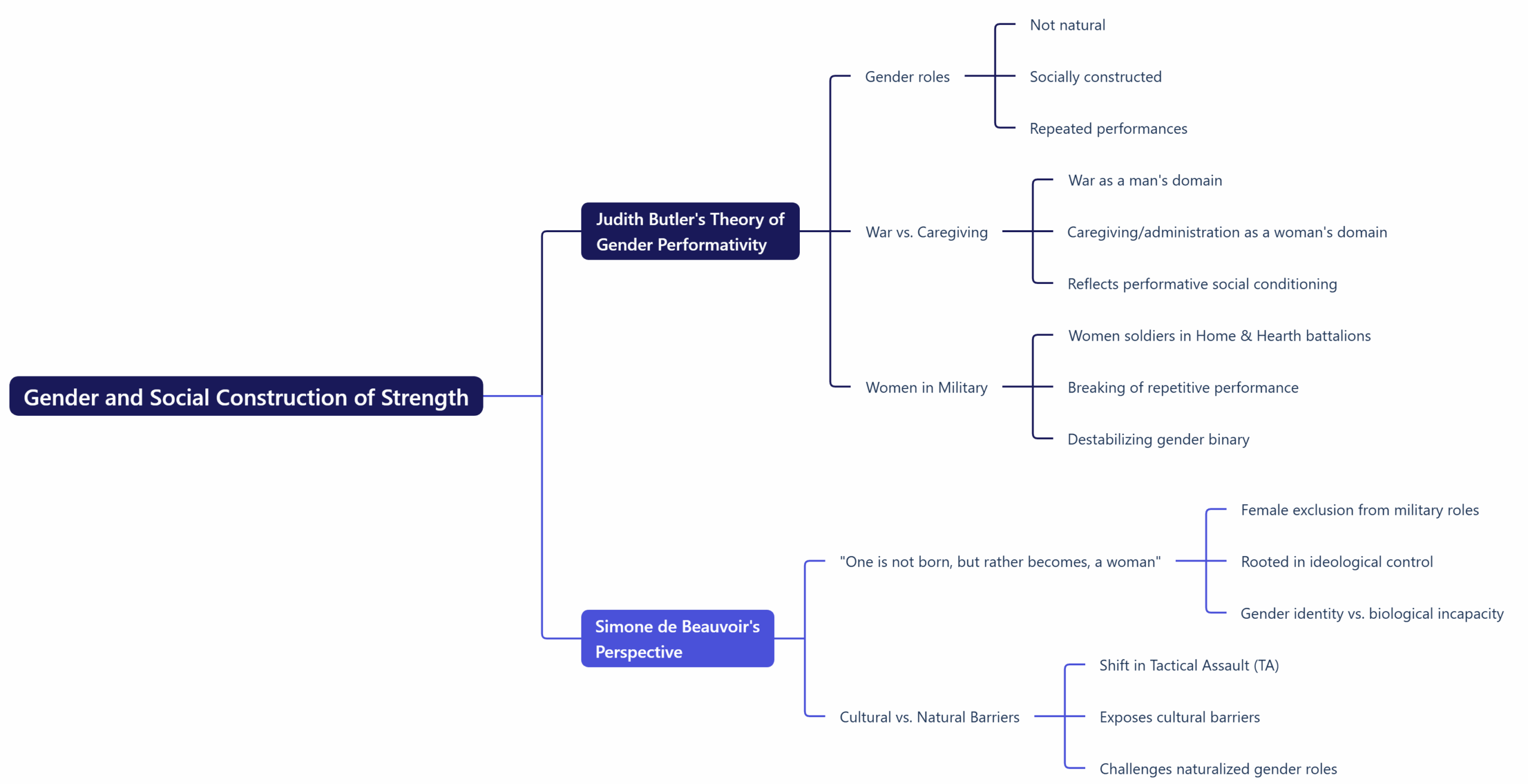
Judith Butler’s theory of gender performativity argues that gender roles are not natural but socially constructed and performed repeatedly until they appear normal. The idea that war is a man’s domain and caregiving or administration is a woman’s domain reflects performative social conditioning. Women soldiers entering Home & Hearth battalions represent a breaking of this repetitive performance, destabilizing the gender binary itself. Simone de Beauvoir’s seminal statement—“One is not born, but rather becomes, a woman”—explains how female exclusion from military roles is rooted in society’s ideological control of gender identity rather than biological incapacity. The shift in TA therefore exposes that barriers were cultural, not natural. Citizenship, Nationalism & InclusionT.H. Marshall (1950) highlighted that full citizenship encompasses civil, political, and social rights. Military service traditionally symbolizes the highest form of national citizenship. When women are structurally excluded from core defence roles, they are positioned as secondary citizens—beneficiaries rather than protectors of the state. Induction into TA battalions enables women to move from protected to protectors, expanding their status within national identity. Nira Yuval-Davis argues that women historically serve symbolic rather than substantive roles in national projects—depicted as mothers of the nation rather than agents of sovereignty. The inclusion of women soldiers subverts this limited representation, enabling what Yuval-Davis calls participatory citizenship. Indian Context and Social ChangeIn the Indian military context, women’s presence has historically been confined to nursing, administration, and medical corps. The Babita Puniya vs. Union of India (2020) Supreme Court decision dismantled the institutional paternalism that denied women command roles, declaring such exclusion unconstitutional and rooted in stereotypes rather than evidence. The move to induct women into Home & Hearth battalions expands this transition from officers to combat-linked soldier roles. Amitabh Behar and gender scholars argue that change in state institutions is essential to dismantle systemic patriarchy—military reform therefore has ripple effects across society. Intersectionality & Representation
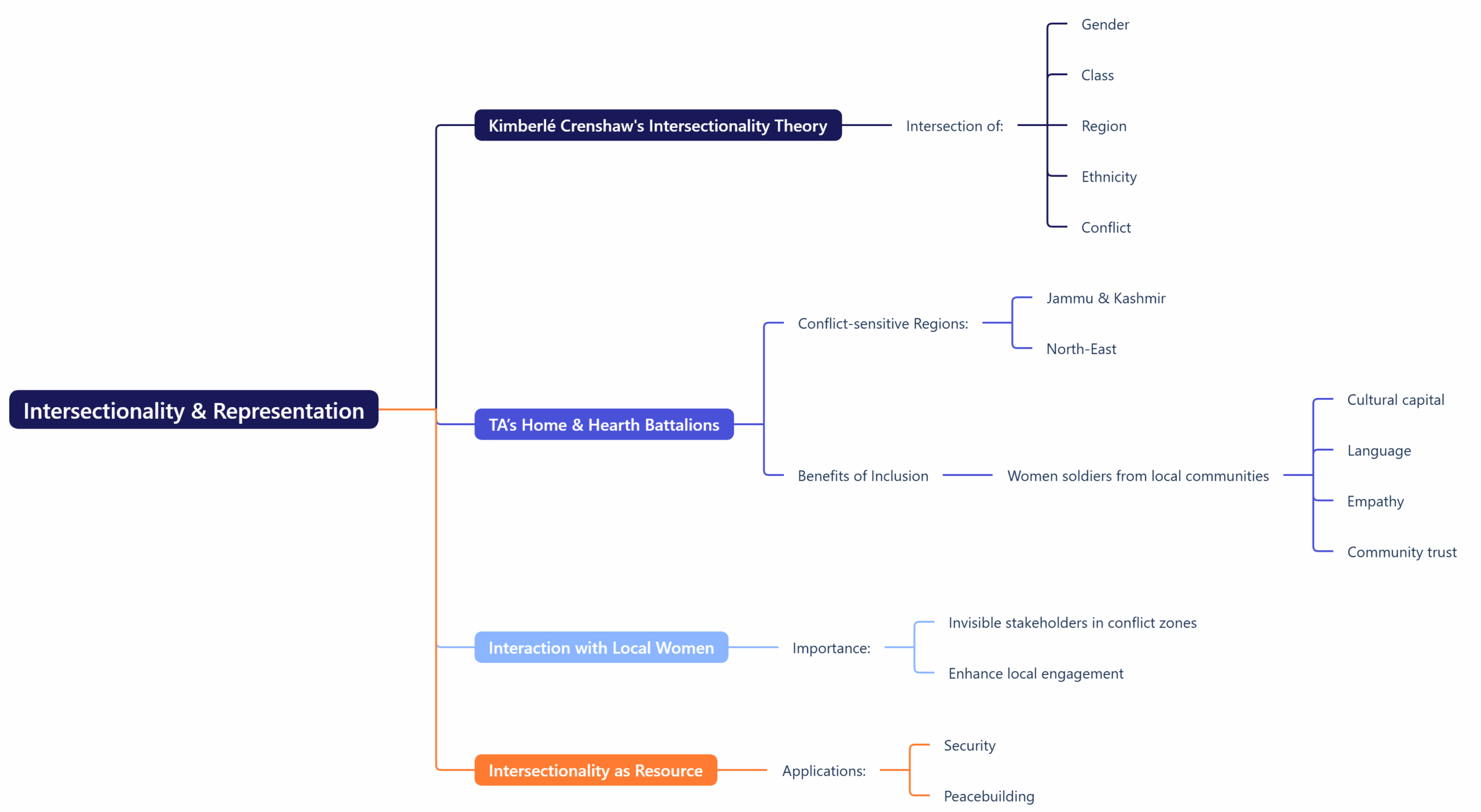
Kimberlé Crenshaw’s intersectionality theory suggests analysing how gender intersects with class, region, ethnicity, and conflict. TA’s Home & Hearth battalions operate in conflict-sensitive regions like Jammu & Kashmir and the North-East. Women soldiers from local communities will bring cultural capital, language, empathy, and community trust—dimensions often ignored in masculine military logic. Their inclusion may also enable better interaction with local women, who are invisible stakeholders in conflict zones. Thus, intersectionality becomes a functional resource for security and peacebuilding. Feminist Military SociologyMady Segal (1995) explains that women’s participation in armed forces strengthens operational effectiveness by diversifying perspectives and human capabilities. Evidence from global militaries shows women outperforming male battalions in intelligence, humanitarian missions, and psychological operations. Similarly, Carol Cohn argues that militaries maximize strategy when they incorporate care-based logics rather than only aggressive logics. Women in TA battalions can enhance disaster response, peacekeeping, and civil-military relations—roles increasingly central to modern security. Symbolic Representation & Role-Model EffectAccording to Gail Omvedt, representation transforms not only structures but imaginations. When marginalized groups visibly participate in institutions of power, symbolic change precedes structural change. The presence of women soldiers disrupts the internalized belief that national defence involves a masculine monopoly. From a Durkheimian lens, the army symbolizes the collective conscience of society; therefore, changing its composition modifies the moral order of the nation itself. Nationalism, Militarism & GenderEnloe warns that militaries often portray women’s inclusion as symbolic modernization while preserving core patriarchal values. The real test is not simply entry but equality of role, training, command opportunities, and resource allocation. The shift from women as officers in administration to women as soldiers in operational battalions indicates deeper institutional transformation rather than superficial inclusion. Challenges Ahead: A Sociological Critique
Acker’s theory of gendered organizations states that institutions are built on male-normed models of work; inclusion requires redesign, not superficial placement. A New Paradigm of EqualityWomen’s military inclusion represents a shift toward what Anthony Giddens calls reflexive modernity, where social structures reform based on rational assessment rather than tradition. It enhances functional capacity while promoting democratic values. Amartya Sen’s capability approach shows empowerment is not merely about opportunity but the expansion of real freedoms—women soldiers gain freedom to command, lead, and transform national identity. ConclusionThe induction of women soldiers into the Territorial Army Home & Hearth battalions is a historical sociological moment. It challenges patriarchal military culture, expands notions of citizenship, strengthens conflict-zone engagement, and redefines gendered national identity. As feminist military theorists argue, national security cannot be built on half the population’s participation. This transformation signals the emergence of a more inclusive and egalitarian India—where defending the nation is not a masculine privilege but a democratic right. The battlefield of gender equality has shifted from the courtroom to the barracks—and society must follow. |


To Read more topics, visit: www.triumphias.com/blogs
Read more Blogs:
Children, Capital, and Control: A Sociological Lens on India’s Paediatric Drug Regulation Crisis
One comment