


Transforming India-Africa Engagement
(Relevant for GS paper-2, IR)

India-Africa EngagementThe India-Africa partnership, rooted in shared historical experiences of colonialism, common development goals, and a commitment to a multipolar world, has grown into a dynamic, multidimensional alliance. In recent years, this relationship has acquired strategic significance in the realms of trade, technology, infrastructure, health, and geopolitics, symbolizing the evolving contours of South-South cooperation. Historical Context and Shared LegacyIndia and Africa share a profound historical bond, forged during the anti-colonial struggles and the Non-Aligned Movement (NAM). Leaders like Mahatma Gandhi, who began his political career in South Africa, and African icons like Nelson Mandela, laid the foundations for solidarity between the two regions. Over the decades, India has steadily deepened its engagement with Africa through initiatives focused on mutual growth, capacity building, and regional peace. This historical legacy continues to influence the partnership’s ethos—cooperation without conditions. Contemporary Engagement: A Multi-Dimensional Partnership
India is currently Africa’s third-largest trading partner, with bilateral trade reaching USD 103 billion in 2024–25 (as per Ministry of Commerce & Industry), marking a 17% increase over the previous year.
Major African partners include Nigeria, South Africa, Egypt, Mozambique, and Kenya.
India’s cumulative investments in Africa stand at over USD 75 billion, making it one of the top five investors in the continent.
India’s strength in digital innovation has translated into active cooperation in digital governance and skilling.
In 2024, India launched the Digital India-Africa Initiative, focusing on:
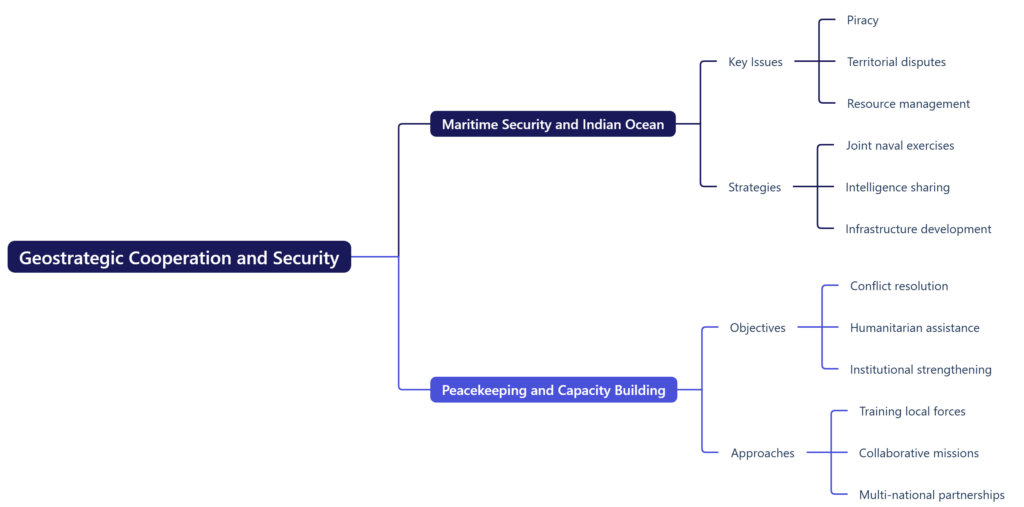
Geostrategic Cooperation and Security
India and Africa share maritime boundaries in the Western Indian Ocean Region (IOR). India has been enhancing its naval presence and security cooperation with African coastal nations such as Mauritius, Seychelles, Kenya, and Madagascar.
India is one of the largest contributors to UN Peacekeeping Missions in Africa, with over 5,000 personnel currently deployed in Congo, South Sudan, and other hotspots. India’s commitment includes:
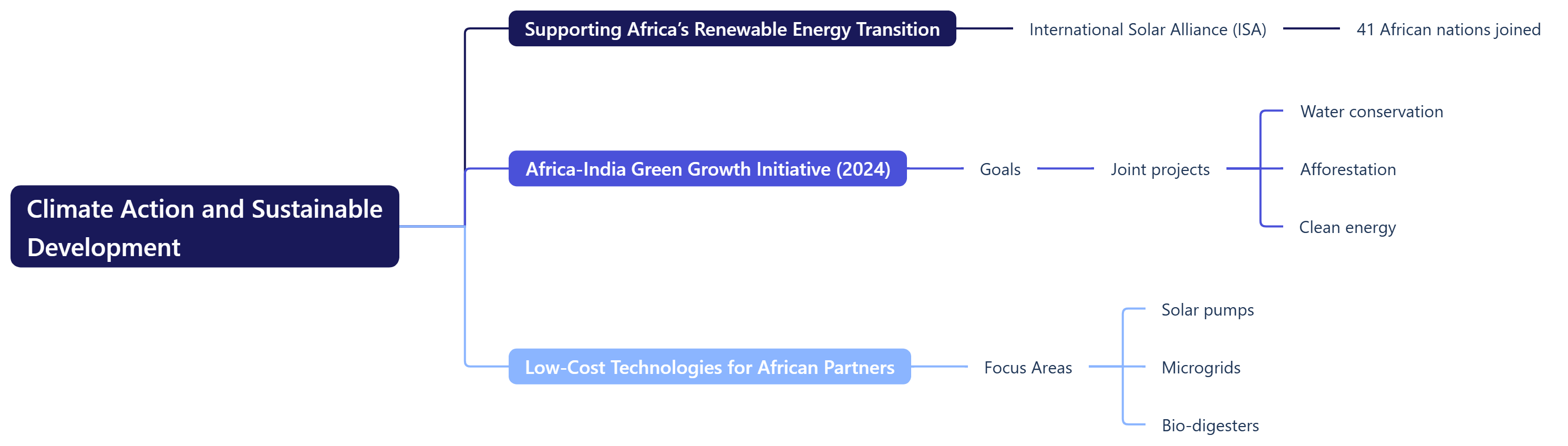
Climate Action and Sustainable Development
Africa and India both face severe climate challenges—desertification, floods, and food insecurity. India has committed to:
Cultural and People-to-People Ties
Cultural diplomacy is a cornerstone of India-Africa relations.
Recent Developments and SummitsIndia-Africa Forum Summit (IAFS) The last IAFS was held in 2015, and the next is expected in 2025, with focus areas including:
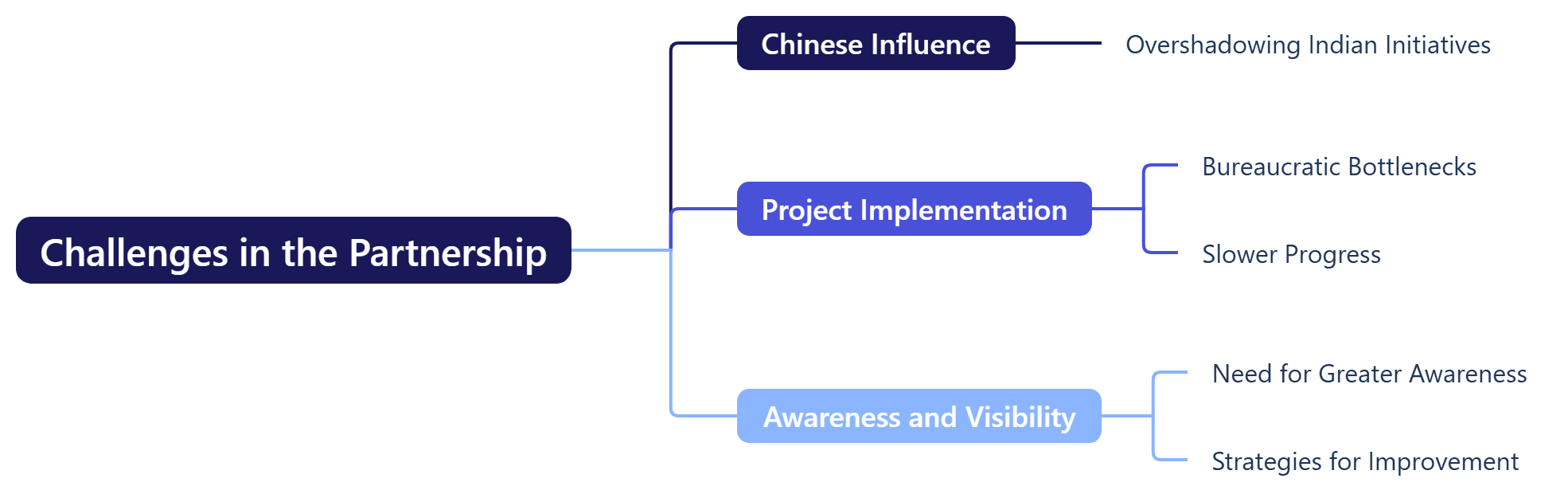
Voice of Global South Summit (2023) India, as G20 President in 2023, hosted the Voice of Global South Summit, amplifying the concerns of African nations and advocating for their representation in global institutions like the UN Security Council and G20. In 2023, African Union was admitted as a permanent member of G20, with India’s backing—marking a major diplomatic success for Global South unity. Challenges in the Partnership
Despite robust cooperation, challenges remain:
Way ForwardTo consolidate gains and expand India-Africa ties:
ConclusionThe India-Africa partnership exemplifies the principles of mutual respect, development cooperation, and shared destiny. As both regions navigate the complexities of a shifting global order, their deepening ties offer a blueprint for equitable globalization. By aligning their strengths and aspirations, India and Africa can co-create a more inclusive, just, and sustainable future. |







To Read more topics, visit: www.triumphias.com/blogs
Read more Blogs:
IAS, Vinayak Karbhari Narwade | Social Empowerment is the key to Economic Development |Triumph IAS
One comment