


Sons of the Soil or Citizens of India? A Sociological Critique of Domicile-Based Politics
(Relevant for Sociology Paper 2: Politics and Society)
Introduction: The New Fault Line in Indian CitizenshipThe rise of domicile-based policies in Indian states like Jharkhand, Assam, and Jammu & Kashmir marks the emergence of what can be termed “Provincial Citizenship.” These policies give preference to so-called ‘sons of the soil’ — locals or natives — in jobs, land rights, and public services, thereby creating an exclusionary framework within a constitutionally unified nation. While the Constitution of India guarantees a single, national citizenship, these regional moves effectively fragment the substantive rights of internal migrants. The conflict isn’t just legal; it’s deeply sociological, shaped by identity, fear, economic insecurity, and political mobilization. Identity, Exclusion, and Citizenship
Weiner | T.H. Marshall | M.N. Srinivas
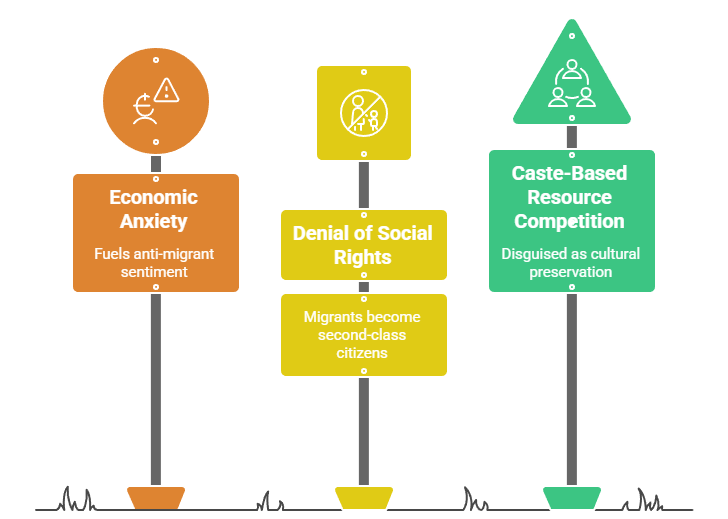
Weiner’s analysis of ‘sons of the soil’ movements explains how local elites exploit economic anxiety and demographic pressure to mobilize nativist sentiment. Migrants are framed as threats to employment and culture, turning material competition into ethnic conflict.
Marshall’s idea of citizenship as comprising civil, political, and social rights reveals the deeper issue. While internal migrants legally retain national citizenship, they are denied social rights — like local jobs or welfare — in their host states. This creates second-class citizens within the same country.
In states like Jharkhand or Maharashtra, dominant castes often lead nativist movements, disguising caste-based resource competition as cultural preservation. Srinivas’s concept helps unpack the caste power behind the push for provincial citizenship. Caste, Subalternity, and Land ConflictsRanajit Guha | A.R. Desai | Dalit-Adivasi Movements
For Adivasis in Jharkhand or Assamese locals, provincial citizenship isn’t just exclusionary — it’s also a protective mechanism. According to Ranajit Guha, subaltern groups use such movements to resist both external domination and internal marginalization. It becomes a form of political subversion. Example: Jharkhand’s 1932 Khatiyan policy, which proposes limiting government jobs and benefits to those whose ancestors were listed in land records before 1932, aims to protect tribal identity — but also excludes newer residents.
Desai’s analysis of agrarian class structures shows how many nativist agitations hide the real conflict over land and employment. Migrants are often more skilled or willing to work for less, which threatens the rural middle-peasantry, leading to disguised class war. Media, Identity Politics, and the Control of Belonging
Stuart Hall | Michel Foucault | Andre Béteille
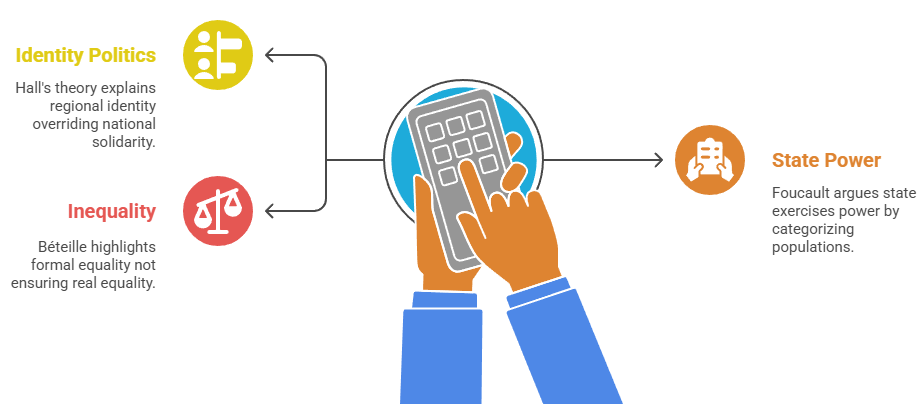
Provincial citizenship is a form of identity politics, where political identity is constructed by defining the ‘outsider’. Hall’s theory helps explain why regional identity today often overrides national solidarity, especially in electoral politics.
The creation of documents like the NRC in Assam is not neutral. Following Foucault, the state exercises power by categorizing populations — deciding who counts as a ‘native’ or a ‘foreigner.’ This control over identity is both bureaucratic and deeply political.
Béteille’s work reminds us that formal equality does not ensure real equality. While the Constitution provides equal rights, social belonging and access are mediated by caste, region, and class — all of which play into the rise of provincial citizenship. Conclusion: Beyond Legalism — Towards Substantive FederalismThe rise of provincial citizenship is not just a legal anomaly; it’s a sociological response to economic precarity, cultural anxiety, and regional inequality. Yet, it risks undermining the foundational idea of India as a single, pluralistic nation. To reconcile local identities with national unity, India needs more than Supreme Court judgments. What’s needed is:
India’s unity lies not in uniformity, but in a pluralism that respects local realities without compromising on constitutional equality. |


To Read more topics, visit: www.triumphias.com/blogs
Read more Blogs:
Firecracker Ban in India: Environmental Protection and Social Justice
Rural Unrest in Contemporary India: A Sociological Perspective