Man vs. Machine in Modern Romance: the New Dating in India | Sociology Optional Coaching | Vikash Ranjan Classes | Triumph IAS | UPSC Sociology Optional
Man vs. Machine in Modern Romance: the New Dating in India | Sociology Optional Coaching | Vikash Ranjan Classes | Triumph IAS | UPSC Sociology Optional
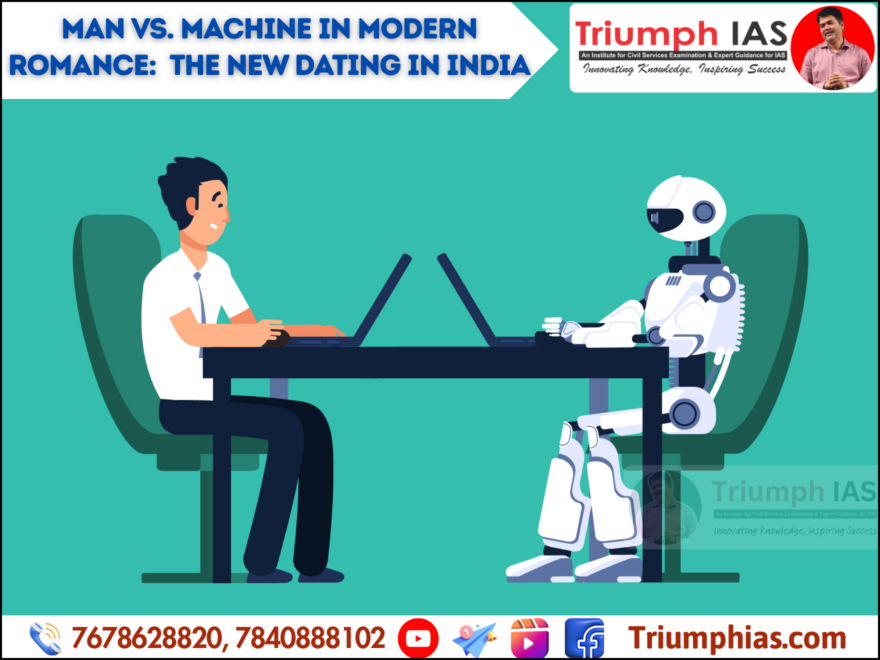
Man vs. Machine in Modern Romance: the New Dating in India
(Relevant for Sociology Paper I: Technology and Social Change and Sociology Paper II: Technology and changing relationships in India, Changing family structures)
In a rapidly digitizing world, artificial intelligence is no longer confined to classrooms or corporate boardrooms—it’s reshaping something as intimate and emotionally complex as romantic relationships. From drafting flirtatious texts to offering late-night emotional support, AI tools like ChatGPT are now being used as relationship substitutes or as aides in navigating the dating scene. This signals a profound shift in human interaction, and it deserves serious sociological analysis.
Trending Reality: “Chat GPT is my boyfriend”
A growing number of women, especially in urban India, are relying on AI for emotional companionship, often finding AI more “attentive” than human partners. Meanwhile, men are increasingly using tools like Chat GPT to draft intelligent, humorous, and emotionally nuanced texts. This isn’t just a technological trend—it’s a window into changing social norms, emotional expectations, and gender relations.
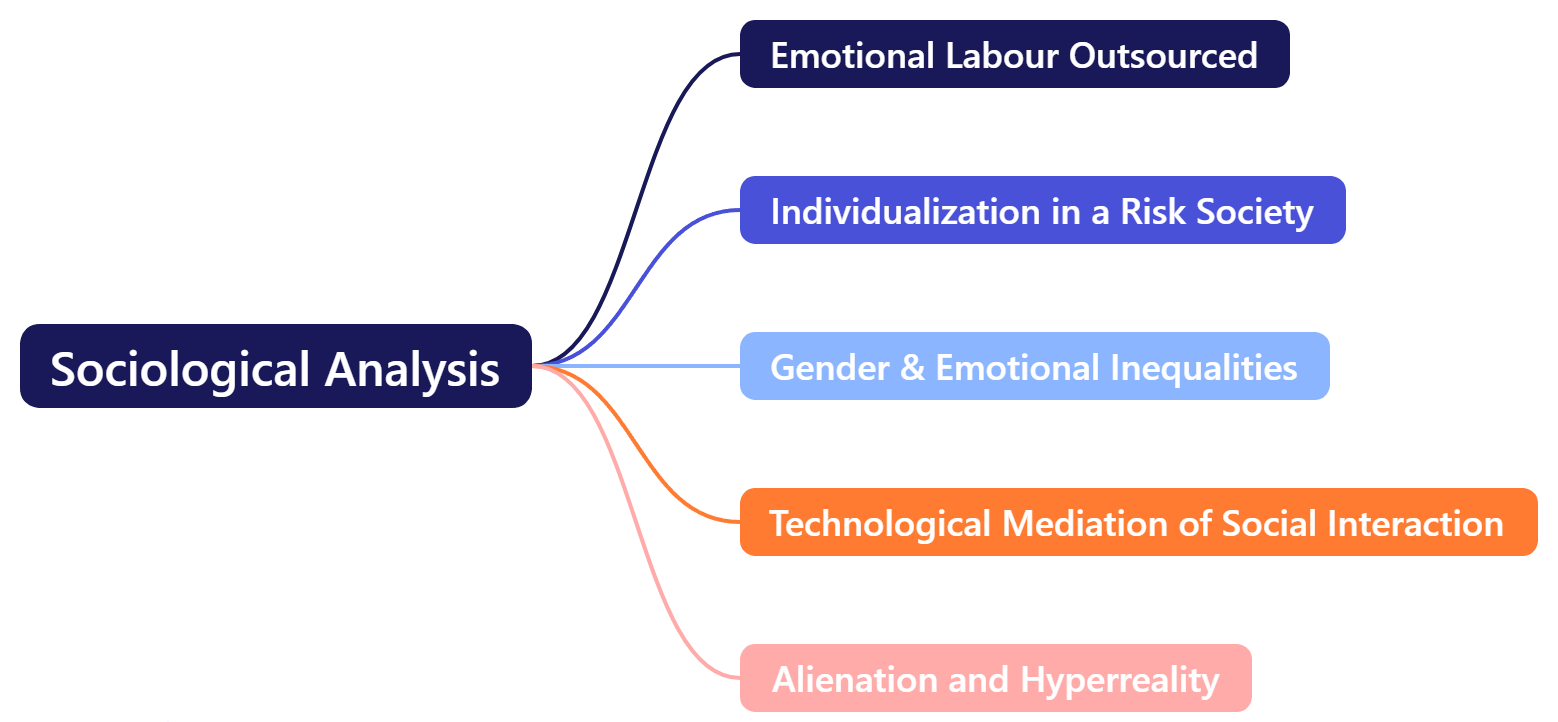
Sociological Analysis
Emotional Labour Outsourced: Sociologist Arlie Hochschild’s concept of emotional labour can explain how emotional responsibilities in relationships—like listening, affirming, consoling—are now being delegated to AI. Men use Chat GPT to appear more emotionally present, while women use it as a replacement confidante. This marks a shift in how emotional intimacy is negotiated—mechanically simulated rather than mutually cultivated.
Individualization in a Risk Society: Following Ulrich Beck and Anthony Giddens, the emergence of AI dating companions signals the rise of individualized relationships in a risk society, where human relationships are considered unstable and emotionally risky. People seek safer, predictable, and “perfect” emotional partners—AI fits the role perfectly.
Gender & Emotional Inequalities: The trend exposes gendered dimensions of emotional support. Women often expect high emotional availability, and when unmet by men, they turn to AI. On the flip side, men use AI to perform empathy, without necessarily embodying it—further complicating the emotional economy of relationships.
Technological Mediation of Social Interaction: Manuel Castells’ network society theory helps us see this as a natural progression in a digitally mediated society, where even love is filtered through algorithms and data-driven compatibility. Dating, once personal, is now curated via digital tools.
Alienation and Hyperreality: Using Marx’s concept of alienation and Baudrillard’s idea of hyperreality, AI-facilitated emotional intimacy might provide a “realer than real” experience. Yet, it could deepen emotional alienation, as humans interact more with representations than actual partners.
Is This the Future of Relationships?
The AI-driven dating revolution is both empowering and alarming. While it provides a safe space foremotional expression, it also fosters emotional dependency on non-human entities, blurring the line between authentic connection and algorithmic simulation.
Impact on Indian Social Structure & Urban Relationships
Urban youth in India, especially women, are more independent but also emotionally underserved in fast-paced lifestyles. ChatGPT offers non-judgmental companionship and becomes part of emerging singlehood cultures in metros.
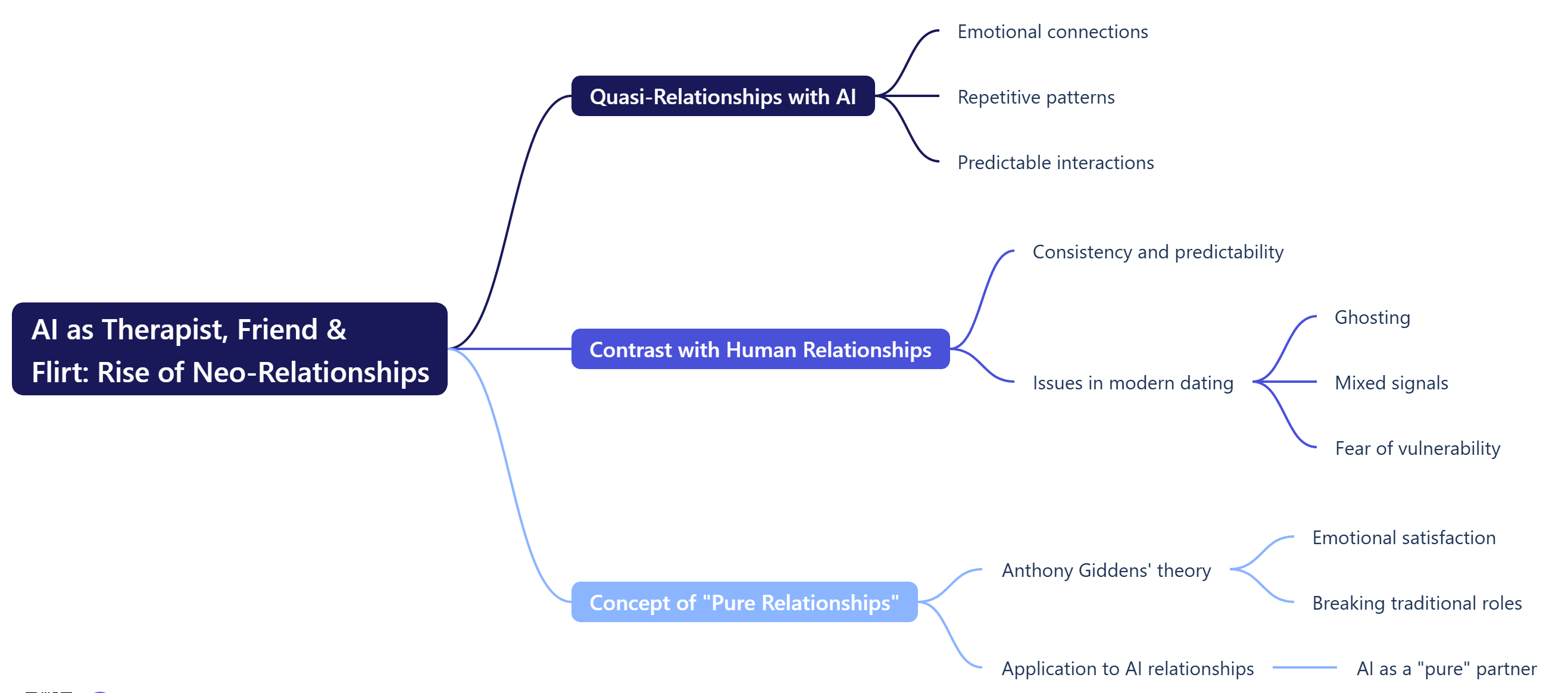
AI as Therapist, Friend & Flirt: Rise of Neo-Relationships
Young users now form ‘quasi-relationships’ with AI—emotional, repetitive, and patterned.
The AI offers consistency and predictability, traits that are missing in modern human dating culture marked by ghosting, mixed signals, and fear of vulnerability.
This hints at Anthony Giddens’ concept of “pure relationships”—relationships based on emotional satisfaction rather than traditional roles. But in this case, the “pure” relationship is with an AI.
Case Anecdotes & Pop Culture Echoes
A Delhi woman vents to ChatGPT daily. Her husband feels replaced but relieved.
A divorced man only talks to his ex-wife through Chat GPT and now gets compliments for his “emotional growth.”
Gen Z men call Chat GPT their girlfriend—until the server goes down.
Films like Her (2013) have already foreshadowed these realities—where emotional intimacy is projected onto a machine.
Conclusion
From text messages to emotional therapy, the intimate life of humans is undergoing a quiet revolution. Machines are now not just tools—but emotional companions, raising serious questions about love, dependence, authenticity, and the future of human relationships. Whether it’s man vs machine, or man enhanced by machine, we are undoubtedly entering a new sociology of digital intimacy. We are at the crossroads of AI-driven emotional culture. While tools like ChatGPT can offer companionship, they also challenge the foundation of authentic human connection. The sociological implications go far beyond love—they affect family dynamics, emotional well-being, gender roles, and even ethical boundaries in a digitized world. The future of relationships may not be man vs machine, but man with machine. The question remains: at what emotional cost?
PYQs
Paper I:
Examine Anthony Giddens’ concept of ‘pure relationships’. Do they exist in today’s society? (2017)
What is the impact of digital communication on social interaction? Substantiate with sociological perspectives. (2018)
Critically analyse the commodification of human relationships in modern capitalist societies. (2019)
Discuss the concept of alienation in the context of capitalist society. Is it still relevant in the digital age? (2019)
How do post-modern sociologists explain identity formation in a consumer-driven society? (2020)
Analyse the relationship between gender and technology. How does technology impact gender roles? (2021)
Examine how symbolic interactionism explains the development of self in the digital era. (2022)
How has modern technology influenced interpersonal relationships in society? Discuss with sociological perspectives. (2023)
Paper II
Discuss the role of education and technology in the changing gender roles in Indian families. (2017)
Analyse the rise of singlehood among Indian youth and its sociological implications. (2020)
How is the increasing use of social media influencing gender identities in contemporary India? (2022)
How has technology influenced courtship and dating practices among Indian youth? (2023)
Examine the impact of social media and digital platforms on interpersonal relationships in urban India. (2023)
To Read more topics like Man vs. Machine in Modern Romance: the New Dating in Indiain Public Posts, visit: www.triumphias.com/blogs







One comment