Public welfare schemes are generally evaluated in terms of their manifest functions—the intended and officially stated objectives such as poverty alleviation, employment generation, food security, or social justice. However, sociological analysis, particularly drawing from Robert K. Merton, urges us to go beyond manifest outcomes and examine latent functions and unintended consequences. Welfare policies are embedded within complex social structures; therefore, their effects extend far beyond policy design.
Dimension:
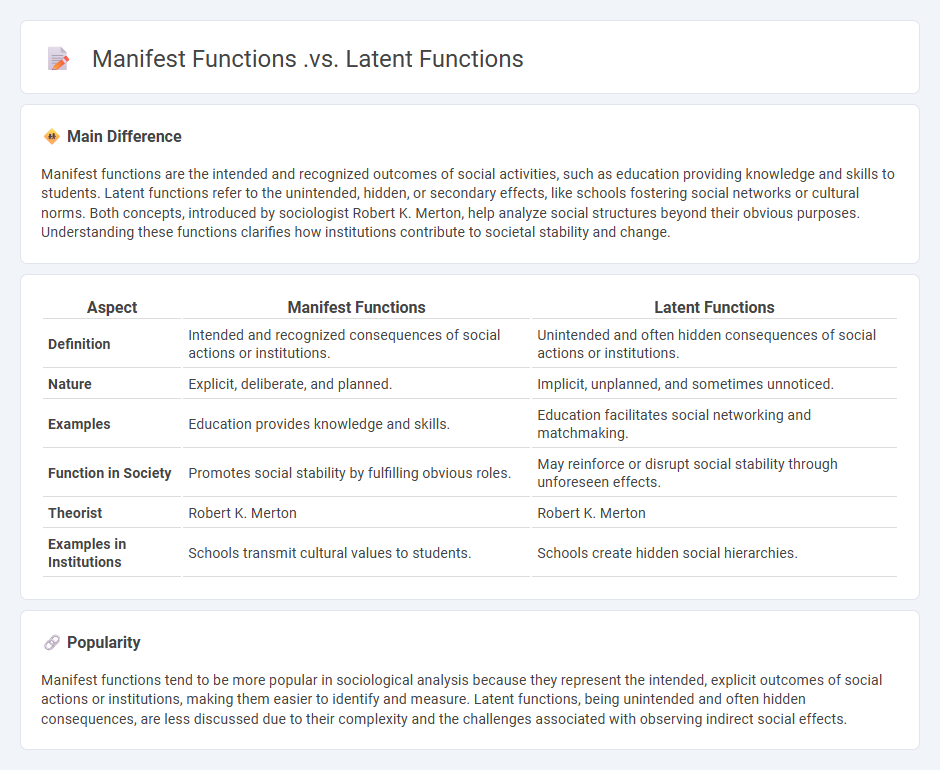
Manifest vs. Latent Functions: A Sociological Lens
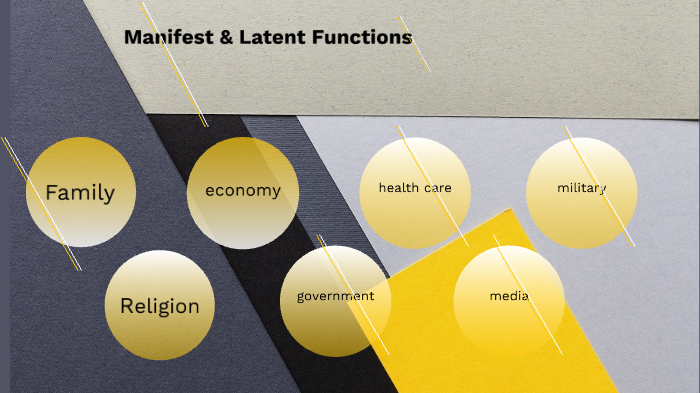
Merton’s structural–functionalist framework distinguishes between manifest functions (intended and recognized consequences) and latent functions (unintended and often unrecognized consequences). Applying this to welfare schemes allows us to critically examine how policies reshape social relations, power structures, and cultural norms.
For example, employment guarantee programs such as Mahatma Gandhi National Rural Employment Guarantee Act were introduced to provide rural livelihood security. While the manifest goal is income support and asset creation, latent functions may include enhanced bargaining power for rural laborers, increased female participation in public workspaces, and the politicization of welfare beneficiaries. These secondary effects significantly transform village-level social hierarchies.
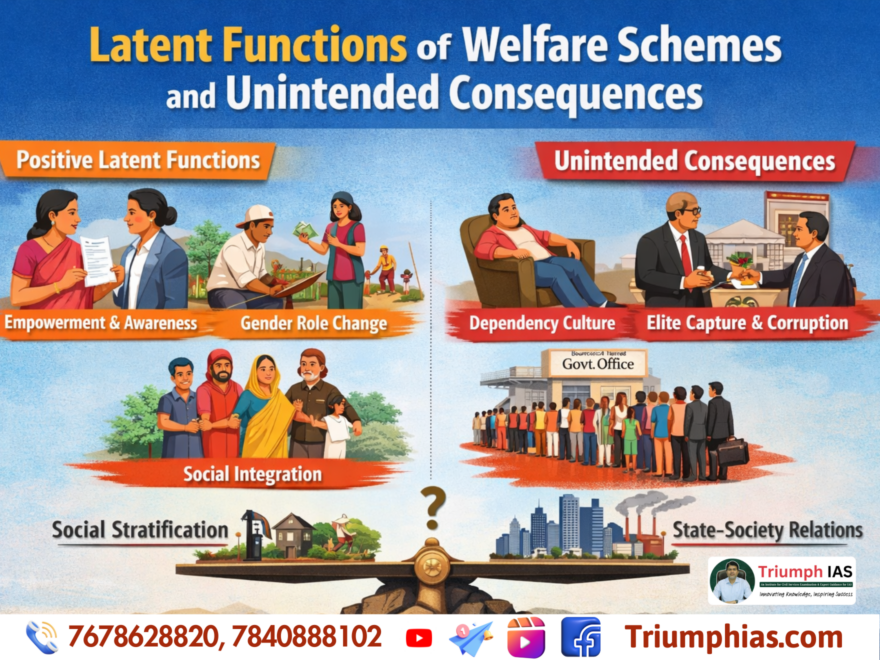
Positive Latent Functions
Welfare schemes often produce constructive unintended consequences:
1. Empowerment and Political Awareness Access to welfare can increase citizens’ engagement with state institutions. Beneficiaries develop awareness of entitlements, grievance mechanisms, and democratic processes, thereby strengthening participatory citizenship.
2. Gender Role Transformation Direct benefit transfers to women or reservation-linked welfare may alter intra-household power dynamics. Financial inclusion schemes frequently enhance women’s decision-making authority, thereby subtly restructuring patriarchal norms.
3. Social Integration Schemes targeting marginalized groups—Scheduled Castes, Scheduled Tribes, minorities—can reduce social exclusion and foster symbolic recognition, strengthening social solidarity.
Unintended Negative Consequences
However, welfare schemes may also generate dysfunctional outcomes:
1. Dependency Culture Critics argue that prolonged state support can create reliance on subsidies, weakening work incentives. While this claim requires empirical scrutiny, it remains a recurring theme in policy debates.
2. Elite Capture and Corruption In stratified societies, local elites may appropriate benefits intended for the poor. This leads to reproduction of inequality rather than its reduction.
3. Bureaucratic Expansion and Proceduralism Large-scale welfare delivery may expand administrative structures, sometimes increasing red tape and exclusion errors. Those lacking documentation or digital literacy may be left out.
4. Stigmatization Beneficiaries may face symbolic labeling as “dependent” or “poor,” reinforcing social stigma rather than dignity.
Welfare, Social Structure, and Power
Sociologically, welfare is not merely an economic transfer; it is a mechanism of state-society interaction. Drawing from conflict perspectives, welfare schemes can be interpreted as tools to maintain social stability by mitigating class tensions. From a functionalist perspective, they contribute to systemic equilibrium. From a critical lens, they may reproduce structural inequalities if not carefully designed.
The interplay between welfare and caste, class, gender, and region must be examined. In India, welfare delivery intersects with pre-existing hierarchies, thereby reshaping but not entirely dissolving them. Thus, the study of latent functions becomes central to understanding broader processes of social change.
Evaluate changes in power relations and community cohesion.
Monitor exclusion errors and elite capture.
Recognize symbolic and cultural outcomes alongside material gains.
Welfare schemes are dynamic social interventions. Their evaluation requires a multidimensional framework that integrates economics, sociology, and political science.
Conclusion
The concept of latent functions compels us to analyze welfare schemes beyond their declared objectives. While they aim at poverty reduction and social justice, their unintended consequences—both integrative and disruptive—shape social stratification, gender relations, political participation, and institutional trust. A nuanced sociological perspective therefore enhances both academic understanding and policy design.
UPSC Civil Services (Mains) Question
“Discuss the latent functions of welfare schemes in India. How do unintended consequences influence social stratification and state–society relations?” (250 words)





2 comments