



Ethical Dynamics in the Stock Market
(Relevant for GS paper-4)

Introduction: Stock MarketThe stock market plays a pivotal role in capital creation and economic growth. However, ethical breaches—such as insider trading, price manipulation, and algorithmic arbitrage—undermine market integrity and investor confidence. Recent incidents in India spotlight how ethical lapses can distort markets and impact ordinary investors. Understanding these dynamics is critical for civil services aspirants studying governance, regulatory frameworks, and financial ethics. Insider Trading and Manipulation: Landmark Cases
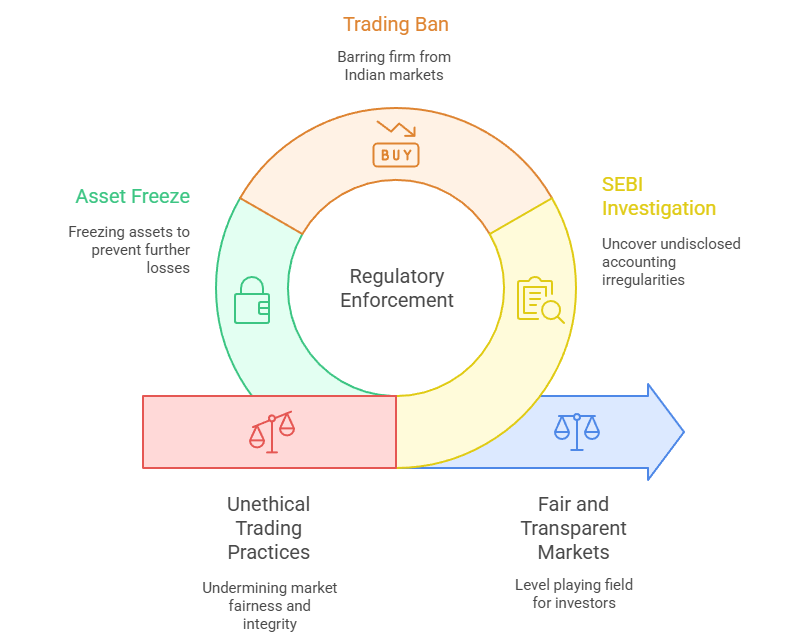
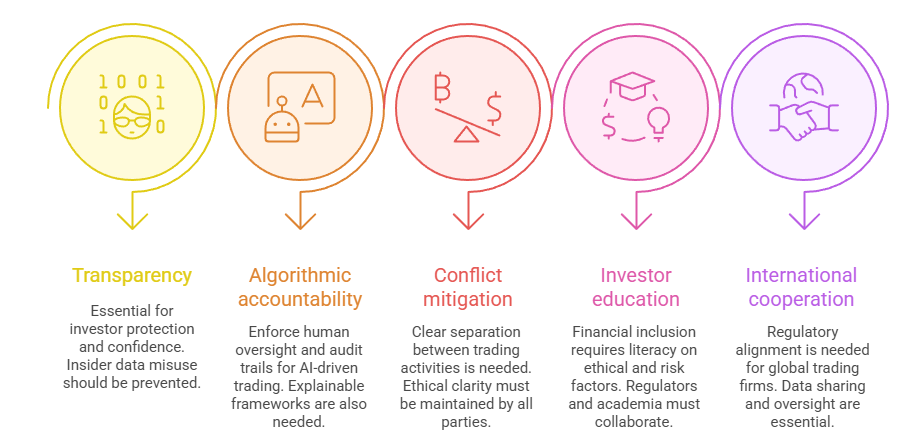
Insider trading remains a central ethical violation. In mid‑2025, SEBI launched an investigation into six IndusInd Bank officials suspected of selling stock options while in possession of undisclosed accounting irregularities, potentially profiting illegally before the public disclosure. Such actions erode fairness and violate SEBI’s mandate to ensure level playing fields. Another high-profile case involves U.S.-based trading firm Jane Street, accused by SEBI of manipulating Bank Nifty and Nifty 50 indices through large-volume trades timed to influence retail investors’ behavior. SEBI barred the firm from trading in India, froze approximately ₹4,840 crore (about $570 million), and alleged that retail investors lost around $21 billion cumulatively from 2021 to 2024 due to its trading strategies While Jane Street denies wrongdoing—claiming their actions were basic arbitrage—it faces regulatory action and legal appeals in India. Algorithmic Trading and the AI DilemmaThe increasing use of AI-driven algorithmic trading raises a fresh set of ethical concerns. The main issue is accountability—who is responsible when AI-driven errors lead to market crashes? Algorithms operate at high speeds and volumes, often with limited human oversight, magnifying risks to market stability If AI glosses over real-time anomalies or misinterprets data, the ripple effects can be catastrophic. Hence, transparency in algorithm design, human oversight, and a robust legal framework are essential for ethical deployment. Conflicts of Interest and Regulatory FailuresHistorical episodes like the NSE co-location scam—where select brokers and institutional entities received advance access to tick-by-tick price data—exposed serious governance lapses and conflicts of interest at the exchange level. SEBI and investigative agencies found collusion, misuse of insider access, and manipulated privilege even by top-level NSE officials. These episodes highlight vulnerabilities in regulatory architecture and the need for stronger governance and oversight. The NSEL scam is another case where brokers mis-sold commodity contracts with promises of assured returns. SEBI found several brokers violated fit-and-proper norms, engaged in client code manipulation, and misused funds. These firms were declared unsuitable to act as intermediaries—signaling regulatory intolerance of unethical practices. Systemic Risks, Investor Protection & Emerging TrendsIndia’s equity market reached a valuation milestone of over $5 trillion by mid-2025, with over 1 crore new retail investors joining in 2024 alone. But rapid expansion brings acute ethical challenges: misinformation, pump-and-dump schemes, and inexperienced retail participation make investors especially vulnerable. The impact of regulatory action in the Jane Street case shows how concentrated influence by sophisticated entities can mislead retail players, manipulating both cash and derivatives segments. SEBI’s clampdown highlights the necessity of vigilant surveillance, especially amid rising cross-border proprietary trading. Regulatory Framework and Business ResponsibilityIndia’s National Voluntary Guidelines (NVGs) on Social, Environmental and Economic Responsibilities of Businesses, issued in 2011, emphasize ethical conduct, transparency, and accountability in corporate operations. SEBI’s Annual Business Responsibility Reporting (BRR) mandates disclosure aligned with these principles across sectors, including financial market entities. These frameworks reinforce investor confidence and aim to deter malfeasance. Despite such frameworks, the persistence of high-profile scandals reveals enforcement gaps. SEBI’s effectiveness hinges on proactive monitoring, timely action, and addressing structural conflicts of interest in institutions themselves. Ethical Imperatives and Policy Lessons
ConclusionEthics in the stock market is not just a moral add-on—it underpins its very purpose as a fair allocation mechanism for capital. Incidents such as SEBI’s crackdown on Jane Street, insider-trading probes at IndusInd, and the legacy of exchange-level manipulation illustrate how ethical deviations damage trust, distort prices, and harm retail investor welfare. India’s rapid stock market growth introduces immense opportunities, but also demands heightened vigilance. Strengthening regulatory frameworks, embedding responsible AI practices, enforcing conflict‑of‑interest norms, and promoting financial literacy are all essential steps. For civil services aspirants, this scenario provides a rich case study across themes such as governance, market regulation, standard-setting, investor protection, and ethical leadership in public institutions. The broader lesson: ethical governance is foundational to a robust, equitable, and resilient stock market. |


To Read more topics, visit: www.triumphias.com/blogs
Read more Blogs:
Strategic Ripples: India-China Tensions over the Brahmaputra
One comment