


Creative Capitalism: Redefining Profit with Purpose
(Relevant for Sociology Paper 1: Sociological Thinkers)
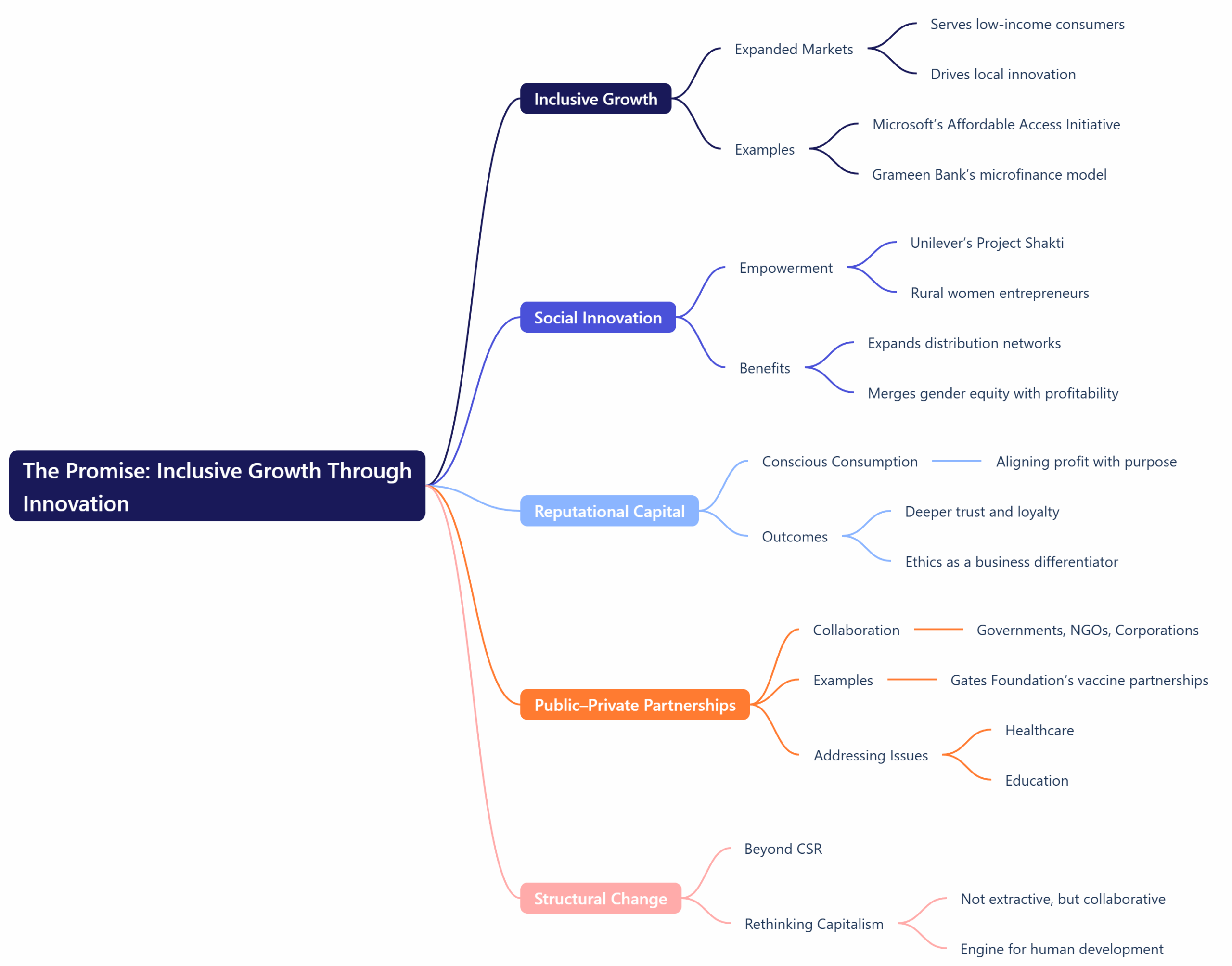
Rethinking Capitalism in the Age of InequalityAs the world reflects on the first death anniversary of Ratan Tata, one of India’s most ethical industrialists, conversations around capitalism and compassion have taken center stage. His legacy — built on the belief that businesses must serve not only shareholders but also society — embodies a vision now known as Creative Capitalism. Coined by Bill Gates in his 2008 World Economic Forum address, Creative Capitalism calls for a reimagining of capitalism’s traditional engine — one that has long prioritized profit over people. Gates argued that in an era of widening inequality, market systems must evolve to include the world’s most underserved communities. The result is a model that merges profit with purpose, innovation with inclusion, and growth with equity. At its heart, Creative Capitalism represents a moral recalibration of economic logic — a belief that doing good and doing well need not be mutually exclusive. The Idea: When Markets Meet MoralityTraditional capitalism — as envisioned by Adam Smith — rests on the “invisible hand” that converts individual pursuit of profit into collective prosperity. But this assumption, critics argue, collapses when inequalities are structural and opportunity is uneven. Creative Capitalism, therefore, expands this framework by introducing a moral dimension to market activity. It invites corporations to innovate for inclusion, not merely for competition. It blurs the boundary between business and social responsibility, urging firms to harness technology, capital, and innovation to uplift marginalized populations. Under this model, profit is no longer the sole end but a means to social transformation. India’s Experiment with Creative CapitalismIndia’s economic liberalization in 1991 opened vast opportunities for private enterprise. Yet, three decades later, inequality remains stark — the top 10% owns nearly 77% of national wealth. Against this backdrop, Indian companies have begun to embrace Creative Capitalism as both a moral duty and a strategic advantage. The Tata Group, often described as the conscience of Indian industry, exemplifies this philosophy. Its commitment to community welfare — from rural education to healthcare — redefined what stakeholder capitalism looks like in the Global South. Similarly, the Infosys Foundation, HDFC Bank’s Parivartan initiative, and new-age startups in fintech, edtech, and agritech are integrating social inclusion into their business DNA. For instance, fintech firms are using AI-driven microloans to reach unbanked populations, while edtech platforms provide digital literacy to rural students. Here, capitalism does not merely extract value; it creates shared value — a win-win between profit and people. The Promise: Inclusive Growth Through Innovation
Creative Capitalism’s potential lies in how it reconfigures corporate purpose. It offers several social and economic benefits:
The Paradox: When Compassion Meets the Market
However, creative capitalism is not without tension. Critics argue that profit and purpose often pull in opposite directions.
Ultimately, without institutional safeguards, creative capitalism risks becoming a moral façade — softening capitalism’s image without reforming its core structures. Thinkers on Morality and MarketsSociologically, the evolution of creative capitalism reflects enduring debates about ethics, inequality, and modernity. Max Weber, in The Protestant Ethic and the Spirit of Capitalism, argued that capitalism was historically tied to moral discipline — thrift, hard work, and rationality. Yet, modern capitalism, he warned, risks becoming an “iron cage” of profit-seeking devoid of ethical purpose. Creative capitalism can be seen as a Weberian revival — an attempt to restore moral meaning to economic activity. Karl Marx, conversely, would view it skeptically — as capitalism’s latest adaptation to preserve itself. For Marx, any model that relies on private profit still perpetuates class inequality, even if wrapped in benevolence. From this lens, creative capitalism may ease symptoms of injustice without addressing structural roots. Amartya Sen’s Capability Approach provides a more balanced insight. Sen argues that true development expands people’s freedoms — the ability to live a life one values. In that sense, creative capitalism succeeds only when it enhances human capability, not just consumer choice. Together, these thinkers remind us that economic systems are not morally neutral — they are reflections of the societies that sustain them. The Future: From CSR to ESG and BeyondIn the 21st century, Creative Capitalism is evolving through ESG (Environmental, Social, and Governance) investing, impact entrepreneurship, and conscious consumerism. The shift is not just ideological but generational: younger investors and employees increasingly demand ethical accountability from corporations. However, the future of this model depends on three crucial factors:
If businesses can institutionalize these values, creative capitalism could evolve from a corporate philosophy into a global economic paradigm. Conclusion: Doing Well by Doing GoodAs inequality, climate change, and technological disruption redefine the 21st century, capitalism stands at a crossroads. The question is no longer whether markets can create wealth, but whether they can create justice. Creative capitalism offers a hopeful vision — one where profit and empathy coexist, where entrepreneurship becomes a form of social stewardship. Yet, its success depends not on a few visionary leaders like Ratan Tata or Bill Gates, but on a systemic shift in how we measure success itself. In the words of Gates, “We have to find a way to make the power of capitalism serve more people.” Perhaps the future of capitalism will not be decided by how much wealth it creates — but by how compassionately it distributes it. |



To Read more topics, visit: www.triumphias.com/blogs
Read more Blogs:
Behind the Silence: A Sociological Lens on India’s Mental Health Crisis
Digital ShramSetu and the Sociology of Inclusion: Can AI Empower India’s Informal Workforce?