India’s urban centres are increasingly pivotal in driving the nation’s economic progress. As the country aspires to become a developed economy by 2047, the role of cities in fostering innovation, generating employment, and contributing to GDP is more critical than ever. However, to harness their full potential, Indian cities must overcome several infrastructural, environmental, and governance challenges.
The Economic Significance of Urban India
Urban areas, though occupying just about 3% of India’s landmass, contribute approximately 60% to the nation’s GDP. With projections indicating that by 2036, 40% of India’s population will reside in urban locales, the economic influence of cities is set to intensify. The 2024 Union Budget underscored this by designating cities as “growth hubs,” aiming to leverage their potential for national development.
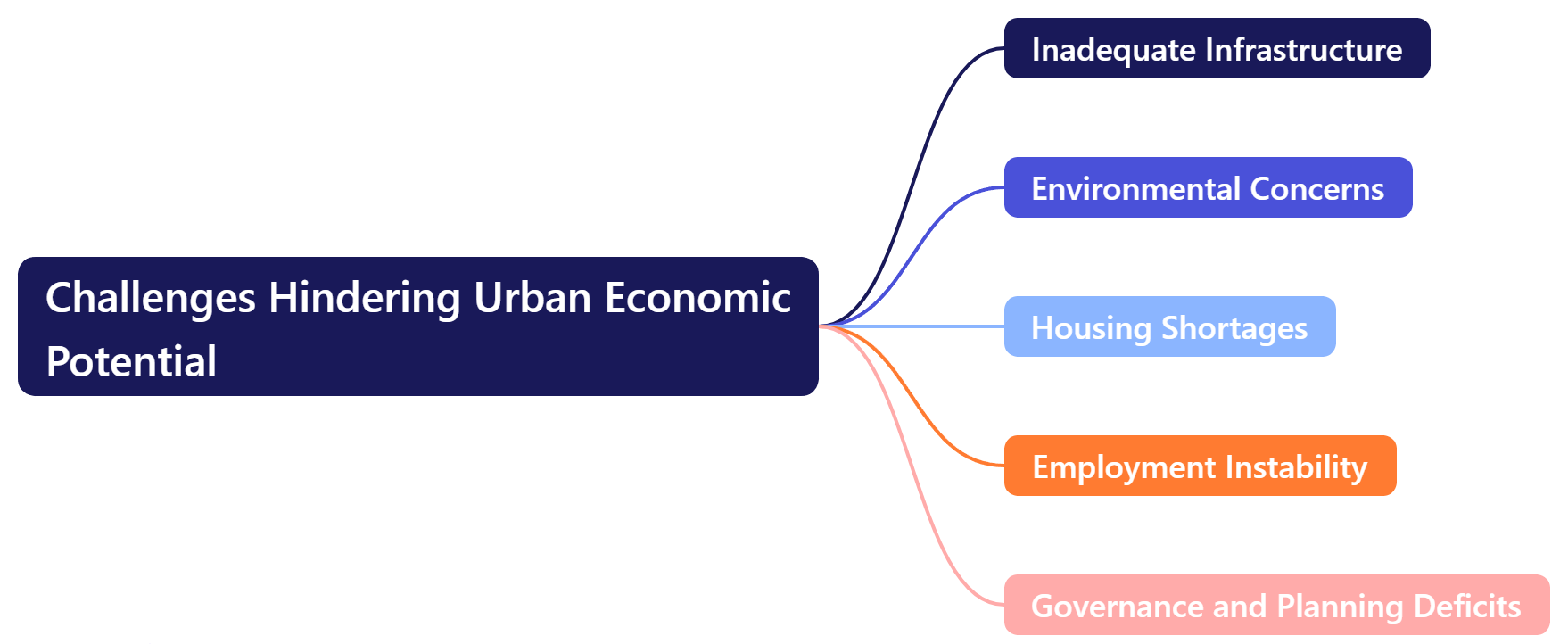
Challenges Hindering Urban Economic Potential
Despite their economic contributions, Indian cities grapple with multiple issues:
Inadequate Infrastructure: Rapid urbanization has outpaced the development of essential infrastructure, leading to traffic congestion, water shortages, and inadequate waste management systems.
Environmental Concerns: Urban areas face significant environmental challenges, including air and water pollution, urban flooding, and the heat island effect, which adversely affect the quality of life.
Housing Shortages: A significant portion of the urban population resides in informal settlements due to the lack of affordable housing, leading to overcrowded and unsanitary living conditions.
Employment Instability: The urban workforce often contends with precarious employment conditions, with a substantial segment engaged in the informal sector lacking job security and social benefits.
Governance and Planning Deficits: Fragmented governance structures and outdated urban planning impede efficient service delivery and the implementation of development projects.
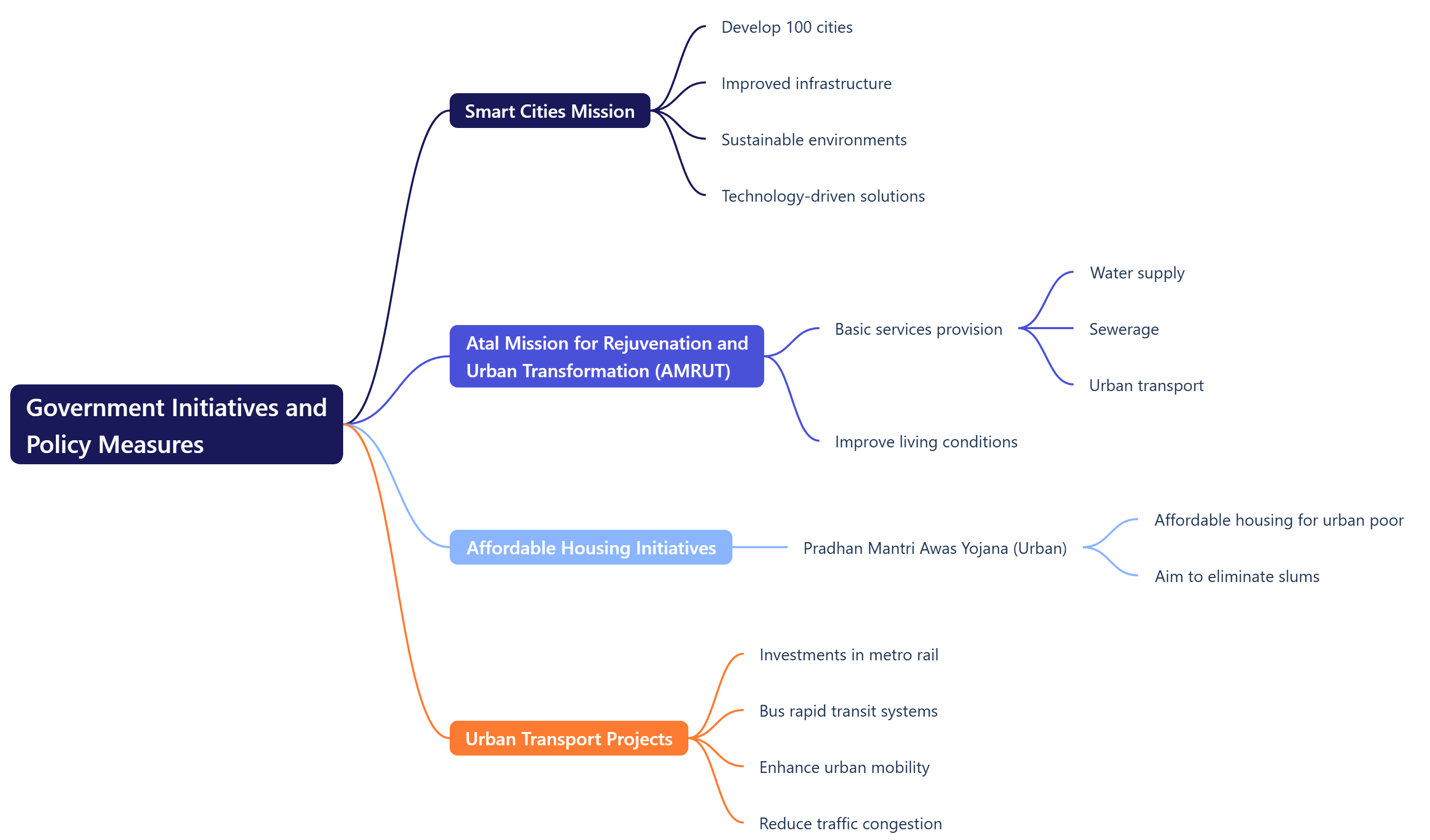
Government Initiatives and Policy Measures
Recognizing these challenges, the Indian government has launched several initiatives:
Smart Cities Mission: Aims to develop 100 cities with improved infrastructure, sustainable environments, and enhanced quality of life through technology-driven solutions.
Atal Mission for Rejuvenation and Urban Transformation (AMRUT): Focuses on providing basic services like water supply, sewerage, and urban transport to improve living conditions.
Affordable Housing Initiatives: Programs like the Pradhan Mantri Awas Yojana (Urban) strive to provide affordable housing to the urban poor, aiming to eliminate slums.
Urban Transport Projects: Investments in metro rail projects and bus rapid transit systems aim to enhance urban mobility and reduce traffic congestion.
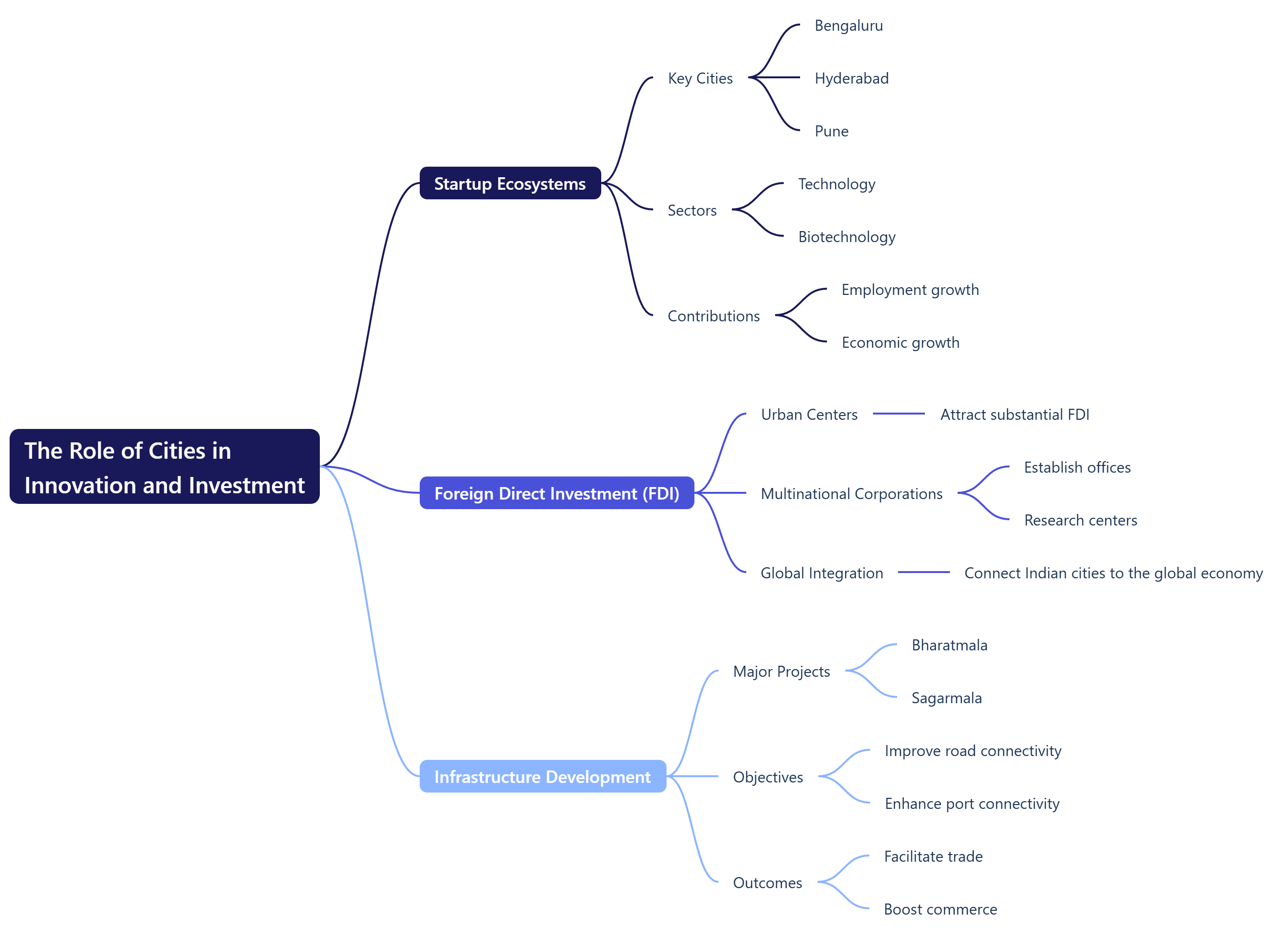
The Role of Cities in Innovation and Investment
Indian cities are emerging as hubs for innovation and investment:
Startup Ecosystems: Cities like Bengaluru, Hyderabad, and Pune have become centers for startups, particularly in technology and biotechnology sectors, contributing significantly to employment and economic growth.
Foreign Direct Investment (FDI): Urban centers attract substantial FDI, with multinational corporations establishing offices and research centers, further integrating Indian cities into the global economy.
Infrastructure Development: Projects like the Bharatmala and Sagarmala aim to improve road and port connectivity, facilitating trade and commerce.
Recommendations for Sustainable Urban Growth
To optimize the role of cities as economic engines, the following measures are recommended:
Integrated Urban Planning: Develop comprehensive urban plans that address housing, transportation, and environmental sustainability.
Strengthening Urban Governance: Enhance the capacity of urban local bodies through training and financial autonomy to effectively manage urban development.
Promoting Public-Private Partnerships (PPPs): Encourage PPPs to mobilize resources and expertise for infrastructure projects.
Investing in Human Capital: Focus on education and skill development to prepare the urban workforce for emerging sectors.
Environmental Sustainability: Implement green building codes, promote renewable energy, and develop urban green spaces to mitigate environmental degradation.
Conclusion
Indian cities hold immense potential to drive the nation’s economic growth. By addressing infrastructural deficits, environmental challenges, and governance issues, and by fostering innovation and investment, cities can become sustainable and inclusive growth engines. Strategic planning and concerted efforts are essential to transform urban centers into catalysts for national development.
To Read more topics like Cities at the Core of India’s Economic Transformationin Public Posts, visit: www.triumphias.com/blogs