protest politics, sociology optional, UPSC CSE, digital activism, social movements, Castells, Habermas, civil society, online protests

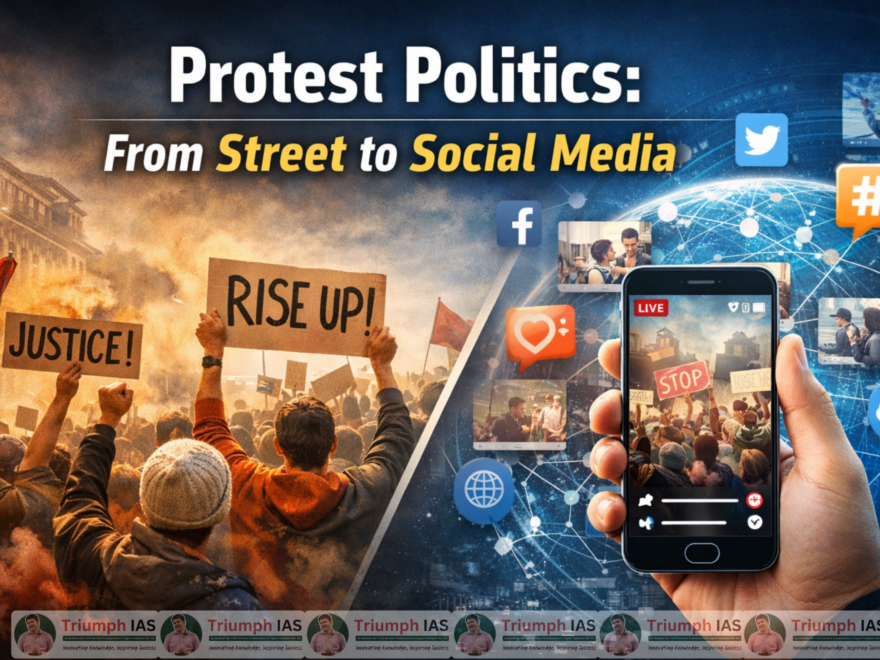
Protest Politics: From Street to Social Media

Relevant for Sociology Optional Paper 1, Paper 2, and GS Paper I (Indian Society)

Introduction

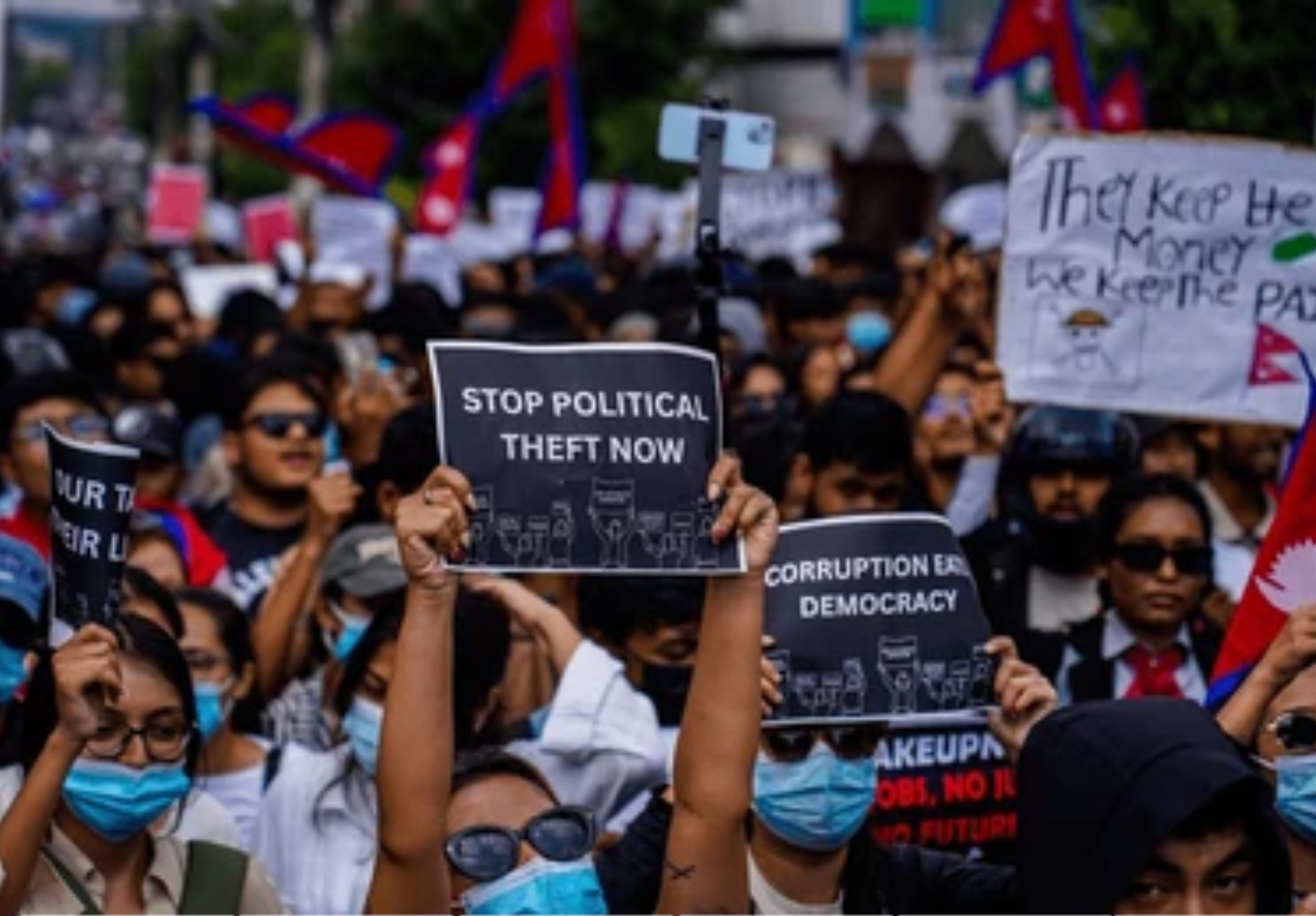
Protest politics has long been a central feature of democratic societies, serving as a means through which citizens articulate dissent, demand accountability, and influence policy. Traditionally rooted in street demonstrations, strikes, and civil disobedience, protest politics has undergone a significant transformation in the digital age. The rise of social media platforms has expanded the terrain of protest from physical spaces to virtual arenas, fundamentally altering the nature, scale, and impact of collective action.

From Streets to Screens: A Sociological Shift
Classical sociological theories—particularly those of Marx and Weber—emphasized material conditions, class conflict, and organized leadership as drivers of protest. Movements such as labor strikes or anti-colonial struggles relied heavily on physical mobilization. However, in the contemporary era, digital communication has reconfigured these dynamics.

Social media platforms like Twitter, Facebook, and Instagram have enabled what Manuel Castells terms “networked social movements.” These movements are characterized by decentralized organization, rapid information dissemination, and the ability to mobilize large numbers without formal leadership structures. Hashtags such as #BlackLivesMatter or #MeToo illustrate how digital spaces can amplify marginalized voices and create global solidarities.

Characteristics of Digital Protest Politics

  1. Low Entry Barriers: Participation in online protests requires minimal resources, allowing broader inclusivity. Individuals can express dissent through likes, shares, or comments.

  2. Speed and Virality: Information spreads rapidly, enabling quick mobilization and real-time coordination.

  3. Global Reach: Digital protests transcend geographical boundaries, fostering transnational activism.

  4. Leaderless Movements: Many online protests lack centralized leadership, making them flexible but sometimes less cohesive.

Continuities with Traditional Protest
Despite these transformations, street protests have not become obsolete. Instead, there is a hybridization of protest forms. Online mobilization often translates into offline action, as seen in movements like the Arab Spring or anti-corruption protests in India. Thus, social media acts as both a catalyst and an amplifier rather than a replacement.

Critical Perspectives and Limitations
While digital protest politics offers new opportunities, it also raises several concerns:

  • Slacktivism: Critics argue that online engagement may remain superficial, lacking sustained commitment.

  • Surveillance and Control: States can monitor digital activities, leading to repression or manipulation.

  • Digital Divide: Unequal access to technology can exclude marginalized groups, reinforcing existing inequalities.

  • Misinformation: The rapid spread of unverified information can distort narratives and undermine credibility.

From a sociological perspective, these limitations highlight the interplay between structure and agency in digital spaces. Technology does not inherently democratize protest; rather, its impact depends on broader socio-political contexts.

Theoretical Insights
Resource Mobilization Theory suggests that the success of movements depends on access to resources—now including digital tools and networks. Similarly, New Social Movement Theory emphasizes identity, culture, and post-material values, which are prominently expressed in online activism.

Furthermore, Habermas’s concept of the public sphere gains renewed relevance. Social media can be seen as a fragmented digital public sphere where discourse is both democratized and contested. However, algorithmic biases and corporate control complicate its emancipatory potential.

Conclusion
The evolution of protest politics from streets to social media reflects broader transformations in society, technology, and power structures. While digital platforms have expanded the possibilities for collective action, they have not replaced traditional forms of protest. Instead, contemporary protest politics is best understood as a hybrid phenomenon, where online and offline strategies intersect. For sociology, this shift underscores the need to rethink concepts of mobilization, participation, and power in an increasingly networked world.

UPSC Civil Services (Mains) Question

Q. “Critically examine how social media has transformed the nature and effectiveness of protest movements in contemporary societies.” (250 words)


To Read more topicsvisit: www.triumphias.com/blogs

Read more Blogs:

Social Movements in the Age of Digital Mobilisation


The supreme art of war is to subdue the enemy without fighting – Triumph IAS & Vikash Ranjan Sir


“𝟑𝟎𝟗 𝐌𝐚𝐫𝐤𝐬 𝐢𝐧 𝐒𝐨𝐜𝐢𝐨𝐥𝐨𝐠𝐲 𝐎𝐩𝐭𝐢𝐨𝐧𝐚𝐥 𝐰𝐢𝐭𝐡 𝐣𝐮𝐬𝐭 𝐎𝐍𝐄 𝐬𝐨𝐮𝐫𝐜𝐞!”SANDESH JAIN [B.Tech] SOCIOLOGY STRATEGY #UPSC CSE 2025
Heartiest Congratulations to #Sandesh #Jain, #IPS. A student of the Sociology Foundation Course (Aug 2023 Batch) at #Triumph #IAS, Sandesh secured AIR 161 in UPSC CSE 2025 in his #First #Mains appearance.
𝐖𝐡𝐚𝐭 𝐦𝐚𝐤𝐞𝐬 𝐭𝐡𝐢𝐬 𝐚𝐜𝐡𝐢𝐞𝐯𝐞𝐦𝐞𝐧𝐭 𝐞𝐱𝐭𝐫𝐚𝐨𝐫𝐝𝐢𝐧𝐚𝐫𝐲 𝐢𝐬 𝐡𝐢𝐬 𝐒𝐨𝐜𝐢𝐨𝐥𝐨𝐠𝐲 𝐎𝐩𝐭𝐢𝐨𝐧𝐚𝐥 𝐬𝐜𝐨𝐫𝐞:
𝐓𝐎𝐓𝐀𝐋 𝐒𝐎𝐂𝐈𝐎𝐋𝐎𝐆𝐘 𝐌𝐀𝐑𝐊𝐒: 𝟑𝟎𝟗
𝐏𝐚𝐩𝐞𝐫 𝟏 – 173 Marks
𝐏𝐚𝐩𝐞𝐫 𝟐 – 136 Marks
𝐒𝐚𝐧𝐝𝐞𝐬𝐡 𝐟𝐨𝐥𝐥𝐨𝐰𝐞𝐝 𝐚 𝐬𝐢𝐦𝐩𝐥𝐞 𝐛𝐮𝐭 𝐩𝐨𝐰𝐞𝐫𝐟𝐮𝐥 𝐬𝐭𝐫𝐚𝐭𝐞𝐠𝐲:
Single Source Preparation- Only #Vikash #Ranjan Sir’s Sociology Foundation Class Notes, Discussions, Application Strategies & Answer Writing Practice.
No multiple books or Scattered Materials, No PDFs, No Free YouTube Time Wastes, No other Essentials.
He focused on developing Sociological Wisdom — the ability to apply concepts, thinkers, and examples in answers.
Because UPSC preparation is not just about knowledge. It is about developing Sociological Wisdom.
#New #Sociology #Optional – Foundation to Final Course
#Batch for UPSC CSE 2027 -2028 | #Admissions #Open
Available for:
Offline Classroom Program
Live Online Classes
Tablet Course (Learn Anytime)


Leave a Reply

Your email address will not be published. Required fields are marked *