


𝐑𝐞𝐥𝐞𝐯𝐚𝐧𝐭 𝐟𝐨𝐫: Essay for IAS INTRODUCTION Human societies have always grappled with poverty, inequality, and vulnerability. In responding to these
Continue reading
𝐑𝐞𝐥𝐞𝐯𝐚𝐧𝐭 𝐟𝐨𝐫: Essay for IAS INTRODUCTION Human societies have always grappled with poverty, inequality, and vulnerability. In responding to these
Continue reading
𝐑𝐞𝐥𝐞𝐯𝐚𝐧𝐭 𝐟𝐨𝐫: Essay for IAS INTRODUCTION Economic growth is conventionally expected to generate employment by expanding production, investment, and demand.
Continue reading
Education in Transition: Reform, Inequality, and the Future of Learning in Contemporary India (Relevant for Sociology Paper I and II)
Continue reading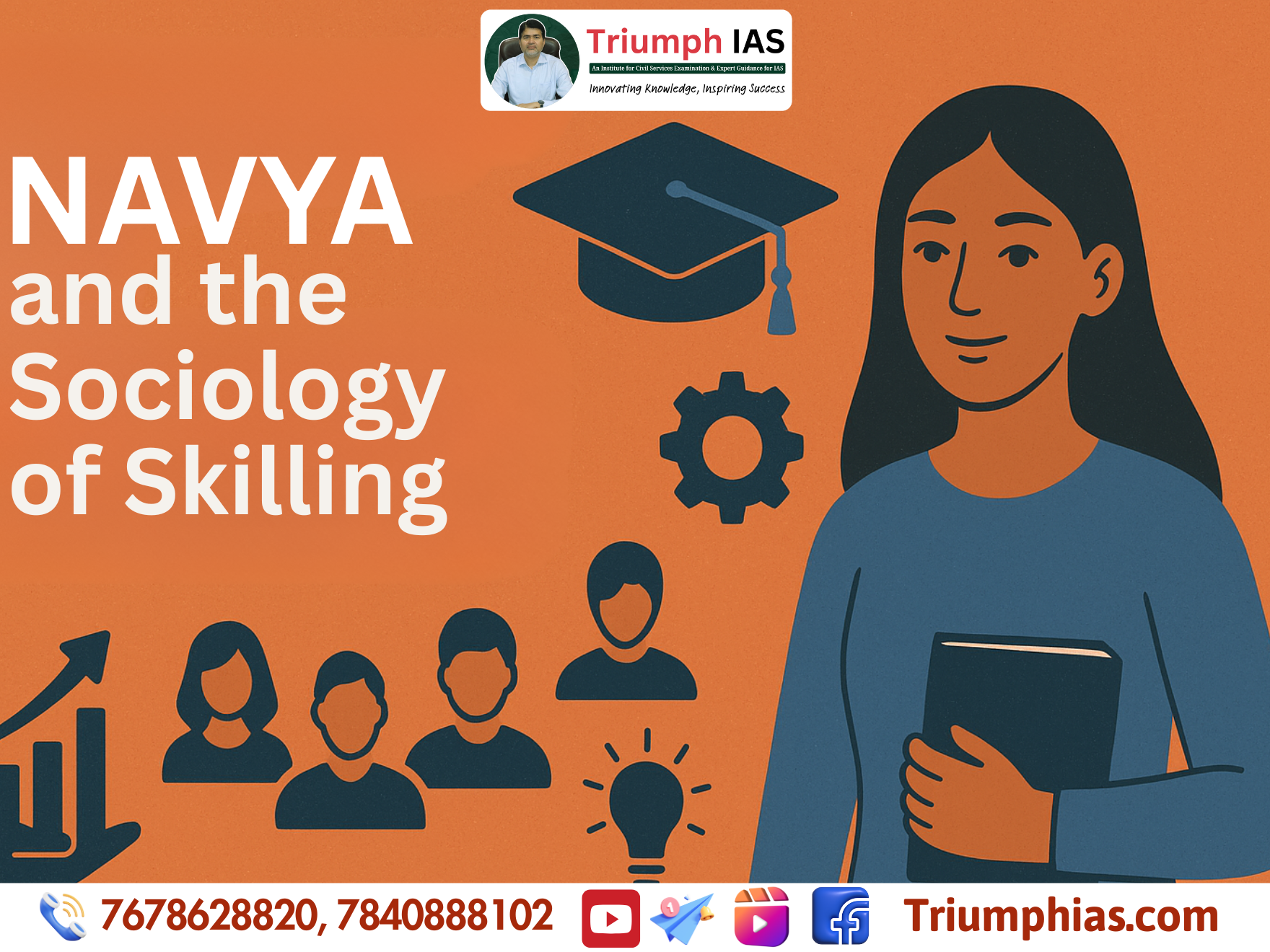
NAVYA and the Sociology of Skilling (Relevant for Sociology Paper 1: Stratification and Mobility) The launch of the NAVYA initiative
Continue reading
Reinventing Vocational Education in India: A Pathway to Employability and Growth Introduction: Vocational Education in India India stands at a
Continue reading
Skilling for Tomorrow: Developing Future-Oriented Competencies (Relevant for GS paper-3, Employment and Growth) India stands at a pivotal juncture where
Continue reading
Closing India Skill Gap (Relevant for GS paper-3, Skill Development) India faces a pressing dilemma—rising youth unemployment despite a shortage
Continue reading
When considering the array of 51 optional subjects for the UPSC Mains Examination, Sociology consistently stands out as a top choice.
Continue reading
Explain the Sociological Significance of the NEW EDUCATION POLICY and its Thrust on Vocationalization and Skill Development. (Paper: 2, Section-
Continue reading
Economic Inequality (Relevant for Economics section of General Studies Paper Prelims/Mains) Economic disparity signifies the uneven distribution of both income and
Continue reading
Inclusive Growth Economics (Relevant for Economics section of General Studies Paper Prelims/Mains) Inclusive growth Economics refers to economic advancement that generates
Continue reading
A glimpse at 4th anniversary: Revocation of Article 370 (Relevant for General Studies Paper Prelims/Mains) As the 4th anniversary of the
Continue reading
India’s Demographic Dividend AN OPPORTUNITY (Relevant for General Studies Paper Prelims/Mains) India, as one of the most populous nations globally, stands
Continue reading
Government Empowerment Programmes for Rural Women Relevance: G.S paper I: Society and Social Issues & G.S paper II: Polity and
Continue reading