
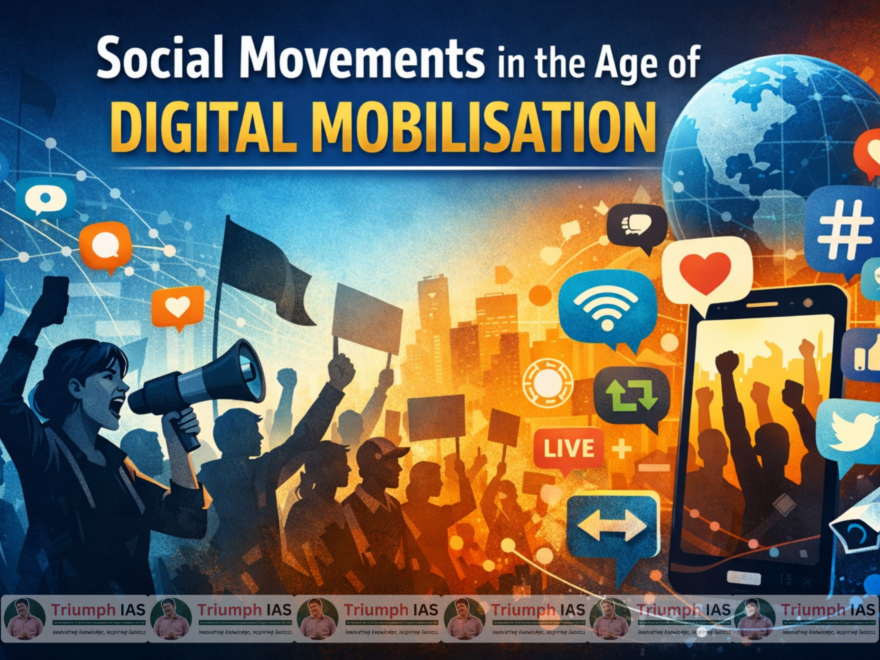
Relevant for Sociology Optional Paper 1, Paper 2, and GS Paper I (Indian Society)
IntroductionThe character of social movements has undergone a profound transformation in the 21st century with the advent of digital technologies. From the Arab Spring to contemporary climate activism, digital platforms have reconfigured how collective action is organized, communicated, and sustained. In sociological terms, this shift reflects the transition from traditional, resource-intensive mobilization to networked, decentralized, and rapid forms of engagement. DimensionClassical theories of social movements—such as Resource Mobilization Theory and Political Process Theory—emphasized organizational capacity, leadership, and political opportunity structures. However, digital mobilisation challenges these frameworks by lowering entry barriers and enabling spontaneous participation. Social media platforms like Twitter (X), Facebook, and Instagram serve as new “public spheres,” facilitating what Manuel Castells calls “networked social movements.” One of the defining features of digital-era movements is leaderless or horizontal organization. Movements such as #BlackLivesMatter or #MeToo demonstrate how hashtags can act as rallying points, allowing dispersed individuals to coalesce around shared grievances without centralized leadership. This aligns with the concept of “connective action” proposed by Bennett and Segerberg, where personalized content sharing replaces traditional collective identity framing. Digital mobilisation also enhances speed and scale. Information dissemination is instantaneous, allowing protests to be organized within hours. This immediacy was evident during movements like the Arab Spring, where online networks played a crucial role in mobilizing masses against authoritarian regimes. However, sociologists caution that while digital tools can trigger mobilization, sustaining long-term structural change requires institutional engagement. Another critical dimension is the democratization of voice. Marginalized groups, historically excluded from mainstream media, now have platforms to articulate their concerns. Digital spaces thus function as counter-publics, enabling subaltern narratives to challenge dominant discourses. For instance, Dalit activism in India has increasingly leveraged digital media to highlight caste-based discrimination. However, digital mobilisation is not without limitations. One major critique is “slacktivism”—low-effort online participation that may not translate into real-world action. Clicking, sharing, or liking posts can create an illusion of engagement without substantive commitment. Moreover, digital divides—based on class, gender, and geography—mean that access to these platforms is uneven, potentially reproducing existing inequalities. Additionally, the surveillance and control capabilities of states have expanded alongside digital activism. Governments can monitor online activities, suppress dissent, and manipulate narratives through misinformation. This raises questions about the autonomy and sustainability of digital movements in authoritarian contexts. From a theoretical standpoint, digital mobilisation necessitates a rethinking of core sociological concepts such as collective identity, solidarity, and power. While traditional movements relied on physical proximity and shared experiences, digital movements operate through symbolic and mediated interactions. This shift challenges Durkheimian notions of solidarity and calls for new frameworks to understand virtual communities. ConclusionIn conclusion, social movements in the age of digital mobilisation represent a hybrid form of collective action—combining online and offline strategies. While digital tools have expanded the possibilities for participation and visibility, they also introduce new challenges related to sustainability, inequality, and control. For sociology, this transformation offers fertile ground to revisit and refine theories of social change in an increasingly interconnected world. |
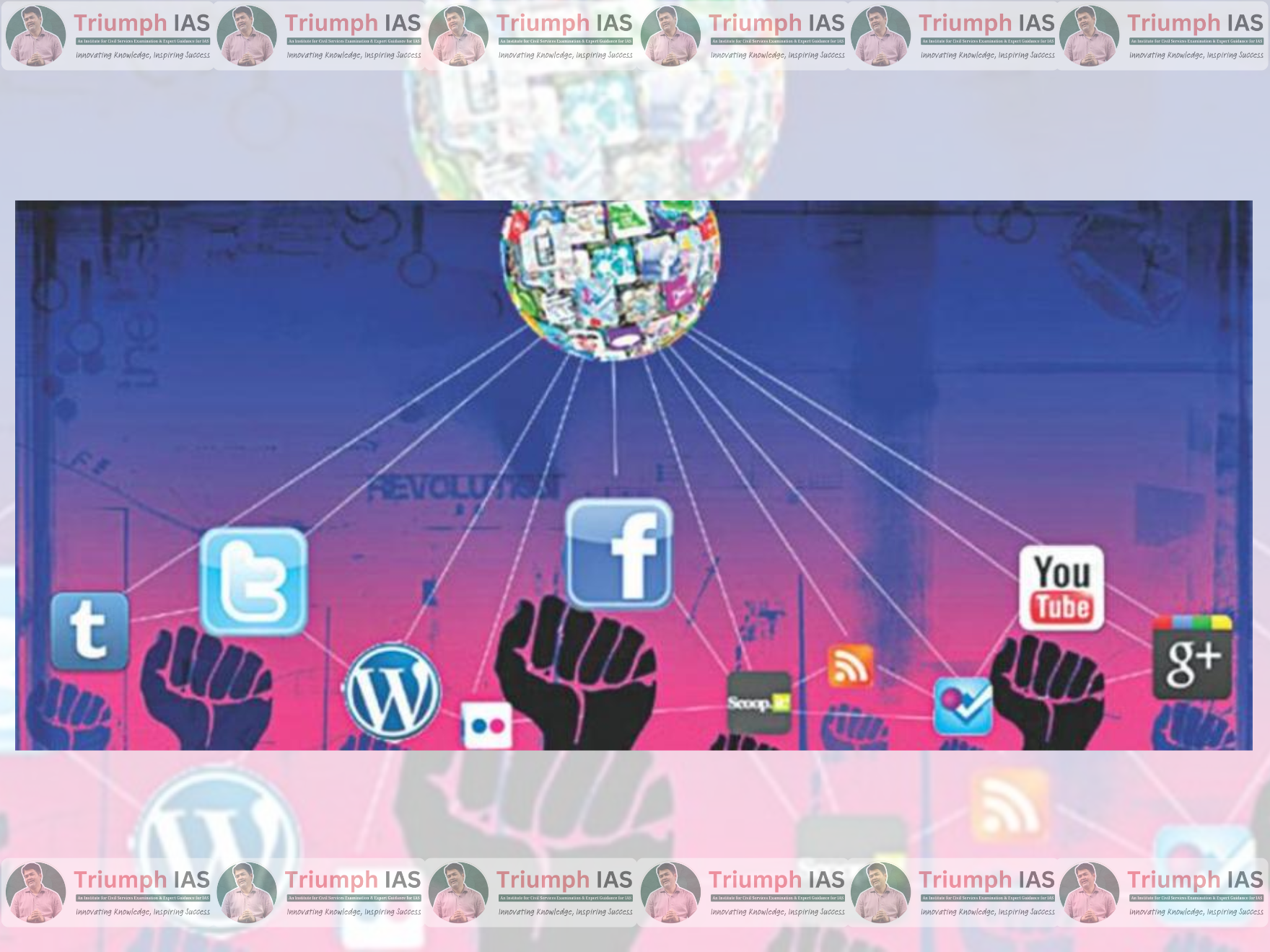
UPSC Civil Services (Mains) Question
Q. “Discuss how digital technologies have transformed the nature and dynamics of social movements. Critically evaluate their impact on collective action.” (250 words)
To Read more topics, visit: www.triumphias.com/blogs
Read more Blogs:
 SANDESH JAIN [B.Tech] SOCIOLOGY STRATEGY #UPSC CSE 2025
 𝐖𝐡𝐚𝐭 𝐦𝐚𝐤𝐞𝐬 𝐭𝐡𝐢𝐬 𝐚𝐜𝐡𝐢𝐞𝐯𝐞𝐦𝐞𝐧𝐭 𝐞𝐱𝐭𝐫𝐚𝐨𝐫𝐝𝐢𝐧𝐚𝐫𝐲 𝐢𝐬 𝐡𝐢𝐬 𝐒𝐨𝐜𝐢𝐨𝐥𝐨𝐠𝐲 𝐎𝐩𝐭𝐢𝐨𝐧𝐚𝐥 𝐬𝐜𝐨𝐫𝐞:
 𝐓𝐎𝐓𝐀𝐋 𝐒𝐎𝐂𝐈𝐎𝐋𝐎𝐆𝐘 𝐌𝐀𝐑𝐊𝐒: 𝟑𝟎𝟗
 𝐏𝐚𝐩𝐞𝐫 𝟏 – 173 Marks 𝐏𝐚𝐩𝐞𝐫 𝟐 – 136 Marks
 Single Source Preparation- Only #Vikash #Ranjan Sir’s Sociology Foundation Class Notes, Discussions, Application Strategies & Answer Writing Practice. No multiple books or Scattered Materials, No PDFs, No Free YouTube Time Wastes, No other Essentials.
 Offline Classroom Program
 Live Online Classes
 Tablet Course (Learn Anytime)
One comment