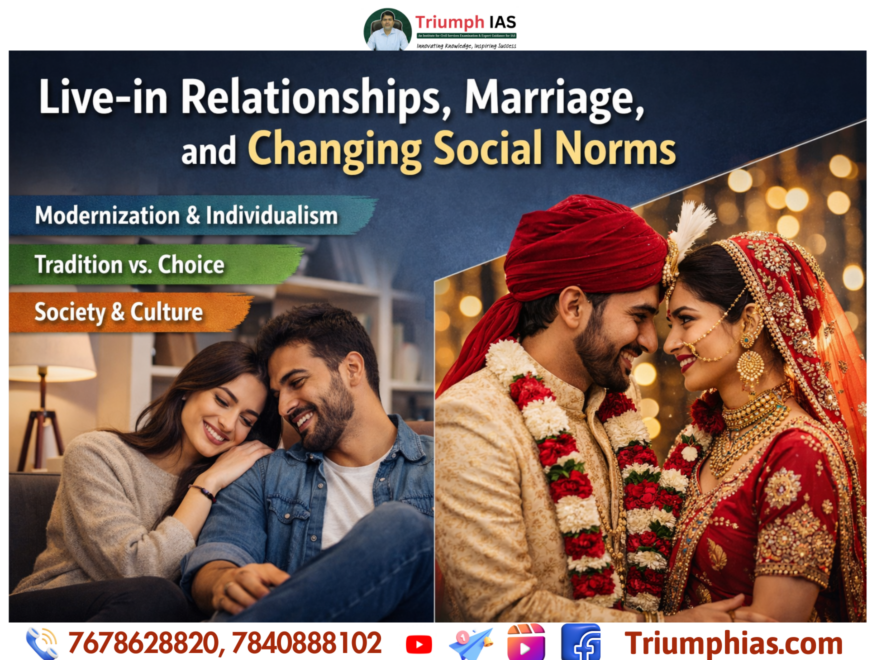
The institution of marriage has historically been regarded as a foundational pillar of society, particularly in traditional contexts like India, where it is closely tied to kinship, religion, and social order. However, rapid processes of modernization, urbanization, and globalization have begun to reshape intimate relationships, giving rise to alternative arrangements such as live-in relationships. These transformations reflect broader shifts in social norms, individual autonomy, and value systems.
Dimension
From a sociological standpoint, marriage has traditionally been a socially sanctioned union that regulates sexual behavior, ensures reproduction, and maintains social stability. Functionalist thinkers like Talcott Parsons viewed marriage as essential for socialization and emotional support within the family. In contrast, live-in relationships challenge this conventional framework by offering companionship without formal institutional recognition. They represent a shift from collective, family-centered decision-making to individual choice and personal fulfillment.
One of the key drivers behind the rise of live-in relationships is urbanization. In metropolitan settings, anonymity, economic independence, and exposure to diverse cultures reduce the social stigma traditionally associated with non-marital cohabitation. The growing participation of women in education and the workforce has further strengthened this trend by enhancing financial autonomy and bargaining power within relationships. Feminist perspectives interpret live-in arrangements as a form of resistance to patriarchal control embedded in traditional marriage structures.
Additionally, the influence of globalization and media has normalized alternative relationship models. Western cultural narratives, disseminated through films, digital platforms, and social media, have contributed to changing perceptions of intimacy and commitment. The emphasis has shifted from duty and obligation to compatibility, emotional satisfaction, and mutual consent.
However, the transition is neither uniform nor uncontested. Live-in relationships continue to face moral scrutiny, particularly in rural and semi-urban areas, where traditional norms remain dominant. There is also a generational divide, with younger cohorts more accepting of such arrangements compared to older generations. Sociologically, this reflects a tension between tradition and modernity—a recurring theme in Indian society.
Legal developments have attempted to keep pace with these changes. Courts in India have, in several instances, recognized live-in relationships under the ambit of the right to life and personal liberty, and have extended certain protections, especially for women. Yet, ambiguities persist regarding property rights, inheritance, and long-term security, highlighting the gap between social change and institutional adaptation.
Furthermore, live-in relationships raise important questions about the future of family structures. The decline of arranged marriages, increasing age at marriage, and rise of individualism indicate a gradual shift toward more fluid and negotiated forms of relationships. This transformation aligns with Anthony Giddens’ concept of the “pure relationship,” based on emotional communication and sustained only as long as it satisfies both partners.
Conclusion
In conclusion, the emergence of live-in relationships alongside traditional marriage signifies a broader transformation in social norms. It reflects increasing individualization, changing gender roles, and the impact of global cultural flows. While marriage continues to hold strong cultural legitimacy, alternative relationship forms are gradually gaining acceptance, indicating a pluralization of intimate life in contemporary society. The challenge lies in balancing evolving individual freedoms with social cohesion and legal clarity.

 SANDESH JAIN [B.Tech] SOCIOLOGY STRATEGY #UPSC CSE 2025
 𝐖𝐡𝐚𝐭 𝐦𝐚𝐤𝐞𝐬 𝐭𝐡𝐢𝐬 𝐚𝐜𝐡𝐢𝐞𝐯𝐞𝐦𝐞𝐧𝐭 𝐞𝐱𝐭𝐫𝐚𝐨𝐫𝐝𝐢𝐧𝐚𝐫𝐲 𝐢𝐬 𝐡𝐢𝐬 𝐒𝐨𝐜𝐢𝐨𝐥𝐨𝐠𝐲 𝐎𝐩𝐭𝐢𝐨𝐧𝐚𝐥 𝐬𝐜𝐨𝐫𝐞:
 𝐓𝐎𝐓𝐀𝐋 𝐒𝐎𝐂𝐈𝐎𝐋𝐎𝐆𝐘 𝐌𝐀𝐑𝐊𝐒: 𝟑𝟎𝟗
 𝐏𝐚𝐩𝐞𝐫 𝟏 – 173 Marks
 Single Source Preparation- Only #Vikash #Ranjan Sir’s Sociology Foundation Class Notes, Discussions, Application Strategies & Answer Writing Practice.
 Offline Classroom Program
 Live Online Classes
 Tablet Course (Learn Anytime)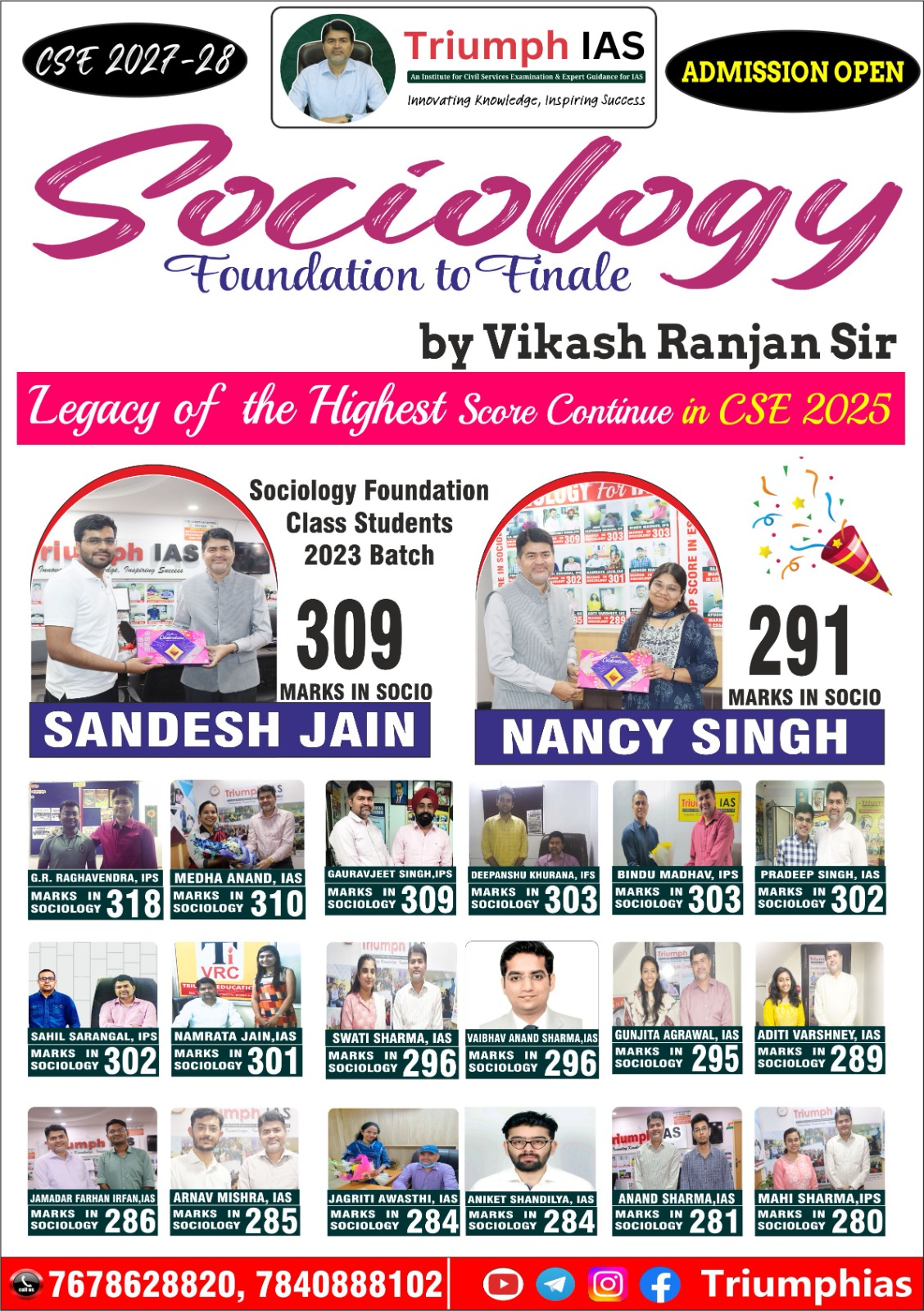
One comment