

𝐑𝐞𝐥𝐞𝐯𝐚𝐧𝐭 𝐟𝐨𝐫: Essay for IAS
INTRODUCTIONPower is conventionally associated with visible authority—political office, military might, economic dominance, or institutional control. However, history and philosophy repeatedly remind us that the most enduring form of power is often subtle, silent, and exercised away from formal structures. The statement “The hand that rocks the cradle rules the world” eloquently captures this deeper truth by asserting that those who nurture, educate, and shape young minds ultimately determine the direction of societies and civilizations. Though commonly attributed to motherhood, the phrase transcends gender to signify the formative influence of caregivers, educators, and social institutions in shaping values, character, and worldview. At a philosophical level, the quote highlights the primacy of socialization over coercion, moral authority over brute force, and cultural continuity over transient political regimes. Sociologically, it underscores the role of family, education, and early conditioning in reproducing or transforming social structures. Politically, it reminds states that governance begins not merely with laws but with the cultivation of responsible citizens. In an era marked by rapid technological change, ideological contestation, and moral uncertainty, the relevance of this statement has only deepened. Therefore, this essay examines the multidimensional significance of the idea by exploring its philosophical foundations, sociological implications, gendered interpretations, relevance to nation-building, and contemporary challenges, before concluding with its enduring relevance for governance and public life. MAIN BODY:At the outset, it is important to recognize that the statement rests on a profound philosophical insight: the power to shape minds precedes the power to rule institutions. Political philosophers from Plato to Confucius emphasized that the moral and intellectual formation of citizens determines the health of the state. Plato, in The Republic, argued that education is the cornerstone of justice, for an unjust society is merely the reflection of poorly nurtured individuals. Similarly, Indian philosophical traditions place immense emphasis on sanskar—the moral and cultural imprint imparted during early life. According to the Upanishadic worldview, the individual (vyakti) is the foundation of society (samaj), and societal harmony depends on the cultivation of virtues such as self-restraint, compassion, and wisdom at an early age. Thus, the “hand” that nurtures the child indirectly shapes the ethical trajectory of society. Moreover, modern philosophy reinforces this idea through the concept of social conditioning. Thinkers like John Locke viewed the human mind as a tabula rasa, molded by experience and instruction. Consequently, those who guide early experiences wield immense, if invisible, power. Hence, while rulers may command obedience, it is caregivers and educators who command conscience. From a sociological standpoint, the statement underscores the centrality of primary socialization in sustaining social order. The family, particularly during early childhood, serves as the first institution through which language, norms, values, and identities are transmitted. It is here that individuals internalize concepts of right and wrong, authority and obedience, equality and hierarchy. Émile Durkheim argued that education is society’s means of perpetuating itself by instilling collective conscience in the young. Similarly, Talcott Parsons viewed the family as a key agency that stabilizes social systems by preparing children for their future roles. Therefore, the “cradle” becomes the site where society reproduces itself—either reinforcing existing structures or sowing seeds of change. Furthermore, gender roles, caste attitudes, and class aspirations are often unconsciously transmitted within households. A society that socializes children into discrimination cannot later legislate equality effectively. Conversely, early exposure to empathy, diversity, and critical thinking can produce socially responsible citizens. Thus, social transformation begins not in parliaments alone but in nurseries and classrooms. Traditionally, the statement has been interpreted as a tribute to motherhood, acknowledging the central role women play in nurturing future generations. In patriarchal societies where women were excluded from formal power, motherhood became a domain of moral authority and indirect influence. While this recognition affirms women’s contribution, it must be approached with nuance. On one hand, the statement challenges narrow definitions of power by valuing care work, emotional labor, and moral education—domains historically undervalued because they are feminized and unpaid. Feminist scholars have long argued that reproductive and caregiving labor sustains economies and political systems, yet remains invisible in conventional power hierarchies. On the other hand, romanticizing motherhood alone risks confining women to domestic roles and reinforcing gender stereotypes. Therefore, a contemporary interpretation must broaden the meaning of the “hand” to include fathers, teachers, caregivers, and institutions, while simultaneously empowering women with equal access to education, employment, and leadership. Importantly, when women are educated and empowered, their influence over the next generation multiplies. Empirical evidence consistently shows that maternal education correlates strongly with improved child health, educational outcomes, and civic values. Thus, investing in women is not merely a gender issue but a civilizational imperative. While the cradle symbolizes early nurturing, its influence extends seamlessly into the classroom. Education systems institutionalize the formative process by shaping knowledge, skills, and values. As Nelson Mandela observed, education is the most powerful weapon to change the world—not because it coerces, but because it enlightens. Teachers, like parents, exercise transformative power through daily interaction, role modeling, and intellectual stimulation. A curriculum that encourages critical inquiry produces active citizens, while rote learning fosters conformity. Similarly, value-based education inculcates ethical responsibility, whereas purely instrumental education risks producing skilled but morally indifferent individuals. In this context, the state’s role becomes crucial. Public policy that prioritizes early childhood care, nutrition, and education yields long-term social dividends. Conversely, neglecting these sectors undermines national potential, regardless of economic growth rates. Thus, the true strength of a nation lies not merely in GDP figures but in the character of its citizens. History offers compelling evidence that civilizations rise and fall based on how they nurture their young. Ancient societies that emphasized civic virtue—such as Athens or the Roman Republic—produced citizens committed to public life, at least during their formative periods. Similarly, Confucian emphasis on filial piety and moral education shaped East Asian societies for centuries. In the Indian context, the gurukul system aimed at holistic development, integrating intellectual, moral, and spiritual training. Though imperfect, it reflected an understanding that education is not merely about livelihood but about life itself. Conversely, societies that neglect moral education often witness erosion of trust, civic apathy, and social fragmentation. Therefore, while political revolutions may alter regimes overnight, cultural revolutions—rooted in early socialization—determine long-term stability. In the contemporary world, the “cradle” has expanded beyond the family to include digital media, peer groups, and algorithm-driven platforms. Children today are exposed to information, ideologies, and influences at unprecedented scales and speeds. Consequently, the responsibility of those shaping young minds has become more complex. While technology offers immense educational potential, it also exposes children to misinformation, consumerism, and distorted value systems. Therefore, the role of parents and educators now includes digital literacy and ethical guidance. The absence of such guidance risks creating a generation rich in information but poor in wisdom. Moreover, in polarized societies, children often inherit ideological divisions uncritically. Hence, fostering critical thinking, empathy, and dialogue from an early age becomes essential for democratic resilience. Once again, the silent influence of early nurturing proves more decisive than loud political rhetoric. For civil servants and policymakers, the message of the statement is clear: sustainable governance begins with investment in human development. Policies related to maternal health, early childhood education, nutrition, and primary schooling are not welfare measures but nation-building strategies. Furthermore, administrators must recognize that laws can regulate behavior, but values regulate intent. Therefore, governance that ignores moral and civic education remains fragile. Initiatives such as value-based education, community engagement, and parental support programs contribute to long-term social cohesion. In public leadership, the statement also serves as a reminder that authority exercised with care and responsibility leaves a lasting legacy, much like nurturing in childhood. Power that dominates may win compliance, but power that mentors creates commitment. CONCLUSION:In conclusion, “The hand that rocks the cradle rules the world” is not a sentimental aphorism but a profound commentary on the nature of power, social continuity, and human development. It reminds us that the foundations of civilization are laid not in corridors of power but in homes, schools, and early relationships where values are formed and identities shaped. By emphasizing nurturing over domination, the statement challenges conventional hierarchies of power and calls for a revaluation of caregiving, education, and moral formation. In an age of rapid change and moral uncertainty, this insight becomes even more relevant, urging societies to invest in the formative spaces that quietly shape the future. Ultimately, while rulers may govern territories and economies may drive growth, it is those who shape minds and hearts who truly rule the world—patiently, persistently, and profoundly. |
Read more blog:
Caste Census, Reservation, and the Politics of Social Justice
Best Essay Writing Course for UPSC CSE
If you’re preparing for the UPSC Civil Services Examination (CSE), one paper that can unlock exceptional scores and a top rank is the Essay Paper. While General Studies and Optional Subjects are structured and syllabus-driven, the Essay writing segment is where individuality, critical thinking, and articulation truly shine.
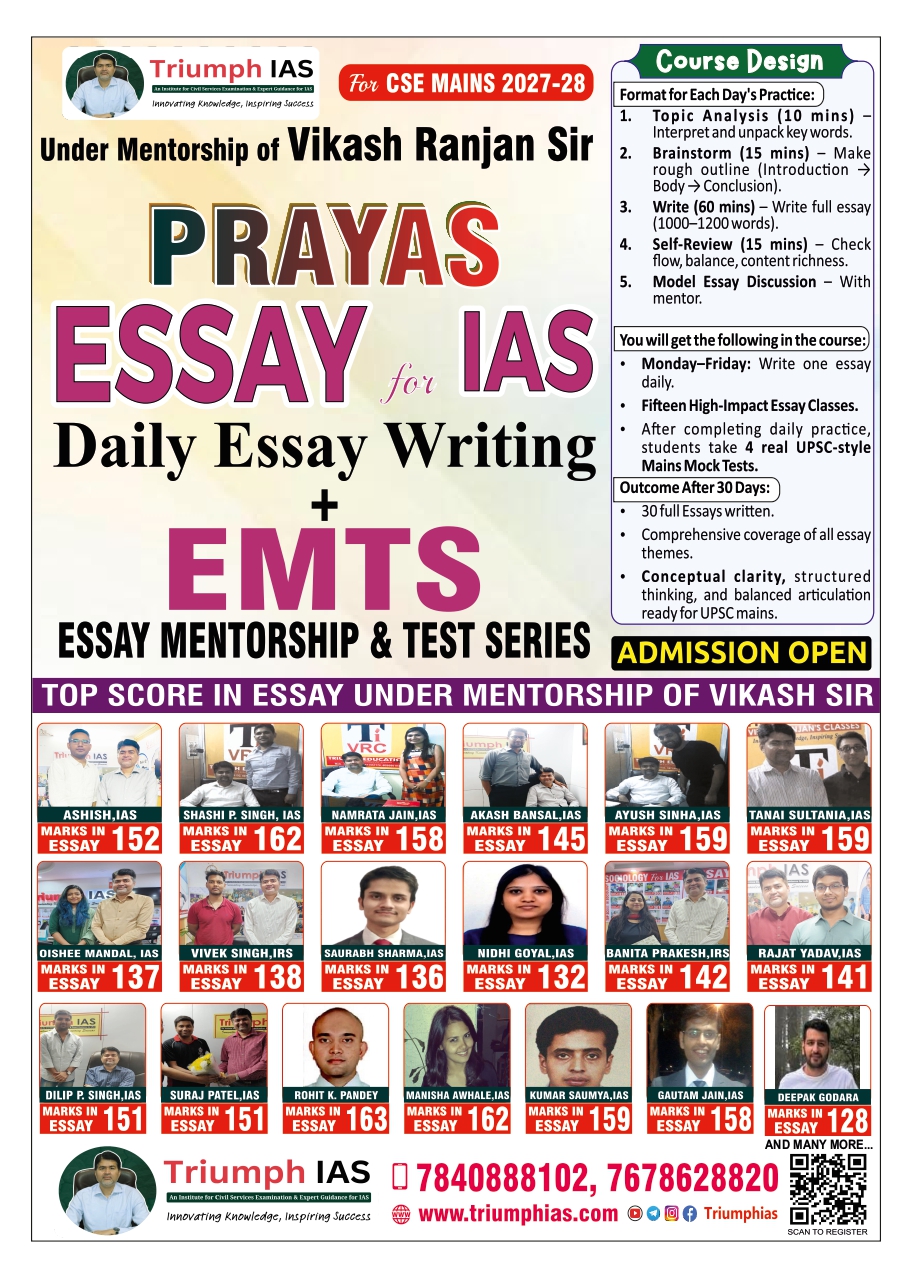
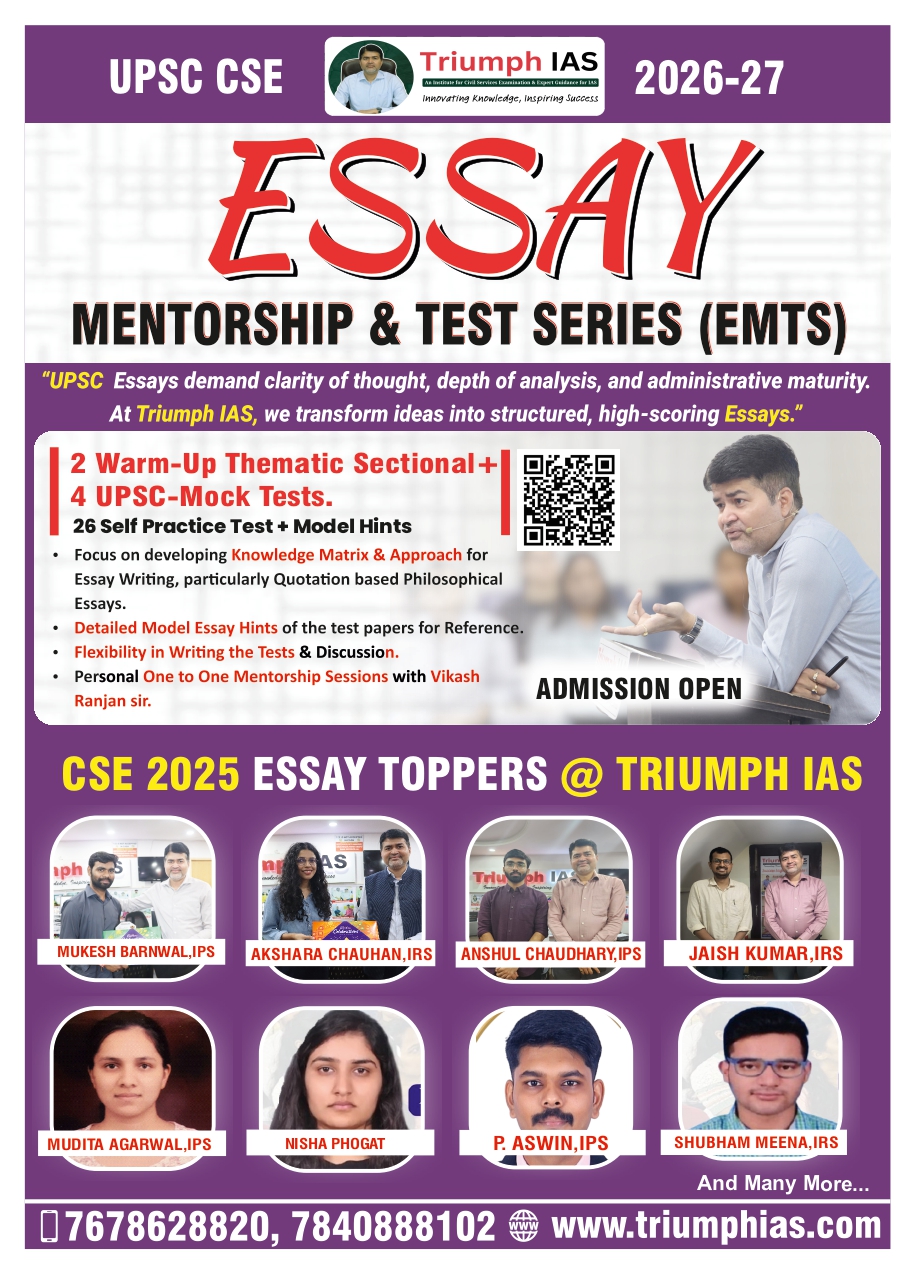
Among various Essay programs available across India, Triumph IAS, under the expert mentorship of Vikash Ranjan Sir, offers the Best Essay writing Course for UPSC CSE. This comprehensive guide explores what makes this program unparalleled and why it should be part of every serious aspirant’s preparation strategy.

2 comments